Laura Rutledge’s husband reportedly stated he would FORBID his wife from continuing at ESPN, claiming the very executives are to blame for her repeated injuries. What’s really going on behind the scenes?
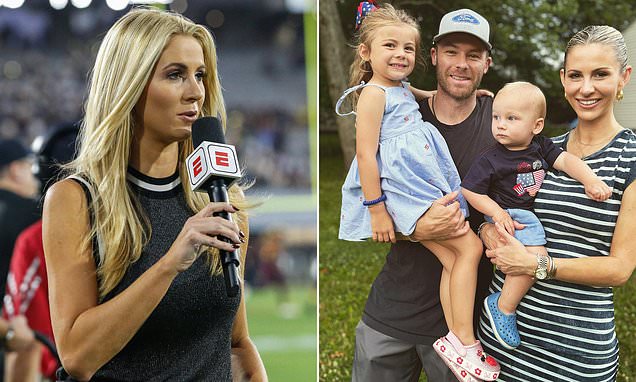
In recent news, Laura Rutledge, a prominent ESPN reporter and host, has come into the spotlight for more than just her reporting. Rumors have emerged from various sources suggesting that her husband is considering taking a drastic step to protect her well-being. According to reports, he might forbid her from continuing her career at ESPN, citing concerns over repeated injuries she has sustained while working. This dramatic claim raises questions about the underlying issues at ESPN and what it means for Rutledge’s future in sports journalism.
The Charm and Challenges of Being an ESPN Host

Laura Rutledge is known for her charisma, expertise, and extensive knowledge of sports. Over the years, she has made a name for herself in a male-dominated industry, proving that women can hold their own in sports journalism. However, success in this field often comes with its own set of challenges. As Rutledge covers high-stakes events, such as college football games and major tournaments, her demanding role often leads to long hours and the physical toll that comes with it.
In recent times, Rutledge has faced some unfortunate injuries that have prompted her husband to voice concerns publicly. His protective feelings are understandable, especially when it comes to his wife’s health and safety. The question remains: what can be done to balance ambition and well-being in such a fast-paced environment?
The Pressure from Executives and Workplace Environment

Another layer of complexity is added by the reported involvement of ESPN executives in Rutledge’s situation. It has been claimed that they are somewhat culpable for not prioritizing the health and safety of their employees. High-pressure environments can lead to harm, both physically and mentally. Rutledge’s injuries may be a direct reflection of a culture that pushes its talent to the limits without giving sufficient regard to their personal well-being.
- Pace of Work: The never-ending demand for content can lead to burnout and injuries as hosts like Rutledge are pushed to do more in less time.
- Lack of Support: There seems to be a gap in support systems for employees, leaving them vulnerable to overexertion.
- Perception of Strength: Many feel they need to project a sense of invincibility, which can prevent them from seeking help when injuries occur.

Critics of ESPN have pointed out that such an environment might be counterproductive, as it can lead to talented reporters stepping back or even leaving the network. If Rutledge’s husband is indeed contemplating forbidding her from further commitments at ESPN, it could lead to a significant public relations issue for the network.
Public Reaction and Future Implications
The public reaction to these reports has been mixed. Some fans have expressed solidarity with Rutledge’s husband, praising his protective instincts and the need for athletes and reporters alike to prioritize their health. Others have criticized the idea of forbidding a partner from pursuing her career, viewing it as an archaic notion of control.
This ongoing narrative not only sheds light on Rutledge’s situation but also raises pertinent questions about the overall culture within ESPN and the larger sports journalism industry. It also prompts a discussion on how media companies can better support their employees. Initiatives aimed at promoting mental health resources and ensuring that the physical well-being of their talent is a priority can help avert such crises in the future.

As Laura Rutledge navigates this challenging season both professionally and personally, her journey may serve as a calling for change within ESPN and beyond. It highlights the importance of dialogue about workplace accountability, employee safety, and the need for companies to champion the well-being of those who bring sports stories to millions.
As we keep an eye on Rutledge’s situation unfolding, it is evident that her story may resonate far beyond the scope of sports journalism, becoming a pivotal point of discussion surrounding workplace culture and the treatment of employees in the media landscape.
Conclusion

In conclusion, Laura Rutledge’s recent experiences at ESPN highlight significant issues regarding employee health and the responsibilities of major networks. As her husband reportedly considers forbidding her from continuing her role, the discussion surrounding the need for a supportive workplace culture becomes increasingly important. It is crucial for fans and followers to stay updated on this evolving situation and understand the implications it holds not just for Rutledge, but for the entire industry. Let’s share our support for those navigating similar challenges in high-pressure environments.