Christian Karoline Leavitt Calls TV Anchor ‘Stupid’

In a controversial exchange recently brought to light, U.S. press secretary Karoline Leavitt found herself at the center of a heated dialogue following a statement made by former President Donald Trump. During an interview with the conservative news outlet Daily Caller, Trump did not hold back his disdain for CBS News anchor Margaret Brennan, labeling her “stupid” and “nasty.” Leavitt stood in agreement with Trump’s remarks, suggesting that Brennan’s interviewing style lacked both effectiveness and professionalism.
The Dynamics of Media and Politics

This encounter is a reflection of the broader dynamics between the Trump administration and the media, especially given the historically combative relationship that many in Trump’s circle have had with journalists. Leavitt’s comments about Brennan not only echo Trump’s sentiment but also signify the attitude of current political figures towards mainstream media. During the interview, Trump particularly focused on Brennan’s approach in interviews with high-profile figures such as Secretary of State Marco Rubio, expressing disbelief at the perceived harshness of her questioning.
Trump praised Rubio for his adept handling of difficult inquiries regarding pressing U.S. foreign policy issues, particularly those concerning Iran. This contrast portrayed Brennan as an antagonistic figure, potentially working from a biased standpoint. The heated exchange has reignited discussions about journalistic integrity and the balance between challenging questions and biased reporting.
Karoline Leavitt’s Combative Style
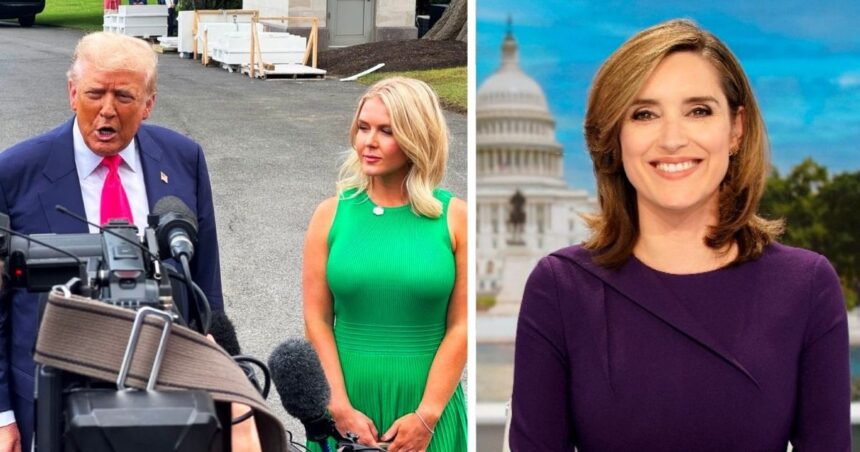
Known for her assertive approach during press briefings, Leavitt has established herself as a vocal representative of the administration. Her comments regarding Brennan further underline the adversarial stance that the Trump administration often adopted towards the press. Leavitt is frequently seen wearing a cross necklace, an emblem of her Christian faith, which she proudly acknowledges as a fundamental aspect of her identity.
Leavitt has emphasized the importance of prayer before engaging with the press, highlighting her Christian beliefs and how they influence her approach to public service. This juxtaposition of her faith with her intense criticisms of journalists creates a complex image of a leader who is both devout and combative. By aligning herself with Trump’s critiques of media figures, she reinforces her commitment to the administration’s narrative while also navigating the challenges of being a public servant with strong moral convictions.
Implications for Future Media Relations

The ongoing tension between the Trump administration and journalists has broader implications for how the media is perceived in the political arena. The comments made by Leavitt and Trump can be seen as part of a larger strategy aimed at undermining the credibility of traditional news sources. This adversarial relationship not only shapes public perception but also influences how future administrations may interact with the press.

As the political landscape continues to evolve, the approach taken by figures like Leavitt will be pivotal. It raises questions about accountability, the freedom of the press, and how democratic ideals can be maintained when the media is viewed through a lens of hostility. Observers of political discourse are left to ponder the long-term effects of such exchanges on the nature of journalism and its role in society.
In conclusion, the exchange between Christian Karoline Leavitt and former President Trump regarding CBS News anchor Margaret Brennan underscores the existing tensions between political leaders and the media. As these dynamics continue to unfold, it’s crucial for both sides to engage constructively. For those interested in staying updated on this evolving story and the implications for future media relations, we encourage you to follow our coverage and join the discussion.


