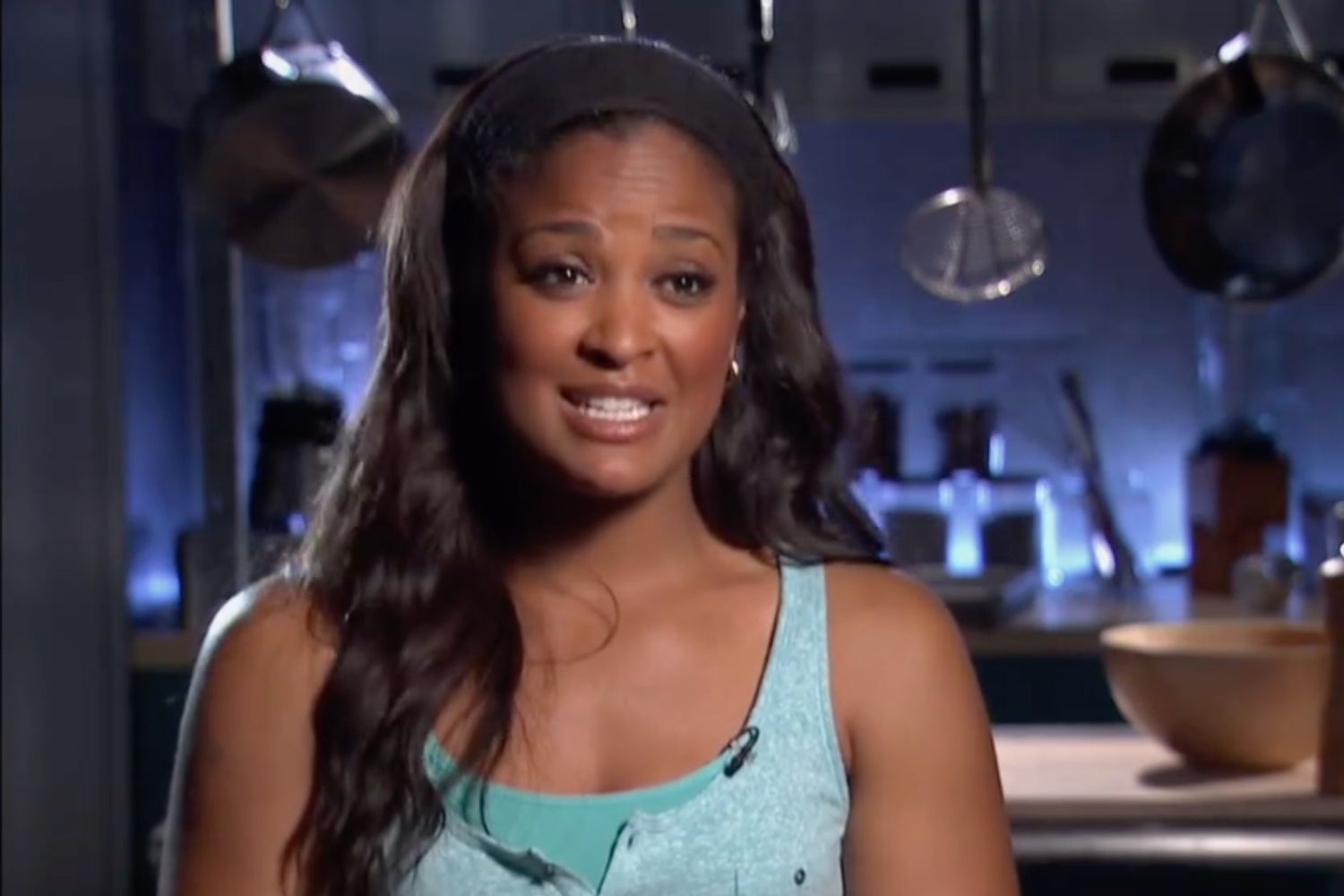
Laila Ali made a surprising return to Food Network in a completely new role and revealed the deeply personal reason behind her decision: “It was his last wish.”

Laila Ali’s Heartfelt Return to Food Network: Fulfilling a Last Wish

Laila Ali, the renowned boxing champion and television personality, recently made an unexpected comeback to Food Network, but this time in a role unlike any she has taken before. Known for her dynamic presence both inside the ring and on television, Ali’s return was motivated by a deeply personal and emotional reason. In her own words, “It was his last wish.” This heartfelt revelation has captured the attention of fans and viewers alike, shedding light on the powerful story behind her decision to rejoin the Food Network family.

The Personal Reason Behind Laila Ali’s Return to Food Network

Laila Ali’s journey back to Food Network was not just a professional move but a deeply emotional one. The “last wish” she refers to was that of a loved one whose memory continues to inspire her. This personal connection gave new meaning to her role on the network, transforming it from a simple career opportunity into a mission to honor someone special. Ali’s return highlights how personal motivations can profoundly impact career choices, especially in the world of entertainment and media.

Her new role on Food Network allows her to blend her passion for food with her desire to keep a loved one’s legacy alive. This unique combination has resonated with audiences, who appreciate the sincerity and depth behind her involvement. Ali’s story is a testament to how personal experiences can lead to meaningful and impactful endeavors.

How Laila Ali’s New Role Differs from Her Previous Appearances

While Laila Ali has been a familiar face on television, her latest role on Food Network marks a significant shift from her past appearances. Previously known for her competitive spirit and charismatic hosting style, Ali’s current position involves a more intimate and heartfelt approach. This change reflects her personal journey and the emotional impetus behind her return.

In this new capacity, Ali engages with the culinary world in a way that connects deeply with her audience. She shares stories, recipes, and experiences that honor the memory of her loved one, creating a space where food becomes a medium for storytelling and remembrance. This approach not only enriches the content on Food Network but also offers viewers a unique perspective on the intersection of food, family, and legacy.

The Impact of Laila Ali’s Story on Fans and Viewers

Laila Ali’s candid sharing of her motivation has struck a chord with many fans. Her openness about fulfilling a last wish adds a layer of authenticity and emotional depth to her public persona. Viewers have expressed admiration for her courage in turning a personal loss into a source of inspiration and connection.

Moreover, Ali’s story encourages others to reflect on their own relationships and the ways in which honoring loved ones can bring meaning to everyday activities, such as cooking and sharing meals. This narrative has broadened the appeal of Food Network programming, attracting audiences who seek content with emotional resonance alongside entertainment.

Conclusion: Celebrate Life and Legacy with Laila Ali on Food Network

Laila Ali’s return to Food Network is more than just a comeback; it is a heartfelt tribute to a loved one’s last wish that has inspired a new chapter in her career. Her story reminds us of the power of honoring those we cherish through the passions we pursue. As you watch Ali’s journey unfold on Food Network, take a moment to appreciate the deeper stories behind the shows and consider how you can celebrate your own family’s legacy.

Don’t miss out on Laila Ali’s inspiring new role—tune in to Food Network and be part of a journey filled with love, remembrance, and delicious food.

!-- interstitial / put after -->

Related Posts

Charlie Anderson raised his glass at my brother Will’s wedding reception. He scanned the smiling faces, then his gaze landed on my sister, Sarah. “To Will and Mary,” he slurred, a cruel smirk spreading across his face, “and to Sarah, still drawing those sad little cartoons in her parents’ basement.” A ripple of uncomfortable laughter spread through the room. My heart sank into my stomach. That was the moment the dream of a perfect wedding shattered. My brother, Will, saw it too. His jaw clenched. He had been so happy just moments before. Mary, his new wife, had glowed with joy. The reception hall was beautiful. Fairy lights twinkled. Floral arrangements, likely chosen by Mary from her own flower shop, adorned every table. Family photos were everywhere, memories of happier times. But Sarah. Poor Sarah. She had looked anxious all evening. I had watched her, hovering near the dessert table. Her usual quiet nature was amplified tonight. She felt like a deer caught in headlights. Will had promised to keep a close eye on her. Mary had tried to engage her positively. She had just given Sarah a warm hug minutes ago. “You look beautiful, Sarah,” Mary had said genuinely. Sarah had just managed a weak smile. Now, that smile was gone. Her face burned crimson. She pulled back into herself, her shoulders hunched. I saw tears welling in her eyes. Charlie, Will’s best friend, was oblivious. He was a stand-up comedian, always pushing boundaries. But this time, he went too far. He thought he was being funny. He was just being cruel. Will’s eyes met mine across the room. His anger was palpable, even from a distance. He had been so jovial, so carefree all day. Now, a storm brewed beneath his calm exterior. Mary noticed it too. Her hand went to Will’s arm. “Are you okay?” she whispered. Will just shook his head slightly. He was focused on Sarah. The room’s excited chatter dimmed slightly. The atmosphere shifted. A few guests looked down at their plates. My uncle, John, tried to smooth things over with a loud, forced laugh. It didn’t work. Sarah felt isolated. That was not the worst part. Will walked straight towards Charlie. He didn’t make a scene. He wasn’t that kind of man. He cornered Charlie near the bar. “What was that, Charlie?” Will asked, his voice low and dangerous. Charlie just shrugged. “Lighten up, Will! It’s just a joke.” “A joke at Sarah’s expense?” Will shot back. Charlie chuckled, oblivious. “She’s always been so sensitive. It’s part of her charm.” Will’s face hardened. He looked at his best friend with pure contempt. “Her charm? Or your insecurity, Charlie?” That hit a nerve. Charlie’s eyes narrowed. This was clearly not over. I thought I had seen the worst of it. I was wrong. Earlier that day, I had overheard a snippet of conversation. Two distant cousins were gossiping near the restrooms. “Did you hear about Sarah?” one whispered. “Been really struggling lately, hasn’t she? With her anxiety.” Will must have overheard it too. He looked even more worried now. He had been making monthly payments to help Sarah with her living expenses. He did it secretly. He knew how much she struggled to make ends meet as a graphic designer. He just wanted her to be okay. And now this. Charlie’s public humiliation. Sarah retreated further into the shadows of the room. She picked at a napkin. Mary, ever the empath, walked over to her. She sat next to Sarah, offering her a glass of water. “Are you alright, sweetie?” Mary asked, her voice soft and full of concern. Sarah just shook her head, unable to speak. A few days before the wedding, I had found Mary and Sarah in the kitchen. They were baking cookies for the pre-wedding dinner. Sarah had confided in Mary then. “I just feel so inadequate,” Sarah had said, her voice barely a whisper. “Like I’m always letting everyone down.” Mary had listened patiently. She knew about troubled family dynamics. Her own past was fraught with them. That’s why she valued strong bonds so much. “You’re not inadequate, Sarah,” Mary had said, her eyes shining with warmth. “You’re a wonderful artist, and a kind soul.” Sarah had once dreamed of being a celebrated artist. Now she felt stuck, trapped in a job she tolerated. Mary understood. She saw the struggle in Sarah’s eyes. She knew she had to be an ally. She knew she had to help both Will and Sarah. It was more than just a wedding. It was about bringing a family together. But the matriarch of the family, Evelyn, our mother, had other ideas. She approached Sarah, a stern look on her face. “Sarah, are you sure about this graphic design business?” Evelyn said, her voice carrying an edge. “It’s not exactly a stable career. Your brother, Will, he’s a corporate marketing manager. He has security.” Sarah flinched. Her shoulders tightened even further. “Mom, it’s what I do. It’s what I love.” “Love doesn’t pay the bills, dear,” Evelyn replied, oblivious to the hurt she was inflicting. Evelyn always had high expectations. She strived for family legacy and respectability. She wanted her children to be successful. But her definition of success was narrow. Sarah’s artistic pursuits felt trivial to her. “I’m trying, Mom!” Sarah finally burst out, her voice cracking. “I’m really trying to make it work.” “Trying isn’t enough,” Evelyn said, her words like daggers. She just wanted the best for us. But she often missed the mark. Michael, our father, watched from a distance. He was an orthopedic surgeon, a man of authority. He focused on success, too. He usually deferred to Evelyn in family matters. But he saw the pain in Sarah’s eyes. He saw the way Evelyn’s words chipped away at her. He felt a pang of guilt. He had been an absentee father when his career was at its peak. He feared the family becoming fragmented. He knew he needed to step up. The reception hall was no longer filled with easy laughter. An uncomfortable silence began to spread. Guests exchanged uneasy glances. The joyous occasion felt strained. But then came the next shock. The DJ, trying to lighten the mood, made a terrible mistake. “Alright, everyone,” he boomed, “let’s give it up for Charlie Anderson! Our favorite comedian, back for one more round!” My blood ran cold. Charlie, emboldened by a few too many drinks and the DJ’s misguided enthusiasm, grabbed the microphone again. Will’s head snapped up. Mary gasped. “Looks like someone wants more!” Charlie slurred, a triumphant grin on his face. He gestured vaguely at Sarah, who was now practically hiding behind a large potted plant. “Some people just need to learn to take a joke, right? I mean, who doesn’t want to live off their brother and draw stick figures?” The room went completely silent. No one laughed this time. Just stunned silence. Charlie just kept digging his own grave. This was no longer just insensitive. It was a full-blown assault. Mary, usually so composed, stood up abruptly. She walked purposefully towards Evelyn and Michael. “Evelyn, Michael,” Mary said, her voice clear and firm. “Do you not see what is happening here?” Evelyn looked flustered. “Mary, it’s just Charlie being Charlie. He means no harm.” “No harm?” Mary countered, her eyes flashing. “He is publicly humiliating Sarah. And you are letting it happen.” Michael finally spoke. His voice was gruff. “He needs to stop. This is inappropriate.” Evelyn bristled. “Don’t tell me how to raise my children, Mary.” Mary took a deep breath. “I’m not telling you how to raise your children. I’m asking you to protect them.” Her own troubled family dynamic had taught her the importance of speaking up. She wouldn’t let this family be broken. Will, meanwhile, had reached his breaking point. He marched towards Charlie. But before he could say a word, Charlie dropped the microphone. It hit the ground with a sickening thud. The feedback shrieked through the speakers. Everyone cringed. Charlie, realizing he had crossed a line, stammered out a weak apology. He looked genuinely confused about why no one was laughing. He had expected applause. He got silence. Then, Will picked up the microphone. The room held its breath. Every single eye was on him. His face was a mask of pain and anger. He looked at Charlie, then at Sarah, then at his parents, then at every single guest. His hand trembled slightly. “Charlie,” Will began, his voice raw, amplified through the speakers. “That wasn’t a joke.” “That was cruel.” Charlie tried to interrupt, but Will held up a hand. “Sarah is my sister,” he continued, his voice gaining strength. “She is a beautiful, talented, sensitive soul.” He looked directly at his parents, Evelyn and Michael. “And she is struggling.” Evelyn gasped, a hand flying to her mouth. Michael’s shoulders slumped. “For months, Sarah has been battling severe social anxiety,” Will revealed, his voice cracking with emotion. “She fights every single day to simply leave her apartment. To come to family events.” He paused, letting the words sink in. “She wanted to be here today more than anything.” “She wanted to celebrate with me and Mary.” He turned to Sarah, who was now openly weeping, but not from shame. From a different kind of emotion. Relief. “She has dreams of being an artist,” Will said, his voice softer now. “She is talented beyond measure.” “And instead of support, she gets mockery.” He looked at Charlie. “You, my best friend, publicly humiliated her.” Charlie stood frozen, his face pale. He finally understood. The room was absolutely silent. You could have heard a pin drop. “And Mom, Dad,” Will continued, his gaze sweeping over them. “Your constant criticism, your pressure for what you deem ‘success’…” “It doesn’t help. It breaks her down.” Evelyn began to cry openly. Michael buried his face in his hands. Will pulled Sarah from her hiding spot. He hugged her tightly. “We need to lift each other up,” he said into the microphone, his voice firm. “Not tear each other down.” “Family means unconditional love. It means acceptance.” “It means compassion. Especially when someone is struggling.” Sarah leaned into his embrace. Her tears were no longer tears of shame. They were tears of release. Of being seen. Of being loved. Guests reflected on their own moments of insensitivity. Some wiped away tears. A few approached Sarah, offering quiet apologies and words of encouragement. Charlie, completely humbled, approached Will after he stepped down. He looked devastated. “Will… I’m so sorry,” he stammered, his usual swagger gone. Will just nodded. It would take time. Evelyn and Michael walked over to Sarah. Evelyn hugged her tightly, something she hadn’t done in years. “My sweet girl,” she whispered, “I am so, so sorry.” Michael put a hand on Sarah’s shoulder, his eyes full of remorse. “We’re proud of you, Sarah,” he said, his voice thick with emotion. Sarah looked at her brother, her new sister-in-law, and her parents. A new sense of courage bloomed within her. She had felt isolated and ashamed. Now, she felt seen. She felt loved. Her identity, her struggles, her dreams – they were all finally acknowledged. Will and Sarah hugged again, a silent understanding passing between them. The bond was stronger than ever. The family dynamic had shifted. But would the healing truly last? Could you forgive a betrayal like that from a friend and family?

Charlie Anderson raised his glass at my brother Will’s wedding reception. He scanned the smiling faces, then his gaze landed on my sister, Sarah. “To Will and…

Lauren had promised to make Ben’s superhero costume for the school play. But when her name flashed on my phone at midnight, it was me, Char, still stitching furiously. She wasn’t calling to check in, or to thank me. It was a text. “Running late. Need dinner ready for Ben by 6 tomorrow. Thanks, Mom!” Thanks, Mom. Always a command, never a question. My fingers ached, cramped from hours of tiny stitches. This wasn’t my first rodeo. Ben, my sweet grandson, was tucked in bed, dreaming of being Captain Comet. I glanced at the half-finished cape, shimmering under the dim lamp. My own watercolors sat untouched in the corner. A canvas started weeks ago lay hidden under a pile of laundry. I loved Ben more than words could say. He was my joy. My purpose, some might say. But lately, purpose felt a lot like exhaustion. Juggling his boundless energy with my own dwindling patience was a daily challenge. I pushed my feelings down. Family unity, I told myself. That was the most important thing. The phone buzzed again, nearly making me jump. Lauren. Another work emergency, no doubt. *** Meanwhile, Lauren sat hunched over her desk, the fluorescent lights humming a relentless tune. Her corporate office was a jungle of glass and steel. Deadlines loomed like hungry predators. Her boss, Mr. Henderson, had just made a snide comment about her “flexible” schedule. Translation: He thought she wasn’t dedicated enough. The truth was, she was burning out. Her eyes stung from staring at spreadsheets. Her heart pounded with anxiety. She was trying to build a better life for Ben, a life she never had. But the cost was immense. She felt a gnawing guilt, a constant thrum beneath her skin. She knew she was relying too much on Mom. Every day, the mental toll mounted. Her personal relationships were suffering, especially the one with Char. She pushed harder, burying herself in the next project. There was no other choice, she believed. Her phone vibrated, a calendar alert. Ben’s birthday. A fresh wave of guilt washed over her. She barely had time for herself, let alone planning a party. *** The next morning, I sat at our usual booth in the local diner. Sarah, my best friend, stirred her coffee, her eyes wise and knowing. “You look like you wrestled a bear, Char.” I just sighed, picking at a napkin. “It’s Ben’s costume. Lauren needed it done by morning.” Sarah leaned forward, her voice gentle but firm. “She *needed* it, or *she* could have done it?” The question hung in the air. I felt a familiar wave of resentment, sharp and unwelcome. “I just… I feel like I’m being taken for granted, Sarah.” My voice was barely a whisper. Sarah nodded. “You are, honey. You give and give, and sometimes people forget to even see it.” She’d faced her own struggles with self-worth after sacrificing her career for her family. She knew this feeling. A pang hit me. I loved my daughter, my grandson. But the weight of my sacrifices was crushing me. “It’s not fair,” I finally admitted, tears pricking my eyes. “No, it’s not,” Sarah agreed. “And you deserve to say it.” She pushed me to acknowledge feelings I had suppressed for years. I decided right then. I needed to talk to Lauren. This couldn’t go on. *** Planning Ben’s surprise birthday party felt less like a celebration and more like a military operation. I navigated through a flurry of phone calls. Balloon orders, cake choices, guest lists. Lauren, of course, was swamped with work. “Mom, can you just handle the invitations?” she’d asked casually. “And maybe the food?” “Oh, and the decorations?” Each request piled on, one after another. I tried to involve her, to make it a shared effort. “What theme do you think Ben would like, honey?” I asked one evening. “Whatever you think, Mom. You know him best.” A bitter truth. I did know him best, because I spent every waking hour with him. The planning process brought an unspoken worry to the surface. We were making memories for Ben, yes. But where was the family time for Lauren, for us? A sense of underlying tension pervaded the house. It was joy mixed with a growing ache in my chest. I felt like the entire celebration rested solely on my shoulders. My resentment deepened with every call Lauren missed, every text she sent instead of a conversation. She rushed in, days before the party, a furious look on her face. “Mom, you won’t believe this work issue,” she began, oblivious to my efforts. I just stared at the mountain of presents I had wrapped. *** Ben’s birthday party was a whirlwind of balloons, laughter, and sticky cake. My house, usually so tidy, was filled with joyful chaos. I had baked the cake, decorated the living room, and organized all the games. Lauren was there, flitting between guests, her phone glued to her hand. She smiled, but her eyes held a distant, preoccupied look. Then, the moment that stopped my heart. Ben, mid-game of musical chairs, tugged on Lauren’s sleeve. His little face was a picture of innocence. “Mommy, why are you too busy to play?” he asked, his voice soft but clear in the sudden quiet. The music had just stopped. The air went still. Lauren froze, her smile faltering. Her son felt the emotional gap. Her face flushed with guilt and regret. She knelt down, forcing a bright smile. “Mommy’s just helping Aunt Sarah, sweetie. I’ll play the next game!” But she didn’t. She never did. I watched her, a sharp pang of frustration mixed with sadness. I, Char, was the one who played with him. I felt sidelined, despite pouring my heart into this day. A confrontation, long brewing, was about to boil over. As guests started to depart, leaving a messy aftermath, I knew it was coming. *** The kitchen was a warzone of crumpled wrapping paper and cake crumbs. Lauren started stacking plates, her movements stiff. I just leaned against the counter, my arms crossed. The silence was thick, heavy with unspoken words. “I can’t do this anymore, Lauren,” I said, my voice shaking. She stopped, turning slowly. “Do what, Mom?” she asked, a defensive edge to her tone. “Everything!” I exploded, the years of suppressed feelings finally breaking free. “The costumes, the dinners, the school runs, the parties! I love Ben, you know I do. But I feel like I’m just your free childcare, your maid, your personal assistant!” Lauren’s eyes widened, taken aback by my outburst. “Mom, that’s not fair! I work hard! I’m trying to give Ben a good life!” “And what about my life?” I retorted. “What about my dreams? My hobbies? They’ve all been shoved aside for yours!” The raw honesty hung between us. “I didn’t realize… I guess I just assumed,” Lauren stammered, admitting she relied too heavily on me. A mix of anger and hurt swirled inside me. “You assumed I’d just be here forever, picking up the pieces?” The emotional explosion left us both breathless. A profound, awkward silence followed, heavy with unresolved pain. The thought of reconciliation seemed impossibly far away. Then, Lauren’s phone buzzed. “Work emergency,” she mumbled, her eyes still locked with mine, but her focus already shifting. The distance grew again, wider than before. *** A week later, I walked with Ben through the park. He chased after pigeons, his laughter echoing. It was a beautiful day, but my heart felt heavy. “Grandma Char?” Ben asked, looking up at me. “Yes, sweet pea?” “I wish Mommy could play with us more. And you too. You seem sad sometimes.” My breath hitched. He was so perceptive. Ben was caught in our conflict, an innocent bystander bearing the emotional brunt. My heart ached, a sharp, familiar tug. His happiness was paramount. But my own simmering resentment was poisoning it. I reaffirmed my love for him, pulling him into a tight hug. I realized I needed to express my feelings more assertively. Not just for myself, but for Ben. He deserved a happy, healthy family, not one strained by unspoken grievances. As we left the park, a flyer on a community board caught my eye. “Local Art Classes – Beginners Welcome.” I used to love painting. My watercolors and canvases were gathering dust. A tiny spark ignited within me. Maybe it was time to reclaim a piece of myself. *** A week later, my living room was transformed. Canvases, brushes, and tubes of vibrant paint covered my coffee table. I hummed softly, lost in the swirling colors. Sarah sat beside me, sketching in her own notebook. “This is wonderful, Char,” she smiled. “Feels like breathing again,” I admitted, a genuine smile spreading across my face. Suddenly, the front door burst open. Lauren. She stood there, Ben beside her, groceries in hand. Her eyes darted from my paint-splattered hands to the explosion of art supplies. She looked genuinely shocked. “Mom? What… what is all this?” Her tone was a mix of confusion and something else, something I couldn’t quite place. Ben, however, beamed. “Grandma’s painting, Mommy! She’s really good!” I felt a surge of revitalization. This newfound joy was mine. It wasn’t about anyone else. Lauren looked from me to the painting, then back again, a sense of disconnect clouding her face. It was clear she was questioning her own choices, her endless pursuit of a career that left no room for herself. “Wow, Mom,” she finally managed, a hint of guilt in her voice. “That’s… that’s really great. You should show these off. Maybe at the community fair next month?” She was challenged, but also trying to be encouraging. “I’ll even help you promote it,” she promised, a small, tentative olive branch. I just nodded, a complicated mix of hope and skepticism in my heart. *** The community fair arrived a month later, a bustling array of crafts and local talent. My small booth, adorned with my colorful paintings, felt like a victory. Sarah was there, beaming with pride. Ben zipped around, proudly telling everyone his Grandma Char was an artist. Lauren was supposed to be helping. She had promised. But her phone was ringing non-stop. Work. Always work. I watched as an elderly woman, a stranger, admired my landscape painting. “This is beautiful,” she said. “So much life. I wish I had time for hobbies.” I smiled. “It’s never too late to start.” Then I overheard another grandmother nearby, complaining about how her daughter only called for financial support. “My children think I’m just an ATM or a babysitter,” she grumbled. “Elderly help is usually limited to what they can get from us.” A quiet fire ignited in me. I confidently defended my choice. “Investing in my family is not about remuneration,” I said, looking directly at the woman. “It’s about active love, without strings. But that doesn’t mean we lose ourselves.” The woman blinked, surprised. My artwork, full of vibrant life, was gaining attention. But Lauren remained engrossed in a work call, oblivious to my moment of pride, oblivious to the conversations around me. My joy was overshadowed by disappointment. A heavy atmosphere settled around me. I reflected on my identity, outside of my familial roles. I was more than just Grandma Char. I was Char, the artist. The walk to the car after the fair was filled with both joy for my art, and heartache for my daughter’s continued absence. *** That night, back in my quiet house, I poured Sarah a cup of tea. “She did it again, Sarah,” I sighed, staring at my art propped against the wall. “Lauren was glued to her phone the whole time.” Sarah placed a comforting hand on my arm. “You stood up for yourself today, Char. That’s what matters.” She pushed me again, gently but firmly. “You have to accept your feelings, and stand firm for your own future.” I understood the importance of pursuing my own happiness. But the fear of change, of pushing Lauren away, was terrifying. Mixed feelings of excitement and fear swirled in my heart. Sarah reminded me of her own past struggles. “Keep one foot in the door on your own life plans, Char,” she advised. “Bending isn’t breaking. It’s strength.” It prompted me to see my own beauty through my weaknesses. I took a deep breath. I was preparing for an important conversation. This time, I hoped to manifest my desires, not just voice my frustrations. My thoughts were interrupted by a phone call. Lauren. *** The local coffee shop was cozy, filled with the aroma of roasted beans. Lauren and I sat opposite each other, mugs steaming between us. “Mom, what is it?” Lauren asked, a nervous tremor in her voice. I took a breath. “I need things to change, Lauren. I need my life back.” Her face immediately stiffened. “I knew this was coming,” she said, her voice defensive. “You think I like being this stressed? You think I enjoy missing things? You’re making me feel like I’m unreasonable for needing help!” “And you’re making me feel invisible!” I retorted, my voice rising slightly. “I’m not asking for gratitude, Lauren. I’m asking for balance. For you to understand that I’m not just an extension of your family.” My courage seemed to pierce through her defensiveness. Lauren’s shoulders slumped. Her eyes welled up. “I’m scared, Mom,” she confessed, her voice barely a whisper. “Scared of failing Ben, of failing at work. I don’t know how to do it all.” A shift from hostility to vulnerability. She admitted her fears, deep-seated anxieties I hadn’t truly understood before. “I feel like if I stop running, everything will fall apart,” she said. I saw the little girl inside her, the one who tried so hard to be perfect. “You’re wanting too much from all sources simultaneously, honey,” I told her, my voice softer now. “You can’t keep pouring from an empty cup.” We both agreed to make changes, for each other’s benefit. But the struggle with accountability still lingered. Old habits die hard. We sat in silence for a moment, then Lauren reached across the table. Our hands met, a fragile beginning of unity. *** A few weeks later, we were at Ben’s school for an open house. His artwork was proudly displayed, a vibrant crayon drawing of our family. I smiled, seeing his happy depiction of us. Lauren was there too, trying to engage with other parents, but I could tell she was still tense. Our communications were still strained, a tightrope walk around old hurts. I overheard a group of mothers chatting nearby. “Isn’t Char just wonderful? Always there for Ben. Lauren’s so lucky.” A rush of validation flooded me. My efforts were seen by others, even if Lauren sometimes overlooked them. But then, I heard another comment. “Poor Ben, though. His mom’s never around. Always working.” My heart sank. Lauren, standing nearby, stiffened. She clearly heard it too. She felt defensive, pulling away from the group. Ben, playing with a friend, seemed to shrink slightly. He had heard them. He heard everything. The tension remained, a silent scream in the bustling hallway. *** Back home, I sat in my living room, surrounded by my artwork. I gathered the pieces I had completed, reflecting on my journey. Who was Char Parker, outside of being a mother and grandmother? It was a question I struggled to answer, my previous commitments having defined me for so long. As I cleaned out an old box, I found a small, crinkled envelope tucked away. It was a letter from Lauren, written when she was a teenager. Unsent. I opened it, my hands trembling. It was filled with her childhood fears, her feelings of inferiority, her desperate need to prove herself. “I just want you to be proud of me, Mom,” she had written. “I feel like I’m never enough, like I can’t live up to your expectations.” Anguish and empathy washed over me. **TWIST 1: The letter described Lauren’s feelings of inferiority growing up.** This was the root of her intense ambition, her insecurities. I felt a pang of guilt. Had I, unintentionally, contributed to her complexities? This insight allowed me to frame my feelings differently. It wasn’t just about *my* sacrifices. It was about Lauren’s own internal battles. A new resolve began to form. I needed to approach her with more understanding, not just frustration. I prepared for another attempt, a different kind of conversation. *** Family dinner at my house. It was supposed to be a fresh start, a step towards normalcy. Lauren, Ben, Sarah, and I gathered around the table. The mood was cautiously optimistic. Until Sarah, bless her heart, meant well. “It’s good to see you two talking again,” she said, smiling at Lauren and me. “Char’s been through a lot, and you, Lauren, you’ve really been struggling with that work-life balance.” Her words hung in the air, revealing she knew everything. Lauren’s eyes narrowed slightly. I shot Sarah a warning look. Then, Ben, innocent and perceptive, spoke up. “I just want both my mommy and Grandma Char to be happy,” he said, looking from one to the other. “And to play together like a family, without being so busy or sad.” Profound clarity in a child’s simple words. His comment forced the conflict to the forefront. “Ben, we are happy!” Lauren insisted, too quickly. “Mom, Sarah, I told you this was private!” she snapped, turning to me. “You went behind my back, telling everyone my business?” “It’s not ‘your’ business when it affects all of us!” I countered, a new kind of anger brewing. “You accused me of holding you back from your career, but you’re the one who can’t find a balance!” **TWIST 4: Lauren, in anger, inadvertently vocalized how stuck we both felt.** “You haven’t changed, Mom!” she cried. “You’re still sacrificing everything, then resenting it! We’re stuck in this cycle!” A rupture. An argument erupted, a breakdown of all the fragile progress we had made. Ben, wide-eyed, pulled away from the table. He felt isolated, caught in the crossfire. An uncomfortable silence descended. I knew a heart-to-heart was necessary, to break this painful cycle for good. *** The park after work hours was bathed in the warm glow of the setting sun. Ben swung happily on the swings while Lauren and I sat on a bench. I initiated a heartfelt discussion, my voice calm but firm. “Lauren, I read your letter.” Her head snapped up, her face draining of color. “My… my letter?” “The one you wrote when you were a teenager. About feeling like you were never enough.” Her eyes filled with tears. “I was so scared, Mom. I still am. That’s why I push so hard.” Lauren finally shared her deepest fears. Her need for my support was juxtaposed with her own existential struggles. “I need your help, Mom,” she admitted, her voice raw. “But I also need to be myself. To build my own life, for Ben, and for me.” Healing conversations unfolded, slowly, carefully. We listened to each other, truly listened, for the first time in years. “We both have misunderstandings about our roles in each other’s lives,” I conceded. “And we both have to work to change that.” We talked about balance, about boundaries, about dreams. We both vowed to support and appreciate each other moving forward. Her work wellness program offered stress workshops, she told me, and she considered attending. It was a small step, but a crucial one. A fresh start. Ben ran up to us, his face beaming. We pulled him into a group hug, our bonds growing stronger, underlining the importance of listening, truly listening. *** The local art exhibit was a sophisticated affair. My paintings, now framed and lit beautifully, hung prominently. It was a celebration of my achievements, a public acknowledgment of my journey. Lauren, Ben, and Sarah were there, their faces glowing with pride. A renowned art critic paused before my largest piece, a vibrant landscape of an Ohio sunset. “Remarkable,” he murmured. “Such depth. You capture the soul of this land.” My heart swelled. Then, he turned to Lauren. “And you are…?” “Lauren Parker, Char’s daughter,” she replied, her voice a little stiff. “My mother has truly found her calling.” I saw the subtle rivalry, the flicker of envy in her eyes, even as she spoke proudly. My success was shining bright. But it wasn’t easy for her. She was an ambitious woman in her own right. **TWIST 2: The stranger at the community fair, who had admired my art, turned out to be an art dealer.** He was here, introducing me to other gallery owners. My pathway towards independence was clearer than ever. **TWIST 5: At the climax, I learned my art had inspired other grandparents.** Many had faced similar juggle stories, similar silent battles. It emboldened me, shifting my identity from just a grandmother to a cultural voice. Lauren recognized my success. She learned to celebrate it genuinely, stepping out of her own shadow to shine a light on mine. She promised she could share the overload of her work days. She had revisited her childhood aspirations. She acknowledged a yearning for something more than just career success. A moment of realization and unity. I felt immense pride, but also the pressure of this new world. It was dual-edged. Lauren squeezed my hand. She then, surprisingly, prepared a small speech. “My mother,” she began, her voice gaining courage, “has taught me more about sacrifice and self-worth than anyone.” *** Lauren’s office was still a place of busy workday stress. Competing work commitments created anxiety. A major promotion opportunity had arisen. It was out of town, requiring a move. **TWIST 8: She faced the dilemma of leaving Ben with me or declining the offer.** Her need for both success and family created a new kind of conflict. She worried about failing both roles. This was a re-assessment of her entire life plan. It had to include family time as an equal priority. She called me that evening. “Mom, can we have dinner soon? Just us?” *** Our new family dinner tradition was established. Every Sunday, we gathered at my house. It was a fresh start, trust slowly rebuilding. Char, Lauren, Ben, and Sarah. A full table, full hearts. “Grandma Char, remember that time you made me Captain Comet’s cape?” Ben asked, mid-meal. “That was the best ever. Even better than the store-bought ones.” An unexpected comment, full of emotional undertones. It shed light on his deep-seated feelings, his memories of my sacrifices. Family rituals brought forth open communication about feelings once suppressed. Lauren squeezed my hand under the table. We both recognized shared vulnerabilities. “I’m so sorry I wasn’t there more, honey,” Lauren told Ben, her voice soft. “But I’m going to try harder. Promise.” Each family member learned to communicate fears openly. The path for healing was wide open. A soft embrace wrapped up the dinner, signaling bond restoration. *** My art studio, once a forgotten corner, was now vibrant. My art was on full display. A symbol of independence and reclamation of identity. Art critics came, peers looked on with subtle rivalry. Expectations soared. Lauren was there, not as my assistant, but as my biggest supporter. “I can share the overload of my workdays, Mom,” she said, genuinely this time. “I’ve found a balance, thanks to you.” My confidence boosted further. New connections at events, new ideas for my art. My journey resonated with others. I was invited to teach community art lessons. **TWIST 7: I contemplated sharing what I’d learned through sacrifice.** It was a revelation, exposing my vulnerability. It pushed me into a new conflict. Could I truly step into this larger role without harming my connection to Lauren? Without opening old wounds of responsibility? *** Our family gathering felt fuller, richer. Old friends, extended family, new faces from my art classes. Laughter filled the air. Unforeseen disagreements still sparked, old arguments still ignited. Testing our emotional stability. But Char and Lauren now utilized strategies learned together. They found resolution amidst the chaos. “Remember that time I accidentally dropped your prize vase?” Lauren whispered to me, during a lull. “I thought you’d be furious.” **TWIST 6: Instead of anger, I expressed an overwhelming wave of forgiveness.** “It was just a vase, honey,” I smiled. “Our relationship is far more important.” We had turned an accident into a heartwarming conversation, a bond emphasizing vulnerability and trust. Proudly showing our growth provided both of us with strength and connection. The family stood united. Showing maturity and resolve that strengthened our bond, a testament to shared love. The camera, if there were one, would pan out on the joyful gathering as laughter filled the air. My life, once defined by sacrifice, now embraced balance. Lauren’s life, once consumed by ambition, now found joy in presence. We had both learned that love could be a shared journey. Not just a sacrifice. How much of yourself would you sacrifice for your family before you finally said, “Enough”?

Lauren had promised to make Ben’s superhero costume for the school play. But when her name flashed on my phone at midnight, it was me, Char, still…

Jake pulled his gleaming new SUV into my driveway, the tires crunching on loose gravel. He stepped out, scanning the overgrown garden, then pointed a furious finger. “Mom, pull those weeds out! My new SUV is getting dirty just looking at this mess.” My heart sank, not because of the weeds, but because of his cold, arrogant tone after a year of silence. But that wasn’t even the worst betrayal that morning. What came next was a bombshell that shook my entire world. “This is *my* house now, Mom,” he said, his voice dripping with condescension. “And I want it cleaned up.” I stared at him, my sixty-year-old hands trembling. He had no idea. He thought he was taking over *my* home, the house George and I had built our lives in. But George had left *him* the house. And I had kept it a secret for an entire year. The words caught in my throat. How could I tell my son this truth, when he already sounded like he owned the place? He just kept staring at the sprawling, wild backyard. “Seriously, Mom, this place is a jungle. It’s embarrassing. What have you even been doing for the past year?” His questions sliced deeper than any weed. I had been mourning. I had been lost. I had been trying to figure out who Eleanor Grayson was without George. But Jake didn’t see that. He saw an opportunity. He saw property. And he was already acting like the lord of the manor. My son, my own flesh and blood, stood there demanding I clean up *his* house. The house I had poured my life into for decades. The house I had protected, even from him. A wave of hot anger, quickly followed by a chilling sense of dread, washed over me. This was just the beginning. I retreated into the quiet kitchen, the scent of stale coffee clinging to the air. Lily called a few hours later, her voice a balm. “Mom, how was it with Jake?” she asked, already sensing the tension. I poured out my heart, the words tumbling over each other. “He told me to pull weeds, Lily. Like I was his hired help.” “He’s changed so much,” she sighed, a sadness in her voice I recognized. Lily didn’t know the full truth either, about George’s will. I had kept that secret from both of them. It was a heavy burden, weighing on my soul every single day. “He thinks he owns this house,” I whispered, the words catching. Lily was silent for a moment. “Well, Mom, you’ve been living here alone, isolating yourself,” she said gently. “Maybe he thinks he needs to step in.” Her words, though meant kindly, stung. Was I resisting change? Was I holding onto George’s memory so tightly that I was pushing everyone away? The thought sent a shiver down my spine. Despair gnawed at me. What would I do with this house? And more importantly, how could I ever bridge the chasm between Jake and me? I knew I had to talk to him. But the thought of another confrontation made my stomach churn. Lily, bless her heart, was always trying to mend things. She dragged Jake to a local park’s community clean-up day the following weekend. I watched from afar, hidden behind a large oak tree. Jake looked utterly miserable. He wore designer jeans and a crisp shirt, completely out of place among the muddy, cheerful volunteers. He barely spoke, his arms crossed, a sneer on his face. But then I saw something shift. Neighbors, old Mrs. Henderson and Mr. Miller, approached him. They started talking about George. “Your father loved this park,” Mrs. Henderson said, a wistful smile. “He organized this clean-up for years.” Mr. Miller added, “He always said a community was like a garden. Needs constant tending.” Jake shifted uncomfortably. He listened as they shared stories of George, stories I hadn’t even heard. Stories of community. Of connection. I saw a flicker in Jake’s eyes. A realization. He looked utterly disconnected, like an alien in his own hometown. He’d forgotten his roots. He’d forgotten what it meant to be part of something bigger than himself. A seed of doubt, a tiny one, was planted in his arrogant heart. This wasn’t just about weeds. It was about everything. That evening, I sat in George’s old study, sorting through boxes. Dust motes danced in the fading light. Every item held a memory. A framed photo of George and me on our honeymoon. His worn leather armchair. And then, a stack of letters. George’s handwriting. My heart ached with familiar grief. I had been clinging to this past, to these memories, for so long. Letting go felt like losing George all over again. But Lily’s words echoed in my mind. *Resisting change.* I opened one of the letters. It was from George to me, written years ago, talking about the house. “Our home,” he wrote, “is more than wood and brick. It’s a gathering place. A hub for our family, our friends, our community.” He envisioned barbecues, holiday dinners, children playing in the yard. His hopes for a legacy of love, not just property. I closed my eyes, a wave of memories washing over me. The laughter. The warmth. The way George always brought people together. A sudden urge, fierce and strong, pulsed through me. I had to honor his memory. Not by clinging to the past, but by making his vision a reality. That meant reaching out to Jake. I decided to invite him and Lily for dinner. One last attempt to mend our fractured family. Dinner night arrived, and the air in the dining room was thick with unspoken words. I had cooked George’s favorite lasagna, hoping the familiar smell would soften Jake. It didn’t. He picked at his food, barely looking up. Lily tried to lighten the mood, talking about her design projects. But Jake’s cold demeanor cast a pall over everything. He was still seething about the house, about what he perceived as his right. “So, Mom,” he said, cutting straight through Lily’s chatter, “have you thought about selling this place yet?” My fork clattered against the plate. Lily gasped, shocked by his bluntness. “Jake!” she exclaimed. “What? It’s a reasonable question,” he retorted. “It’s too much for her to maintain.” The words were like daggers. I took a deep breath. “Jake, this is our family home,” I said, trying to keep my voice steady. “It holds memories.” “Memories don’t pay property taxes,” he shot back. Lily, trying to mediate, started to say something about how much I loved the house. “You just don’t understand, Mom,” Jake interrupted, his voice rising. “Dad always wanted this house to be something more. A legacy.” He was right. But he had no idea what kind of legacy George truly intended. He was still clueless about the will. Suddenly, a wave of exhaustion washed over me. The words were on the tip of my tongue. But I couldn’t say them. Not yet. “I feel like I’ve always been overshadowed by Dad’s memory, even in this house,” Jake blurted out, his face flushed. “Like nothing I do is good enough.” The accusation hung heavy in the air. The dinner ended in chaos. Jake stormed out, leaving me devastated. Hopelessness gnawed at me. Had I made the right choices? The next weekend, Lily met Jake at a coffee shop. I heard about it later. Lily, ever the diplomat, gently nudged him. “Jake, you were out of line at dinner,” she said. “I’m just being realistic, Lily,” he argued, stirring his coffee with too much force. “Mom needs to move on. And this house is a huge burden.” He went on about his new SUV, his successful career, his grown-up life. He felt unfairly judged. “Is that what success looks like, Jake?” Lily asked, her voice soft but firm. “Being so consumed by your own life that you forget about Mom’s feelings?” She reminded him of their shared childhood, of our love as a family. “You’ve forgotten her, Jake,” she whispered. “Amidst all this talk of property and legacies, you’ve forgotten Mom.” Jake bristled, defensive. But Lily’s words pricked his conscience. He felt a pang of guilt. A tiny crack appeared in his hardened shell. Maybe, just maybe, he had been too harsh. A glimmer of willingness flickered within him. He decided to try again. He would visit Mom. That evening, Jake showed up at the house. No SUV this time, just his old sedan, parked humbly in the driveway. I opened the door, surprised. He stood awkwardly on the porch. “Mom,” he started, “can we talk? Properly?” I nodded, my heart fluttering with a fragile hope. We sat in the living room, the silence stretched thin between us. He struggled. His pride warred with his desire to reconnect. He talked about Dad, about feeling invisible sometimes. And then, I found my voice. I talked about my loneliness after George died. How lost I felt. How every corner of the house held a memory that both comforted and tormented me. I admitted my fear of being alone, of becoming irrelevant. He listened, really listened, for the first time in years. His eyes softened. He hadn’t known. He had been so caught up in his own resentment, he hadn’t seen my struggle. “Mom,” he said, his voice quiet, “I’m sorry. I had no idea.” Vulnerability bloomed between us. We talked for hours. Sharing neglected feelings. It was a fragile start, a tentative laying of groundwork. We both knew there was still so much work to do. But we agreed to revisit discussions about the house, about George’s vision, and about our family values. The silence that followed was no longer empty. It was filled with the promise of healing. A few days later, Lily and I went to the local farmers market. The vibrant colors and cheerful chatter were a welcome change from the heavy atmosphere at home. I felt lighter, inspired. As we browsed the stalls, I ran into Martha, an old friend from our book club. “Eleanor! Still in that big house, dear?” Martha asked, her brow furrowed. “Aren’t you tired of rattling around in there all by yourself?” Her question, though innocent, was a stark reminder. My decisions weren’t about hope. They were about fear. Fear of letting go. Fear of change. Fear of losing George entirely if I moved from his last physical space. But as I looked around at the bustling market, at the fresh produce, at the vibrant life, a sense of empowerment bloomed within me. It was time to choose hope. It was time to confront those fears. I smiled at Martha. “Actually, Martha,” I said, “I’m thinking it’s time for some changes. Big ones.” I felt a surge of readiness. I was ready to let go of aspects of the past. Even, potentially, the house. Feeling bold, I sent a text to Jake. “Come over for dinner again tonight. Just us. Heartfelt discussion. No lasagna.” I was ready to tell him the truth. That evening, the living room felt warm and inviting. Family photos smiled from every surface, a silent testament to our history. Jake and Lily sat on the couch, looking at me expectantly. “We need to talk about the house,” I began, my voice clear and steady. Jake’s face tightened. I saw his fear of losing his childhood, of seeing the house slip away. “Jake,” I said, looking him directly in the eye, “your father’s will left this house to you.” The words hung in the air, heavy and shocking. Jake’s jaw dropped. Lily gasped, her hand flying to her mouth. Twist One. Revealed. “What?” Jake finally managed, his voice a whisper. “But… but you’ve been living here.” “Yes,” I said, “George wanted me to have the choice. To pass it on to whoever I wished, or to keep it. But in the will, he specified that if I ever chose to move, or if something happened to me, it would automatically revert to you.” His eyes widened with a mix of shock and confusion. “He wanted me to be safe, to have a home,” I explained, “but he also wanted you to inherit it, eventually.” He had no idea. All this time, he had been demanding ownership of what was already, effectively, his. A profound silence filled the room. Jake was trying to process it. His entitlement, his anger, his accusations—all based on a misunderstanding. “I considered selling it, Jake,” I admitted, “but I couldn’t. Not just because of my memories, but because I felt like I was holding onto something meant for you.” “Mom,” Lily finally broke the silence, “why didn’t you tell us?” “I was scared,” I confessed. “Scared of losing you both, of changing what George had envisioned. And honestly, Jake, after George died, you were so distant. I didn’t know how to even begin.” This moment strengthened our familial ties in a way nothing else could have. A new perspective emerged. Empowerment. Teamwork. We sat for a long time, talking about George’s wishes, about our future, about what this house truly meant. Uncertainty still lingered, but now it was a shared uncertainty. The next morning, we stood in the overgrown garden. The weeds seemed to mock us. “So,” Jake said, still looking a little stunned by the revelations, “what do we do now?” “We start here,” I said, handing him a pair of gardening gloves. “We pull these weeds out. Together.” He hesitated. “Is this really necessary, Mom?” he asked, still a hint of the old Jake. “Yes,” Lily chimed in, pulling on her own gloves. “It’s a start.” Jake reluctantly pulled on the gloves. We knelt, side-by-side, in the cool earth. At first, it was quiet, only the sounds of rustling leaves and snapping stems. Then, Jake pulled out a particularly stubborn weed, its roots wrapped around a small, forgotten rose bush. “Remember this rose bush, Mom?” he asked, a faint smile playing on his lips. “Dad planted it for your anniversary.” A memory sparked. He started talking about other things. Summer barbecues. Catching fireflies. Hide-and-seek among the tall grasses. The memories flowed, warm and gentle, like a forgotten stream. Working alongside each other, old memories stirred feelings of nostalgia in Jake. We planted seeds for growth, not just physically in the garden, but emotionally within us. Jake softened, his earlier arrogance replaced by a thoughtful quietness. We began to communicate, easily, naturally. Realizations developed, enhancing discussions about our shared past. Flashback scene. The garden, years ago, vibrant and full of life. Young Eleanor, vibrant and laughing, George grilling his famous ribs. Young Jake and Lily, barely teenagers, chasing each other around the very same rose bush. “Jake, get away from those ribs!” Lily would shriek, trying to swipe the last one. “No way!” Jake would yell back, clutching his plate. “Dad said these are mine!” Their innocent bickering, their infectious laughter, echoed in my mind. It was a reminder of the quality of connection we had before loss came into play. That stark contrast. Nostalgia brought on conflicting feelings for present-day Jake. But the humor of the memory resonated. We were still that family. Back in the present, still knee-deep in weeds, Jake suddenly stopped. “Mom,” he said, “I have to admit something.” I looked at him, surprised. “All this time, when you said you loved the garden, I thought it was just sentimentality. But I found George’s diary when I was looking for some old tools last week.” (Discovery 4) My heart skipped a beat. George’s diary. “He wrote about this garden,” Jake continued, “about how he and you planned every flower, every tree. How he saw it as a metaphor for our family. Growing, sometimes wild, but always beautiful.” He picked up a handful of weeds. “I thought you were just letting it go,” he said, a new understanding in his voice. “But you were actually… watering them, weren’t you? Out of nostalgia.” (Twist 7) I nodded, a tear tracing a path down my cheek. “I know it sounds silly,” I confessed. “But every weed, every overgrown patch, was a piece of him. Of our life here.” Jake realized I still loved the old memories more than he could have imagined. It was a turning point. Compassion and empathy bloomed in his heart. We talked about years of miscommunication. How it stemmed from both our insecurities, our misunderstandings. I acknowledged my shortcomings, my fear of being alone, my longing to reconnect. We committed to move forward. To forge a new connection. Together, we began to share our plans for the future of the home. Later, over coffee in the living room, the atmosphere was lighter. “So, what about the house, really?” Lily asked, ever practical. Jake still felt a sadness about losing his childhood home to change. “Change isn’t about closing doors, Jake,” Lily said, her voice gentle. “It’s about opening new ones. New opportunities.” A shared understanding blossomed. Empathy grew. We talked about compromise. About how to keep the essence of George’s vision alive, even if the physical structure changed. “What if,” I ventured, “we shared it? Not just me, or just you, Jake. But all of us.” The idea hung in the air, a possibility. As the sun began to set, casting long shadows across the freshly cleared garden, we sat together. Eleanor, Jake, and Lily. We reflected on our successes. And our failures. Past grievances threatened to bubble up, but this time, we faced them. “I’m sorry, Mom,” Jake said, his voice raw. “For everything I said. For not being there.” “And I’m sorry, Jake,” I replied, “for not telling you the truth sooner. For letting my fear get in the way.” Lily, ever our anchor, reminded us of the video tapes she’d found. (Discovery 3) “Remember those old tapes, Mom? Dad filming us at Christmas? Us arguing over who got to put the star on the tree?” The memory brought a chuckle. We could forgive each other. Mending started to feel real. Moving towards emotional closure. “What if we hold a huge yard sale?” Lily suggested, her eyes sparkling. “Clear out the clutter, refresh the house, make it ready for new memories.” A big yard sale. It was a perfect idea. We could refresh the house and our lives. We expressed hope for the possibilities, banding together for a garden renewal. The community yard sale was a huge success. Neighbors flocked to the house, chatting, laughing, buying old treasures. Jake, at first, felt jittery. He watched as pieces of his childhood were carted away. It felt like losing memories. “My train set!” he exclaimed, seeing a box being carried off. “Don’t worry, Jake,” I said, putting a hand on his arm. “Your memories are preserved within you. They’re not in the objects.” (Confrontation 6) Then, something beautiful happened. He accidentally ran into Mark and Sarah, old friends from his childhood. “Jake! Long time no see!” Mark exclaimed. They started reminiscing, sharing old stories. “Remember when your dad helped us build that treehouse?” Sarah laughed. “He was always so patient.” A neighbor, Mrs. Davison, overheard them. “Oh, George was a wonderful man,” she said, joining the conversation. “He always said this house was the heart of the neighborhood.” (Twist 5) She recounted stories of George and his kids, how he’d always made sure the neighborhood kids felt welcome. She told a story about George and Jake, building a birdhouse together in the garage, a story Jake had completely forgotten. It rekindled a warmth in Jake. Family wasn’t gone. It was still alive in the stories. Renewed admiration for me, for George, for our family, flourished within him. I felt a surge of appreciation for our community, reinforcing those vital bonds. We bonded over shared memories during the sale, new and old alike. Jake started to feel guilty for previous dismissals of our family history. He began to reevaluate everything. After the yard sale, the house felt different. Cleaned. Lighter. Freshly revamped. We stood together, Eleanor, Jake, and Lily, assessing what still needed to be done. Jake felt a little overwhelmed by the prospect of all the new changes. “It’s going to be a lot of work,” he said, looking around. “But we’re still this family, Jake,” Lily affirmed, smiling. “No matter how much changes on the outside.” My heart swelled with appreciation for their growth. It sparked optimism. Plans for more family gatherings, big and small, filled the air. A vision for new family traditions began to form. That evening, we had a family barbecue in the garden, a celebration of our renewed ties. Close family friends joined us, filling the air with laughter and warmth. Old grievances threatened to bubble over, a fleeting moment of tension. But this time, we addressed them casually, with an easy smile. We realized the power of open communication. We embraced laughter, and it led to deep healing. Acceptance blossomed, a thriving theme throughout the evening. Lifelong connections were cemented anew. Late summer evening, the air thick with the scent of jasmine. Eleanor, Jake, and Lily sat on the porch swing. We declared new family goals. New future relationships. Unresolved tensions about previous grievances, about Jake’s perceived loss of the house, reemerged in our quiet conversation. “I’m keeping the house, for now,” I said, looking from Jake to Lily. “But it should no longer bind us.” I explained my intention to put it into a family trust, managed by all three of us. (Discovery 7) Misgivings were verbalized, then, slowly, they faded. Paving the way for full permission to heal. It reinforced our desire for peace and open dialogue as a family. Jake felt lighter, ready to embrace future connections without the burden of sole ownership. We stepped into the outdoor space, dusk painting the sky in hues of orange and purple. “Let’s plant something new,” Lily suggested. “A new tradition.” Jake still feared my choices for the future, a whisper of his old self. “What about a memorial garden for Dad?” he proposed, surprising us all. “A place where we can plant something every year, to honor his memory, and our grandparents.” A beautiful idea. We established a new tradition, embracing new ways that led us beyond what was familiar. We committed to keeping the house alive. Symbolizing our renewed love. Real connection formed, deeper than ever before. Peaceful twilight settled over the Grayson family home. We gathered, just the three of us. Eleanor, Jake, Lily. We established our shared family mission. Jake’s lingering skepticism, though faint, endangered our hopeful optimism. But we talked through it, one last time. Reconciling past hurt brought new relationships, new strengths. Strengthened bonds illuminated forgiveness and acceptance. A full circle realization of our unity. Ultimately, leading us back to fresh starts. The following spring, the Grayson home buzzed with activity. Community members, neighbors, friends—everyone was there. We were having a new garden party. Questions resurfaced about long-term ownership of the house, a few well-meaning neighbors asking about the trust Lily had set up. “Family will always come first,” I affirmed, a confident smile on my face. The community flourished around us, affirming our renewed ties. The family resolved to maintain the house as a gathering point. The community’s warm, approving energy cemented our closure. Finally, Jake, Lily, and I stood in the vibrant, newly cultivated garden. It was no longer wild. It was beautiful, meticulously tended. We reflected on our journey. Each of us shared an unresolved thought, a lingering doubt that we had consciously let go. We each held onto positive growth stories. We released what we feared. We embraced what we had learned. We let go of burdens. We embraced a united familial future. We looked forward to planting new seeds together, literally and figuratively. Our house, our home, was truly ours again. All of us. Could you have kept such a monumental secret from your children, even with the best intentions? What would you have done differently?

Jake pulled his gleaming new SUV into my driveway, the tires crunching on loose gravel. He stepped out, scanning the overgrown garden, then pointed a furious finger….

“She’s only coming to cause trouble, Mother,” Emily hissed. “Always has, always will,” Lydia responded, her voice dripping disdain. My hands froze on the teacup, just outside the kitchen door, the rehearsal dinner chatter still echoing in my ears. My own niece and sister, talking about me. Maggie Harris, the black sheep, the drama queen. Sophia, my daughter, stood beside me, her eyes wide. She had heard it too. “Aunt Maggie, are you okay?” Sophia whispered, touching my arm. No, I was not okay. My heart ached, a familiar old wound ripped open. They thought I was oblivious. They thought I didn’t care. But I cared deeply for Emily, my beautiful niece, about to marry the man she loved. I had planned to give her a special gift, a symbol of hope. Now, it felt like a peace offering in a war zone. Sophia’s words hammered in my head. Emily and Lydia had been talking about me for weeks. Their plan was to tolerate my presence, then dismiss me. They wanted a perfect wedding, free of my “negativity.” But I knew a secret about them. A painful family secret from years ago. It involved a hidden affair, a hushed-up scandal. Something that had nearly torn our family apart once before. I had found old letters, tucked away in my late husband’s attic. Letters that detailed the whole messy truth. My husband had tried to protect everyone. He had begged me to keep it quiet. But now, holding that fragile envelope, I wondered if silence was still the right choice. This wasn’t just about me anymore. This was about deeper wounds, festering beneath the surface. I decided then. I would go to that wedding. I would set things right, one way or another. The morning of the wedding was a flurry of activity. My modest home in Oregon felt miles away from the opulence Emily surely enjoyed. I picked out a dress, a soft lavender, hoping it conveyed peace, not defiance. Sophia helped me, her quiet support a balm to my raw nerves. “Mom, remember what we talked about,” she said gently. “No drama.” I nodded, a forced smile on my face. My heart was a heavy stone. I clutched the small, delicate envelope tucked into my purse. It contained more than just a heartfelt message for Emily. It held a truth, if I chose to reveal it. A truth my late husband had wanted me to keep hidden. What would I do? The wedding venue was a stunning mansion, draped in fairy lights and blooming flowers. It was exactly what Emily had dreamed of. Every detail screamed expense and perfection. I took a deep breath as I stepped inside. Then I saw her. Lydia. My sister. Her eyes, sharp and judgmental, met mine across the crowded foyer. A silent, familiar battle began. She looked me up and down, a barely perceptible sneer on her perfectly made-up face. “Maggie,” she said, her voice like ice. “Fancy seeing you here.” As if I wasn’t family. As if I hadn’t been invited. My jaw tightened. “Lydia,” I replied, trying to keep my voice steady. “It’s Emily’s big day. Let’s make it about her.” Lydia just sniffed, turning her back to speak to a group of well-dressed strangers. Emily, from across the room, noticed the tension. Her smile faltered slightly. I saw the anxiety flicker in her eyes. She had tried to control every aspect of this day. Now, her biggest fear, family drama, loomed. She vowed to keep it at bay. But she had no idea what I carried in my purse. The ceremony was minutes away. Inside the bridal room, Emily confronted her mother. “Mom, please,” Emily pleaded, adjusting her veil. “Can you just be civil? For today?” Lydia scoffed. “Civil? I am always civil. It’s Maggie who brings the chaos.” Emily’s eyes narrowed. She knew her mother. She knew the subtle digs, the dismissive gestures. “I heard what you said,” Emily accused, her voice low. “About Aunt Maggie. About her being here.” Lydia paused, then shrugged. “She deserves it. Always living off others, never making anything of herself.” My blood would boil if I heard this directly. Emily felt a surge of frustration. Her mother’s rigid mindset was suffocating. She remembered the letter she had found a few weeks ago, tucked into an old jewelry box. It was from a distant relative, mentioning Lydia’s past, her own struggles with expectations. It had hinted at more, at a complicated web of family secrets she never understood. Now, seeing her mother’s defensiveness, Emily’s anxiety intensified. This wedding was a façade. The true drama was just beneath the surface. Lydia grabbed Emily’s arm, pulling her towards the door. “Let’s go,” she commanded. “Don’t let that woman ruin your day.” They stepped out, holding onto appearances. The organ music swelled. The guests rose. Emily, breathtaking in her gown, began her walk down the aisle. My heart hammered against my ribs. I watched her, a mix of love and dread swirling inside me. She deserved a happy day. But the truth, like a persistent weed, was determined to sprout. As James, the groom, recited his vows, his voice earnest and full of love, a strange tension filled the air. It was palpable. You could practically taste it. Then, it happened. My hand, trembling slightly, reached for my purse. I wanted to reassure myself the note was still there. But my fingers fumbled. And a small, folded piece of paper slipped out. It fluttered to the opulent Persian rug. A collective gasp rippled through the rows of guests. Emily’s head snapped up, her eyes meeting mine. I froze. The note contained a crucial piece of the family secret. It was an excerpt from my late husband’s letter. The one detailing Lydia’s deep involvement in that old affair. Emily’s eyes teared up, but not from joy. She looked heartbroken, thinking of past grievances, old wounds. The mood shifted dramatically. From joyous anticipation to hushed unease. My secret was beginning to unravel, right there, at the altar. The ceremony awkwardly continued. But the cheerful façade was gone. Everyone knew something was wrong. The reception area, a lavish hall, pulsed with music and chatter. But the whispers grew louder than the band. Emily approached me, her face pale, James at her side. “Aunt Maggie,” she began, her voice strained. “What was that? At the ceremony?” The note was in her hand. She had picked it up. My heart sank. “Emily, I… I’m so sorry,” I stammered, my cheeks flushing crimson. “It was a private message, a heartfelt one. Not meant for public eyes.” But the damage was done. Gossip spread like wildfire among the wedding guests. Embarrassment washed over Emily. She felt like a spectacle, her perfect day tainted. Lydia sidled up to us, a venomous smile on her face. “Still making a scene, Maggie?” she hissed. “Some things never change.” I felt a fresh wave of guilt. And Lydia’s passive-aggressive remarks sharpened with every passing minute. Emily turned to me, her eyes pleading. “Why, Aunt Maggie? Why now?” I knew I had overshadowed her special moment. I acknowledged the past grievances that made her feel this way. I had to explain. But how? Lydia wasn’t done. She stepped onto the reception stage, grabbing the microphone intended for James’s best man. “Attention everyone!” she announced, her voice booming. “I just want to say how wonderful this day is, despite… certain distractions.” She shot me a pointed look. Her words were meant to divert attention, but they only magnified the tension. She launched into an attack on my character, thinly veiled as a toast. James, bless his heart, stepped forward. He gently took the microphone from Lydia. “Thank you, Lydia,” he said smoothly, a polite smile masking his disapproval. “And to Maggie, my dear Aunt Maggie.” He looked directly at me, his eyes full of compassion. “The note Maggie dropped during the ceremony was not a disruption. It was a message of reconciliation.” He held up the folded paper. “It was about healing old family wounds. About moving forward with love.” My heart swelled with relief. James, my calm, diplomatic James, was standing up for me. Emily looked at her new husband, pride radiating from her. Lydia, however, bristled. Her face flushed crimson. Her discontent was palpable. This was leading to an explosive confrontation. Guests began to take sides, whispering loudly. The conflict thickened. The reception dance floor was meant for joy. But it became a battlefield. Lydia, emboldened by a few too many champagne toasts, approached me. She tried to publicly disgrace me. “Still dancing alone, Maggie?” she sneered, pulling my arm as if to mock me. “Some women just can’t keep a partner.” Her words hit hard, striking at the fresh wound of my widowhood. Emily, seeing this, snapped. “Mother, STOP IT!” she cried, her voice echoing. “This evening is about love, not jealousy! Not your ancient grudges!” The music seemed to falter. Family truths, raw and painful, simmered beneath the surface. The tension in the room exploded into open conflict. Guests grew deeply uncomfortable. The wedding joy evaporated, replaced by palpable drama. The evening was becoming a complete disaster. Conversations grew heated, hushed arguments breaking out among relatives. It was a family reunion, alright. Just not the kind anyone wanted. Dinner was served, but no one seemed to taste it. The speeches began, meant to be heartfelt tributes to love. Lydia’s turn came. She stood, glass in hand, her smile brittle. Her speech was filled with backhanded remarks about “those who struggle to find their place.” She spoke of “supporting those who need it, even if they don’t appreciate it.” The room grew quiet, everyone sensing the thinly veiled barbs. Then, I knew. I had to speak. This was my moment. I took a deep breath, clutching my own glass. “Lydia,” I began, my voice clear despite the tremor in my hand. “You speak of those who need support.” “But we all need it. Especially when facing the truth.” I looked around the room, meeting Emily’s wide eyes, James’s concerned gaze. And then, Lydia’s defiant stare. “The truth is,” I continued, my voice gaining strength. “Our family has carried a burden for years. A secret.” “A secret about Eleanor, and that affair.” Lydia’s face went chalk-white. A collective gasp echoed through the room. The air grew heavy, thick with unspoken history. I had revealed it. The family affair, the hidden truth my husband had kept. Lydia’s control faltered. Shock rippled through the room. Her carefully constructed façade crumbled. The tension grew unbearable. My bravery, or foolishness, had changed everything. Outside the banquet hall, the cool night air was a welcome relief. James, Emily, and I stood together, a small island of solidarity in a sea of chaos. “Aunt Maggie,” James said, squeezing my arm. “I’m proud of you. For speaking your truth.” Emily, however, looked terrified. “But the repercussions, Aunt Maggie,” she whispered. “Mother will never forgive this.” We looked back inside. Lydia was huddled with a group of her closest relatives, her face contorted with anger. It was clear. She was gathering allies. She was planning to confront me about my “embarrassment.” “They’re going to come for you, Aunt Maggie,” Emily said, her voice trembling. The three of us, united by circumstance, knew we had to stand together. We vowed to face Lydia’s toxic behavior, head-on. As we moved back inside, the tension was thick enough to cut with a knife. The banquet hall, once a place of celebration, now felt like a courtroom. Lydia, at the head of her small faction, stepped forward. “I stand here as the defender of this family’s honor!” she declared, her voice shrill. But she sounded defensive, antagonistic. She was losing control. It was then we realized something profound. Other relatives, quiet until now, had their own hidden thoughts about Lydia. Their own unspoken resentments. Their own long-held secrets. The wedding spectacle had completely faded. Anger and hurt broke loose, unchecked. Guests whispered about leaving, grabbing their coats. The atmosphere crumbled, beyond repair. James, ever the diplomat, knew he had to act. He stepped to the center of the hall, ready to address the crowd. “Please,” he called out, his voice strong and clear. “Let’s not let this beautiful day end in bitterness.” He looked at me, then at Lydia. “Maggie,” he said. “Lydia.” “You two have a lifetime of shared history. Of childhood.” I stepped forward, my gaze fixed on my sister. “Lydia,” I said, my voice steady. “We suffered together. We had painful experiences as children.” “Why are we still blaming each other as adults?” Emily, seeing the raw emotion, felt a wave of her own insecurity wash over her. She joined us, stepping into the circle. “I… I’ve always felt inadequate,” Emily confessed, tears streaming down her face. “Compared to both of you. So perfect, so strong.” “I’ve been so worried about what everyone thinks.” A chain reaction of vulnerability had begun. Guests, who moments ago were preparing to flee, were now moved. Lydia’s defiant posture softened ever so slightly. I felt my own anger ease. We began to see the necessity of understanding. Not fighting. The tension slowly gave way. A moment of touching, fragile connection bloomed. Emily’s words, her raw honesty, had been a turning point. I realized then, Emily’s discovery of the family heirloom, a locket I had worn as a child, suddenly made sense. She had found it days ago, after I had briefly left it at her place. It was an old locket, one that had belonged to our grandmother. It symbolized the very connection I spoke of. It linked me directly to the secret I had revealed. It wasn’t just a random item. It told a story. Emily now viewed Lydia’s pain through a more empathetic lens. She understood her mother’s desperate need for control. She saw the generational scars. In that intimate moment, standing in the ruined banquet hall, Lydia revealed her own pain. “I always felt overshadowed,” Lydia admitted, her voice barely a whisper. “By Maggie. By her passion, her freedom. I always tried to be perfect, to live up to expectations.” She spoke of the constant comparison, the jealousy that had festered for decades. I, too, admitted my truth. “And I felt overshadowed by your expectations, Lydia,” I confessed, looking at my sister. “By your ambition, your drive.” “I just wanted to be myself. To find my own way.” We looked at each other, two women, sisters, seeing each other in a new, human light. The resentment, the anger, began to melt away. We found a newfound respect for each other’s struggles. The atmosphere shifted, leaving room for a fragile, beautiful reconciliation. Slowly, the crowd began to celebrate again, thawing the tensions with hesitant applause. Outside, under the Oregon stars, Emily, James, and I stood in a hushed circle. “I don’t know if this peace can last,” I admitted, looking up at the sky. “Lydia and I… it’s been so long.” Emily stepped forward, taking my hand. “It has to, Aunt Maggie,” she said, her voice firm. “We have to make it last.” “I’m going to make sure Mother keeps the communication open.” A mix of healing and lingering tension filled the air. But hope, like the glimmering stars, was prevalent. I pledged to reach out to both Emily and Lydia. To rebuild these fragile bonds. We agreed to leave the past behind us, to actively choose love going forward. The next day, a strange calm settled over us. I was back in my cozy home, but the quiet felt different. Then, a knock on the door. It was Lydia. Alone. My heart pounded. “Maggie,” she began, her eyes red-rimmed. “I… I’m so sorry.” She held out a crumpled letter. It was my letter to Emily, the one I had dropped. But it was more than that. It was the full, heartfelt letter I had written to Emily weeks ago, before the wedding. A letter pouring out my love, my regrets, my hopes for reconciliation. Lydia had found it, tucked inside the wedding program she had accidentally taken home. Reading it, she had realized all she had taken for granted. All the pain she had inflicted. “I found this,” she choked out. “I read it. And I saw myself, Maggie. All the hurt I’ve caused.” Hidden emotions surfaced as we both acknowledged our pain. Everyone in the house, even Sophia, was on edge, but eager for reconciliation. Lydia’s honesty led to a magnified understanding among all of us. We began crafting a plan. A plan to move forward, together. Two weeks later, we met at a local coffee shop. Maggie, Emily, and Lydia. It was awkward at first. Old grievances, like stubborn weeds, tried to resurface. Silence hung heavy between us. But we pushed through it. We each shared our individual accounts of pain. Of misunderstanding. Of how the family drama had shaped us. Emily confessed that she finally understood the truth in my note. It wasn’t just about the affair. It was about the struggles we had *both* faced. The constant pressure to be someone we weren’t. We started to see each other in a new light. Not as rivals, but as women burdened by similar expectations. This emotional investment created a ‘reset’ for our friendships, for our sisterhood. We agreed to focus on family activities. To mend our connections, one small step at a time. A month later, we were at a community park for a family picnic. All the main characters, plus extended relatives. Lydia still felt uncertain. She worried how the relatives would perceive this change, this new fragile peace. Then, an unexpected turn. An old family friend, Aunt Susan, started reminiscing. She spoke of Lydia’s own past mistakes, her struggles in her youth. She spoke of a time when Lydia, too, had harbored secrets, connected more extensively to my own past than any of us had realized. Lydia, exposed, realized her reputation was at risk. But instead of shame, something else emerged. Other family members began to share their own stories of trauma. Of misunderstandings. Of unspoken hurts. There was a profound sense of community among us. The family began healing, opening up about various grievances. We realized that our individual pains were interconnected. We vowed to support one another more effectively, moving forward. At the downtown local fair, the community hummed with life. Our family, a motley crew, walked together. Old habits, inhibiting judgments, tried to resurface. A moment of joy, Sophia winning a dart game, was disrupted. Lydia overheard guests whispering. Judging us. Judging *her*. “Look at them,” someone muttered. “Always drama.” Lydia flinched. The tension resurfaced, but this time, it fostered a strange sense of unity. We decided collectively to acknowledge these toxic whispers. To address them. We realized then that Lydia had been struggling, quietly, for years. Her humanity made us all realize we shouldn’t add to her burden. We should address collective healing. We formed a collective bond, leaning on one another against external challenges. A renewed essence of family emerged. Months later, we were at a community theater, enjoying a shared outing. Sophia was performing in a local play. As we watched her shine onstage, old jokes among relatives surfaced. Some touched on old wounds, unknowingly. I felt protective, especially of Emily. I encouraged Emily to take risks, to pursue her own dreams, not just what was expected of her. Emily felt emboldened. She realized that vulnerability was a source of empowerment, not weakness. She accepted that she had to forgive Eleanor, the person involved in that old family affair. The secrets, the shared confusion, all melted away. It was a beautiful, vulnerable statement, marking a true transition. We agreed to face future challenges together, united. At Lydia’s home, a smaller family gathering, we discussed future events. “We need to bring up the past shadows,” I suggested gently. “The loss. The regrets. We can’t just bury them again.” Everyone agreed. We decided to establish new traditions. Traditions of openness. Of honest communication. To prevent old habits from resurfacing. Trust, like a fragile sapling, started building again. A collective willingness to mend bridges was established. Our family defined its new compass direction, moving forward with intentionality. We resolved to face change head-on in the coming years. One year later, we gathered at the very same wedding venue. Not for another wedding, but for Emily and James’s first anniversary. Lydia, surprisingly, expressed a flicker of doubt. “Do you think this peace can truly last?” she asked me, her voice soft. But the realizations from the past year had given us all strength. The old grudges had given way to genuine understanding. I had even gifted Emily that family heirloom, the locket. It was a symbol of our shared history, our intertwined lives. Emily had cried, embracing me tightly. A sense of joy, respect, and new beginnings lingered in the air. Our commitment to stay connected, to nurture our rediscovered family, had deepened. Lydia, incredibly, brought forth her own revelations. She spoke of how past grievances, once sources of bitterness, had become terms of endearment. How they had brought us closer, forging an unbreakable bond. The family realized that our love for one another truly outweighed past pain. We stood together, a group embrace solidifying our commitment. Our laughter echoed through the opulent setting, emblematic of hope and love. We discussed the importance of the last year’s experiences. Contemplating change positively. Vowing to face future challenges collectively, with understanding. We raised a toast to future generations. To a family reborn. Would you have been able to forgive and rebuild bridges after such public humiliation and deep-seated betrayal?

“She’s only coming to cause trouble, Mother,” Emily hissed. “Always has, always will,” Lydia responded, her voice dripping disdain. My hands froze on the teacup, just outside…

My life felt safe. Until tonight. The man on the gurney was bleeding out, fast, and the tattoos on his arm screamed a name I knew to fear. Every nurse’s oath battled my instinct to run. This wasn’t just a patient. This was Dante Ricci. The city’s ghost. Whispers called him crime boss. I knew those symbols. They were etched into this rust-belt town, a dark stain no one talked about. Fear clawed at my throat. But his eyes, even unconscious, held a flicker of something human. My hands, thirty years trained, moved. Tara, my nursing assistant, hovered nearby, pale. “Sarah,” she whispered, her voice barely audible. “We shouldn’t be here.” She was right. This makeshift clinic, hidden behind the diner, felt like a nightmare. But the blood, so much blood, demanded action. Part of me screamed for consequences. For justice. But my nurse’s heart took over. I chose to save him. The decision hung, heavy, irreversible. My ethical responsibilities battled the potential repercussions. What had I just done? The thought echoed in the small, clandestine room. I had intertwined my fate with a criminal. I knew, with chilling certainty, my life would never be the same. This wasn’t just about saving a man. It was about entering a world I swore I’d avoid. A world that found its way to me. The chilling part? I had no idea how deep this went. The hospital lights felt sterile after the grimy clinic. Dante Ricci was stable. Against all odds. I checked his charts, a knot of dread still tight in my stomach. “You’re spending a lot of time on this one, Sarah,” Nurse Brenda said, her voice low. She was older, seen everything. Her eyes held a knowing look. “He’s a patient,” I stated, too defensively. Brenda leaned in. “He’s *that* patient, honey. Ricci. The whispers are everywhere. You don’t want to get mixed up with that kind of trouble.” Her words were a cold splash of reality. This solidified it. This wasn’t just *a* criminal. This was *the* criminal. The head of the local syndicate. I tried to push away the image of his vulnerable face, his hitched breath. But it clung to me. Later, alone, I felt a strange pull. A dangerous empathy for the man I had saved. I spent my lunch break searching online, morbid curiosity consuming me. News articles, old police reports, hushed forum discussions. Dante Ricci’s name appeared everywhere. He wasn’t just prominent. He was feared. His criminal empire stretched through this city like a poison ivy vine. My perception of him, and my initial feelings, began to warp. Guilt gnawed at me. Caring for a man of his nature felt like a betrayal of everything I stood for. Yet, the vulnerability I had witnessed was undeniably real. It created an internal conflict that left me reeling. My nursing duty was clear. But my heart was suddenly tangled in something I couldn’t define. This unexpected attraction to a man I knew nothing about, except his terrifying reputation, unsettled me. What was happening to me? I had no answers, only growing dread and a dangerous, undeniable curiosity. News then filtered through the hospital corridors. Retaliation was already brewing. His enemies knew he was alive. The city was a tinderbox. I walked into my quiet suburban home, the silence heavier than usual. Molly, my seventeen-year-old daughter, was holed up in her room. “Molly? I’m home,” I called, my voice strained. No answer. I missed my husband, David, more than words. His absence made Molly’s teenage angst an unbridgeable chasm. I found her eventually, hunched over her laptop, headphones on. “Hey, sweetie,” I said, trying to keep my tone light. She took off her headphones, irritation clear. “Rough day, Mom? Or just another one of your ‘important’ patients?” The resentment in her voice stung. “It was a difficult day, yes,” I admitted, choosing words carefully. “A new patient… critically injured.” I wanted to tell her everything, to confide. But how could I? “Is he a dangerous man?” Molly asked, her eyes narrowing, surprising intensity in her gaze. My blood ran cold. How did she know? “What makes you say that?” I whispered. Molly shrugged, but her eyes held a deeper understanding than I was comfortable with. “Just a feeling. You’ve been… different.” The tension in the room thickened. She saw right through me. I realized then how distant I had become since David passed. Too wrapped up in work, too afraid to truly connect. “I’m sorry,” I said, reaching for her hand. She pulled away. “Mom, you don’t have to tell me everything. But I’m not a child.” Her words were a gut punch. I vowed to myself, right then, to engage more with her, to break down the walls. But I still couldn’t tell her about Dante. Not yet. Little did I know, Molly was already on her own path, searching for answers. Answers that would tie us all back to danger. Dante awoke in his opulent, yet sterile, bedroom. His head throbbed. The memory was hazy, a blur of pain and a pair of compassionate, weary eyes. He remembered her touch. Her voice. “Find her,” he rasped to Marco, his right-hand man, who stood vigil. Marco, carved from granite, looked uneasy. “Find who, boss?” “The nurse. The one who patched me up,” Dante insisted, his voice gaining strength. “She saved my life.” “We took care of you, boss,” Vito grumbled from the corner. “We paid for the best.” Dante ignored him. His mind was fixed. He couldn’t shake the image of Sarah from his mind. Her bravery, her focused intensity. It was unlike anyone he had encountered in his world. His men exchanged glances. An infatuation with the woman who saved him? This was weakness. This was dangerous. Dante felt it too, the vulnerability of it all. But he couldn’t deny the feeling. He had stared death in the face. Only her face had been clear. “I want her here,” Dante commanded, his voice firm, no room for argument. “Bring her to me.” The tension in the room was palpable. His inner circle was not pleased. But Dante was the boss. And he had a new objective. A new focus. A new obsession. He felt a strange mix of awe and intimidation for the woman who brought him back from the brink. He needed to see her again. He *had* to. I sat in the fluorescent glow of the hospital cafeteria, picking at a cold salad. Tara, ever optimistic, chattered beside me. “You seem miles away, Sarah. Everything alright?” I sighed. “Just… a lot on my mind. Complicated cases.” I couldn’t bring myself to say Dante’s name. To voice the strange, unsettling feelings that had taken root. “Is it that one patient? The mysterious one?” Tara pressed, eyes sparkling. She had a knack for drama. “He’s… a challenge,” I admitted, a slight flush rising. “There’s something about him.” Tara leaned in. “Ooh, tell me more! You haven’t had a spark since David. Maybe this is it!” I laughed, a humorless sound. “Tara, this is completely different. This man… he’s dangerous.” Another nurse, overhearing, chimed in. “You talking about Ricci? Yeah, stay clear, Sarah. That man is trouble with a capital T.” “You don’t want his world bleeding into yours.” Her words were a direct hit to my already fragile composure. My colleague’s warning about my ethics, about getting involved, felt like a judgment. “I’m a nurse,” I stated, sharply. “I treat everyone.” But the truth was, it was more than just treatment. There was an allure in the unknown, a forbidden curiosity. Tara, oblivious to the deeper warning, encouraged me. “Sometimes you need a little adventure, Sarah. You’ve been playing it safe for too long.” Her words, though well-intentioned, added another layer to my internal conflict. I feared the danger. But I also felt an undeniable pull. A sense of responsibility, yes, but also a raw, unfamiliar longing. I made a decision, then and there. I would visit Dante. Not just out of duty. But out of that indeterminate attachment now gripping my heart. The hospital gossip about his “escape” from official care buzzed around me. I braced myself. For the next visit, and for whatever tangled web I was about to walk into. The gates were massive, wrought iron, guarded by men with eyes that missed nothing. Dante’s estate was less a home and more a fortress. My heart hammered against my ribs. I was met by Marco, Dante’s stone-faced advisor. He escorted me through marble halls, whispering of immense wealth and silent power. Every piece of art, every heavy piece of furniture, felt like a trap. The air was thick with tension, the questionable loyalty of his men almost palpable. I was a trauma nurse, used to chaos, but this was a different kind. This was controlled, simmering danger. As we passed a study, I heard hushed, urgent voices. “Shipments delayed… competition hitting hard… he needs to make a move.” I caught glimpses of maps, figures, and grim-faced men. Criminal plans. This was his world. Raw, ruthless, terrifying. Dante was waiting for me in a lavish sitting room. He looked paler, weaker, but his eyes held an unnerving intensity. “Sarah,” he said, his voice a low rumble. “Thank you for coming.” Overwhelmed by anxiety, yet driven by compassion, I found my professional footing. I checked his vitals, inspected his wound, trying to ignore his intimidating men. I felt unprepared for the world that enveloped Dante. A world that now, through my actions, was beginning to envelop me. I was becoming a key figure in an escalating conflict. A conflict I barely understood. A confrontation with Marco later, about my “unauthorized” presence, set off alarms. His gaze was cold, assessing. He didn’t trust me. And I realized, with a chill, that my presence here was a risk to everyone. Dante dismissed his men, a silent signal. Except for Marco, who stood like a statue by the door. “How are you feeling, truly?” I asked, my voice softer. He looked at me, a faint, almost vulnerable smile playing on his lips. “Better. Thanks to you.” He started to tell me stories, not of his empire, but of his childhood. A tough upbringing in New York, a strict but loving mother. He revealed personal anecdotes, moments of humor, and flashes of regret. It was a side of him I never expected. He was still Dante Ricci, crime boss. But he was also just Dante, a man. I found myself intrigued, yet still wary. His men, waiting outside, occasionally passed by. Their silent stares were a constant reminder of the danger. Marco, never moving, cleared his throat loudly. A warning. “You know, Ms. Mitchell,” Dante said, his gaze fixed on me, “you shouldn’t be here. It’s not safe.” His own posse’s actions, his own words, hammered home the truth. This was not a place for me. But I was already drawn in. A budding connection formed, tenderness and fear mingled. I was becoming a tether to his humanity. And in doing so, I felt myself slipping deeper into his dangerous orbit. I departed the estate later, my mind a whirlwind. Intrigued, conflicted, and deeply afraid of the impending danger now trailing my every step. The quiet of my home felt almost deafening after Dante’s estate. Molly was in the kitchen, making herself a late-night snack. “Long day, Mom?” she asked, without looking up. “Yes,” I replied, trying to keep my voice neutral. “That new patient… he’s recovering well.” I wanted to tell her more, to explain the strange push and pull. But the words wouldn’t come. Molly, however, was not easily fooled. “Is he the one they call ‘Ricci’?” she asked, her voice sharp. My blood ran cold for the second time that day. “Molly, where did you hear that name?” She turned, holding a half-eaten sandwich. Her eyes were bright with suspicion. “I’ve been doing some research, Mom. About… about everything.” My heart sank. She meant David. Her father. “What have you been researching?” I asked, dread coiling in my stomach. “Dad. His old associates. And guess what? Dante Ricci’s name keeps popping up.” Molly’s words hit me like a physical blow. My late husband, involved with a crime boss? It was unthinkable. “Molly, that’s impossible,” I stammered. “Your father was a good man. A businessman.” “Was he, Mom?” she shot back, voice full of resentment. “Or was he just a very good liar? I found some old articles. Police reports. Connections. Dad… he was in deep with Dante’s crew.” The revelation hung in the air, thick, suffocating. A mother-daughter rift, sharp and sudden, opened between us. It ignited old wounds I thought were long healed. My husband, the man I loved, the man I mourned, involved in that world? This was a betrayal that went deeper than anything I could have imagined. My family’s past, my quiet life, shattered into a thousand pieces. Molly’s search for truth had uncovered something far more dangerous than she realized. And it threatened to unravel everything we were. Tensions rose in our relationship, now laced with accusations and a painful, shared history. I felt a wave of nausea. This was no longer about a patient. This was about my family. Suddenly, a blaring alert on Molly’s phone startled us both. A news notification. “Ricci under attack,” it flashed. “Rival gangs clash.” The stakes, already impossibly high, had just soared. Dante paced the smoke-filled back room of his bar, ‘The Onyx.’ His men, a grim circle, watched him. “They hit the warehouse last night,” Marco reported, his voice devoid of emotion. “The Contis. They’re making a move.” “Because you showed weakness, boss,” Vito sneered. “Chasing after some nurse.” Dante’s jaw tightened. His new vulnerability, his unexpected feelings for Sarah, were indeed a liability. His advisor, Sal, a shrewd old man, stepped forward. “Dante, you need to consolidate. Show them who’s in charge. This is not the time for distractions.” He was right. His emotional connection to Sarah was a gaping wound in his armor. It jeopardized his position. It clouded his leadership. A fierce internal struggle raged within him. The hardened criminal, ruthless and astute, battling the man who yearned for something different. Something clean. He feared losing control of his empire. He feared dying alone. But more, perhaps, he feared losing the chance at a life beyond this. A life Sarah represented. He wanted redemption. But his world demanded vengeance. The loyalty within his circle was rupturing. Whispers of discontent, of doubt, followed him. This was a dangerous game, and he was risking everything. He decided, then and there, that he needed Sarah. Not just for comfort. But as a shield against the darkness he now desperately wanted to escape. He had to go to her, even with danger looming larger than ever. In a dilapidated warehouse on the city’s east side, rival gang members plotted. Led by a brutal enforcer named Rizzo, their voices were low, venomous. “Ricci’s weak,” Rizzo growled, slamming his fist on a rusty barrel. “Lost his touch since he got shot. Word is, he’s got a woman.” “A nurse, they say,” another man snickered. “Clean-cut. A weakness he can’t afford.” They had been tracking Dante, looking for any sign of vulnerability. And Sarah was it. They talked about leverage. About manipulation. About using her to get to Dante. The danger heightened, twisting around Sarah, pulling her into a web of violence. Rizzo mentioned a name. “The Contis always hated Ricci, especially after what he did to Frank Mitchell.” My stomach dropped as I imagined this scene. Frank Mitchell. Molly’s father. My husband. A cold, hard dread settled in my heart. The rival gang was connected to David. My late husband. This wasn’t just Dante’s world bleeding into mine. This was my world, *our* world, always having been connected to his. The violence now felt impossibly close, brutally personal. My feeling of entrapment deepened. Torn between a growing, dangerous attraction to Dante, and fierce loyalty to my family, I felt like I was drowning. My life, and Molly’s, was in immediate, terrifying danger. Dante, unbeknownst to them, learned of their scheme. A spy in their ranks. A spark ignited in his eyes. A primal urge to protect Sarah. No matter the cost. I sat in my living room, the dim light doing little to ease the tension. Tara was there, a comforting presence. “I just… I don’t know what to do, Tara,” I confessed, my voice barely a whisper. “He’s… Dante. He’s dangerous. But I feel something for him. Something I haven’t felt since David.” Tara listened, her expression serious. “Sarah, this is huge. But you deserve happiness. Just… be careful. This isn’t a normal kind of man.” Tara’s disapproval, her fear for my safety, hung in the air. Our relationship, once solid, fractured under the weight of my dangerous secret. “You think I haven’t thought about that?” I retorted, voice tight. “But what if he’s not entirely what everyone thinks?” Suddenly, a crash from the hallway. Molly. She had been listening. Her face was white with fury. “How can you even say that, Mom? After everything?” “Everything?” I asked, voice trembling. “What do you mean, everything?” “Dad! His involvement! His death!” Molly screamed, tears streaming. “Don’t you understand? This man, Dante, he’s part of why Dad isn’t here!” Molly rushed to the old wooden chest, pulling out a worn, leather-bound book. “I found his diaries, Mom. Dad’s. He wrote everything down.” The old wounds, still raw, burst open. “He kept secrets, Mom. Big ones. Secrets about Dante. About his world.” My world, my understanding of my husband, imploded again. Familial trust shattered into a million pieces. The secrets were out. Forced into the harsh light of our living room. Vulnerability and confrontation hung heavy, suffocating us. Molly’s protest, fueled by pain and fear, raised the stakes. “You can’t be with him, Mom,” she pleaded, voice cracking. “You just can’t.” My resolve shattered. I felt like a puppet, strings pulled by forces beyond my control. I had to protect my family. But how, when the danger was already inside our home, inside our history? My mind a whirlwind, I knew I had to go to Dante. I had to find answers. I had to make him understand. The estate felt even more menacing than before. I marched into Dante’s private lounge, my heart pounding, but a fierce determination hardening my resolve. He was there, surrounded by his men, their faces grim. “You need to tell me what’s going on,” I demanded, voice shaking slightly, but holding firm. “My daughter just told me things about my husband. About you. My home was ransacked. My family is in danger.” Dante’s eyes met mine, a mix of surprise and resignation. “Sarah, you shouldn’t have come here,” he said, voice low, a warning. “This is not your world.” “It is now,” I shot back. “Because of you. Because of my husband.” He looked at his men, then back at me. “Leave us,” he commanded, asserting a dominance that brooked no argument. They shuffled out, though Marco’s gaze lingered, suspicious. “What did Molly tell you?” he asked, voice softer now. “That you were connected to my father. That he was involved with your… business.” Dante sighed, running a hand through his dark hair. “It’s true. Frank… your husband… he had dealings with me. He wasn’t meant for this life. He was trying to get out.” “He wasn’t just trying to get out,” Dante continued, voice heavy. “He had a plan. To outsmart me. To leave it all behind.” My breath hitched. My husband, a hero, trying to escape. But then what happened? Why was he gone? “But he never did, did he?” I whispered, grief fresh, mixing with new, terrifying anger. “And now, your enemies are coming for me. For Molly.” Dante moved closer, his hand reaching for mine, but stopping short. “I won’t let anything happen to you. Or to Molly.” He spoke of his past, the price he paid for loyalty, the blood on his hands. I saw the burden he carried. The weight of his choices. I was torn between absolute fear for my family, and a powerful, painful compassion for this complex, dangerous man. A fragile, tentative bond formed between us. But the air still hummed with unspoken threats. Danger still loomed, a shadow ready to consume us all. My stance softened. I wasn’t just here to accuse. I was here to understand. To seek a partnership. And that was when I started to truly see the unfolding betrayals, not just from Dante’s enemies, but from within his own ranks. The heavy doors of Dante’s estate suddenly burst open. It was Molly. Her eyes, red-rimmed and fierce, immediately found me. “Mom! What are you doing here?” she cried, her voice echoing. Dante and I both froze. She shouldn’t have followed me. “Molly, go home!” I pleaded, stepping towards her. “No!” she yelled, ignoring my words. She marched straight towards Dante, her small frame shaking with raw anger. “You! You’re the reason! You’re the reason my father is dead!” Molly’s words, a violent eruption of familial resentment and fear, tore through the room. The depths of her pain, and mine, surfaced with brutal honesty. Dante looked at her, his expression unreadable. “Your father was a good man, Molly,” he said, voice surprisingly gentle. “He tried to protect you. To protect your mother.” “By getting involved with you?” she spat. “I know who you are, Dante Ricci. I know what you do.” His men, hearing the commotion, began to filter back, hands instinctively going to weapons. Molly’s staunch disapproval of my involvement was evident. My fear for her safety skyrocketed. But then, something shifted. In Dante’s eyes, I saw not anger, but a shared pain. A recognition. He knew the weight of her grief. An unexpected bond, fragile but real, began to form as they confronted their shared trauma. The communication, once shattered, slowly began to mend. But just as a flicker of hope emerged, the ominous drone of an approaching vehicle filled the air. Then another. And another. Panic seized me. Dante’s enemies had followed Molly. They were here. Marco, Dante’s long-trusted advisor, suddenly stepped forward, a cold, calculating look in his eyes. “It’s over, Dante,” he snarled, pulling out a pistol, aiming it. “The Contis know your weakness. And you made too many promises you couldn’t keep. My loyalty ends here.” The ultimate betrayal. Marco, the granite-faced loyalist, was the traitor. He had led them here. The attack on the estate was orchestrated by his own man. Trust eroded completely. Loyalty was tested, found wanting. The stakes for all of us had just become impossibly high. In the aftermath of Marco’s shocking betrayal and the narrowly averted initial attack, Dante moved us to the dining room. The air was thick with unease. His remaining loyal men stood guard, their faces grim. We were trying to negotiate terms of safety. To find a way out of this escalating war. But the tension within Dante’s own circle was palpable. “Why is *she* here?” one of his men muttered, glancing at me. “She brings trouble.” “And the girl,” another added, eyeing Molly with suspicion. Dante silenced them with a look. But their questions hung heavy. They questioned my motives, my loyalty. They were stirring hatred. “My father was involved with your crew,” Molly stated, her voice surprisingly steady. “He tried to get out. He wanted a different life.” Unspoken truths about David, Molly’s father, and his past bond with Dante’s crew, surfaced. The men shifted uncomfortably. They knew David. They knew his story. And it tied us all together, in a way none of us wanted. A mix of fear and pity arose for everyone present. The ties that bound us were fraying. The family dynamic, already strained, suffered another blow. The stakes for loyalty, for survival, had become overwhelmingly clear. But even as we tried to talk, to find a path, the outside world intruded. A sudden crash from downstairs. Shouts. Gunfire. The meeting dissolved into chaos. An unexpected kidnap attempt. They were here for Molly. The estate plunged into pandemonium. Gunshots echoed through the marble halls. Shouts and the thud of heavy boots. “Molly, get down!” I screamed, pulling her towards me. Dante barked orders at his men, his voice a roar above the chaos. “Protect them! Get them to the cellar!” Rival gang members, a flood of darkness, swarmed into the dining room. Their eyes, cold and determined, were fixed on Molly. Immediate danger. The collective trust among our makeshift group was challenged. Could Dante’s men truly protect us? Could Dante? A burly man in a leather jacket lunged for Molly. Dante intercepted him, a brutal, efficient fight ensuing. In the midst of the violence, Dante’s voice cut through the air. “This is my world, Sarah! This is what I do! This is who I am!” He revealed the truth about his criminal connections, the brutal reality of his life. It pushed my limits. Fear and adrenaline fueled every beat of my heart. Connections deepened, forged in the crucible of chaos. Molly, pressed against me, watched in horror. She witnessed the brutal interconnections, the violence that had plagued her father’s life. The tragic downfall of our family, now laid bare before her eyes. This conflict was intensely personal. Dante, bruised and bleeding, stood between us and the attackers. His protective instincts were irrational, reckless. But undeniably real. “I will protect you both,” he vowed, his eyes burning with fierce determination. “No matter what.” The house was compromised. We couldn’t stay. The urgency swelled, a desperate, terrifying need to move. To flee. We scrambled into a waiting armored car. The sounds of battle still raging behind us. Dante, his face streaked with blood, drove with desperate intensity. Molly huddled beside me, trembling. My trust in Dante wavered. Had we gone too deep? Was there any way out? This was his world. And we were inextricably caught in it. We had to confront the skew of choices we’d made, all in the name of protecting one another. Was it worth it? This endless fear? I felt torn between sheer terror for my family’s safety and the new, complex feelings I had for Dante. This moment would either shatter our fragile bond or strengthen it. There was no middle ground left. The car sped through the night, a silent scream of fear and desperation. We were heading for a temporary safe haven. A place Dante’s loyal men could protect. But I knew, with a sinking feeling, that true safety felt like a distant dream. As we drove, my phone buzzed with a message from a neighbor. A picture. My front door, splintered. My home, ransacked. Dante’s enemies had already been there. They were looking for him. They had crossed a line. My attachment to Dante had brought immediate, devastating danger to my doorstep. My priorities, once muddled, suddenly snapped into sharp focus. Protect Molly. At any cost. The safe house was a nondescript building. Stark. Cold. It offered little comfort, only a temporary reprieve. Tension and fear hung heavy in the air, a constant, low thrum. We regrouped, analyzing our impending strategy. But trust issues swelled between us. Especially for me. I faced concerns about our safety that Dante, in his world of constant danger, seemed to gloss over. “We need to be smarter,” I insisted, my voice tight with fear. “We can’t just react.” Molly, quiet for too long, excused herself. She disappeared into one of the other rooms, her face set with new resolve. She had secretly brought her father’s diaries. And there, hidden among the pages, she found an old newspaper clipping. A murder. Linked to Dante’s actions during his early criminal tenure. The full weight of lies and connections, binding our families to this violence, crashed down on her. Molly found more about Dante’s past. And the precariousness of my choice became overwhelmingly clear. Confrontation marked growing depths of character. Trust was eroding, emotions swirling. We were understanding our trauma, but risking becoming entangled further. She separated from us momentarily, trying to figure out how *she* could contribute. How *she* could find a way out. The tension in the safe house rose. We waited for reinforcements. Or for the inevitable. Night fell, casting long, menacing shadows. Dante’s remaining loyal men returned, faces grim, numbers depleted. We gathered, trying to fortify our position, to determine a plan. Each character struggled with their recent revelations. Dante, his usual ruthlessness tempered, looked at me. “We need to know what they’re planning,” he said, eyes intense. “Who their weak links are.” “How?” I asked, voice flat. Suddenly, my phone vibrated. A text from a nurse friend. “Names are leaking, Sarah. From Ricci’s world. Public violence. Casualties mounting.” Panic, cold and sharp, pierced through me. More innocent people would be hurt. Because of him. Because of us. Unraveled safety nets. Growing fear. It prompted me to make choices I never imagined. Dante looked at me, a dangerous glint in his eyes. “Your skills, Sarah. Your medical knowledge. Your ability to observe.” He formulated a strategy. Using *my* nursing skills. To gather intelligence on the rival gang. To infiltrate. To save lives. Or lose them. Bonds were challenged. Fear and connection mingled in the chaos. Heated discussions erupted, fueled by desperation and conflicting views. But in the end, we had to come together. To fight back. Vulnerability was revealed. New, desperate alliances were forged. Plans coalesced, fragile but determined. We braced ourselves. For the imminent conflict. Dawn broke, a pale, hesitant light painting the horizon. It did little to alleviate the tension outside the safe house. We strategized our movement, based on the scraps of intelligence we had gathered. The mistrust among Dante’s men was a constant, low rumble. They still eyed me, and especially Molly, with suspicion. “She’s too soft,” one muttered, nodding towards Molly. Molly, however, had found a new, fierce independence. She stood straighter, her eyes determined. She was no longer just my scared daughter. She was a young woman forging her own path, even in danger. Her independence began to shift the dynamics of our small, desperate group. We all realized it. The threat was drawing closer. We had to act. Before chaos consumed us entirely. Urgency fueled the emotional strain. Difficult conversations, especially between me and Dante, were unavoidable. He wanted me to stay safe. I wanted to fight. Our bonds tightened, however uneasily, as we prepared for an inevitable showdown. Each discovery, each betrayal, reshaped our alliances. Molly slipped away for a moment, her phone clutched in her hand. She had secretly reached out. Not to a friend. Not to the police. But to one of Dante’s enemies. She thought she was helping. She thought she was finding her own way to protect us. Unknowingly, she was putting herself in even greater danger. And all of us along with her. Mixed feelings of concern and anger surfaced in me, shattering any semblance of family peace. Moving with grim purpose, we all headed towards the confrontation. Towards the potential violence, head-on. The loading dock was a wasteland of rusting metal and broken crates. The air crackled with anticipation. Dante’s enemies, led by Rizzo, emerged from the shadows. The final showdown. Personal and ethical dilemmas came to a brutal culmination. This wasn’t just about Dante anymore. It was about us. “We have a proposition, nurse,” Rizzo sneered, his eyes fixed on me. “You want peace? You want your family safe?” He laid out their demands. Impossible demands. Leverage my medical skills. For them. To negotiate peace through Dante’s life. To essentially turn against Dante, to ensure his defeat, or worse, his death. The life-and-death stakes of everyone involved slammed into me. I swung between pure survival instinct and my compassion for Dante, for Molly, for everyone caught in this. It jeopardized our safety, twisted my moral compass. Chaos erupted. Gunfire. Shouts. The clang of metal. Molly, caught in the crossfire, screamed. A rival gang member lunged at me, weapon raised. In a blur of motion, Dante threw himself in front of me. A sickening thud. He had saved my life. His face, etched with pain, but his eyes burning with an undeniable, fierce love. “I love you, Sarah,” he gasped, his true feelings revealed in that moment of ultimate sacrifice. Tension peaked. Redemption and survival intertwined. We were forced to face our deepest truths. Decisions made here would lead to critical, life-altering changes. The profound realization hit me. This wasn’t just about saving him. It was about a life saved, a life demanded. And the choices that would determine our future paths. The loading dock became a crucible. In the thick of the brutal fight, a loyal man of Dante’s, hit by a stray bullet, fell. Without thinking, my nursing instincts took over. I dropped to my knees, assessing the wound, stemming the flow of blood. My bravery, my medical skills, saved his life. It was a powerful, silent truth. A reveal of alliances that had brought us all to this pinnacle. Molly, witnessing the savagery, but also my desperate act of healing, stepped forward. Her voice, clear and strong, cut through the din of battle. “My father,” she cried, addressing Dante and Rizzo, “he wanted out! He had a plan! He wanted to protect his family!” “He wanted a different life,” she continued, her eyes fixed on Dante. “Just like you, Dante. A life free from this. He knew the cost. He tried to find his own redemption.” She challenged them both. To find redemption not through violence, but through understanding. Through acknowledging their insecurities, their intertwined familial ties. Dante, wounded but alive, looked at Molly, then at me. His eyes, still fierce, held a new depth. The fighting dwindled, an uneasy truce hanging in the air. They had risked their lives for each other. Deep emotional connections, forged in fire, had formed. A path towards forgiveness, however difficult, had opened. I saw the beauty in vulnerability. Even amid the hardship, there was room for growth. As we navigated away from the brutal confrontation, an uneasy peace settled. Each of us reflected on the family ties that had been stretched to breaking point. On the personal choices that had led us here. We had survived. For now. But the whispers of struggle ahead were clear. This was not an ending. It was a beginning. A new, uncertain path. Could a connection born in such chaos ever truly find peace? What would you have done to protect your family in Sarah’s place?

My life felt safe. Until tonight. The man on the gurney was bleeding out, fast, and the tattoos on his arm screamed a name I knew to…

The phone rang, a cruel interruption to my carefully constructed peace. It was Principal Jennings, her voice far too cheerful. “Sophia is waiting for you,” she said, “at the front gate.” My Sophia. My daughter, dead for nine years. My hands flew to the phone, gripping it tight. “Principal Jennings, what are you talking about?” I managed, my voice a raw whisper. The smell of fresh sourdough, usually comforting, turned acrid. My bakery, “Claire’s Comfort Bakes,” felt suddenly suffocating. Luke walked in then, wiping flour from his hands. He’d been helping with the morning rush. He saw the look on my face. “Mom, what’s wrong?” he asked, his brow furrowed with concern. I just shook my head, unable to speak. Principal Jennings continued, oblivious. “Sophia Hayes, a new student. She has your daughter’s name. And she’s quite a baker!” A new Sophia. It felt like a punch to the gut. Luke looked at me, then at the phone. His eyes narrowed. He’d heard enough to piece it together. He knew how much Sophia’s memory meant. Nine years. Nine years since the accident. Nine years since my world shattered. My Sophia, gone at eight years old. Now this. A principal calling about another child, using *her* name. It felt like a betrayal. A betrayal of my grief, of Sophia’s sacred memory. Luke walked over, taking the phone from my trembling hand. He spoke calmly to Principal Jennings. “Thank you, Principal. My mother will call you back.” He hung up. “Mom, you look like you’ve seen a ghost,” he said gently. “Worse,” I replied, my voice hoarse. “I heard a ghost.” He pulled out a chair for me. I sank into it, my legs weak. “She said a new student,” I explained, “named Sophia. And she bakes.” Luke sighed, running a hand through his dark hair. “Mom, it’s just a name.” But it wasn’t just a name. Not to me. He knew how I’d been. Isolated. Buried in the bakery. My comfort, my prison. “You haven’t been out of this bakery in weeks,” he pressed. “You never see anyone.” He was right. I hadn’t. I couldn’t. My world was here. Among the scent of vanilla and cinnamon. A world Sophia had loved. A world where her memory still lived, untouched. “You need to live, Mom,” Luke urged. “Sophia would have wanted you to.” His words, meant to comfort, stung. How could he understand? I looked around the bakery. My eyes fell on a small, framed drawing near the register. A crayon drawing of a lopsided cake with colorful sprinkles. Sophia’s drawing, from when she was five. A wave of guilt washed over me. Had I truly stopped living? Was I just existing? I wanted to scream. Luke watched me, his face etched with frustration. He looked so much like his father, my late husband John. John, who had tried so hard to help me, before he too, was taken by a sudden illness just two years after Sophia. I had lost them both. “I have to go,” Luke said, his voice flat. “I’ll be back later to close up.” He turned and walked out, leaving me alone with the ghosts. The chasm between us, carved by Sophia’s death, felt wider than ever. I thought I had found the betrayal. The phone call. Luke’s words. But I was wrong. What I discovered next made my hands go cold. The real betrayal was yet to come. Principal Jennings called again later that day. I ignored it. Then another call. And another. Finally, I picked up. “Claire, please,” her voice was urgent. “Just hear me out.” I listened, my heart pounding. She wasn’t trying to replace Sophia. She was trying to connect. “This Sophia,” she explained, “she has such a spirit. So much like your daughter.” She talked about the new Sophia’s love for art. Her sketches of flowers, her vibrant use of color. My Sophia had loved to draw. She talked about her passion for baking. “She talks about your bakery all the time,” Sarah said. “She says it’s her favorite place in town.” A pang hit me. My Sophia had said the same thing. My mind raced. Was this a cruel twist of fate? Or something more? My skepticism warred with a strange, unfamiliar spark of curiosity. Sarah kept talking, painting a picture of a lively, kind girl. A girl who mirrored my own Sophia in so many ways. My daughter was gone. But here was a shadow. “Please, Claire,” Sarah pleaded. “Just meet her. For five minutes.” I pictured Sophia’s drawing on the counter. The joy in her childish strokes. What if this new Sophia could bring even a flicker of that back? I swallowed hard. “Fine,” I said, the word catching in my throat. “I’ll meet her.” The decision felt like tearing open a wound that had just begun to scab over. I hung up, my hands still shaking. That night, the house felt colder than usual. I found Luke in the kitchen, making himself a sandwich. “Principal Jennings called again,” I said, trying to sound casual. He paused, looking at me. “And?” “I… I agreed to meet her,” I admitted. “This new Sophia.” Luke dropped his knife on the counter with a clatter. “Mom, are you serious?” he asked, his voice rising. “What if this just makes things worse?” He was protective, I knew. But his protectiveness often felt like a cage. “I have to, Luke,” I insisted. “There’s something about it. I just need to see.” He just shook his head, looking exasperated. Then my phone buzzed. It was Margaret, my mother. Her timing, as always, was impeccable. “How are you doing, sweetheart?” she asked, her voice laced with concern. I instantly felt a surge of resentment. Where was this concern nine years ago? Where was it when I was drowning? “Fine, Mom,” I said, my tone sharper than I intended. “Are you still at the bakery?” she pressed. “You should come over for dinner sometime. Luke told me you’re barely eating.” Luke. Of course, Luke had told her. My son and my mother, conspiring against my grief. “I’m busy, Mom,” I snapped. “Busy isolating yourself, Claire?” she shot back. “Sophia wouldn’t want this for you.” Her words were like a dagger. Everyone used Sophia against me. Everyone told me what Sophia would want. “You don’t know what Sophia would want!” I cried, the dam finally breaking. “You weren’t there! None of you were!” The line went silent. I could almost hear her disappointment. “Claire,” she started, her voice strained. “I’m sorry, Mom,” I interrupted, my voice cracking. “I just… I can’t talk about this right now.” I hung up, not waiting for her reply. The phone felt heavy in my hand, a symbol of all my broken connections. I felt utterly alone. Caught between my unbearable past and an uncertain, unsettling present. Luke stood there, watching me. His face was a mixture of concern and resignation. “You know, Mom,” he said quietly, “Grandma grieves too.” I just scoffed. He sighed, then walked away, leaving me in the silence. Alone again. I walked to Sophia’s room, a place I rarely entered. It was still exactly as she’d left it. Her bed, untouched. Her stuffed animals, patiently waiting. I opened her dresser drawer. A tiny ballet slipper. A sparkly hair clip. A half-finished friendship bracelet. Each item a painful memory. A relic of a life cut tragically short. My heart ached with a familiar, searing pain. But this time, a new feeling was mixing in. Curiosity. About the new girl. The other Sophia. The girl who liked to bake. A week later, I stood outside the elementary school. My heart pounded like a drum. The playground was full of children’s laughter. A sound I hadn’t truly heard in years. Principal Jennings met me, her smile kind. “Thank you for coming, Claire.” I nodded, my throat tight. We walked down a brightly colored hallway. Then, she led me into a classroom. And there she was. New Sophia. She was drawing at a table, her head bent in concentration. She looked up. My breath hitched. Dark hair, bright eyes, a dusting of freckles across her nose. Not identical, not a ghost. But a resemblance that struck me to my core. A child’s innocent face, full of life. The life my Sophia should have had. My emotions were a chaotic storm. Grief, anger, a flicker of something else. Hope? No, it couldn’t be. I felt a tension grip my chest. I wanted to run. Principal Jennings introduced us. “Sophia, this is Mrs. Thompson. She owns the bakery you love so much.” New Sophia’s eyes lit up. “The one with the lemon tarts?” she asked, her voice clear and sweet. My Sophia had loved my lemon tarts. I felt a tear prick my eye. I quickly blinked it away. “That’s the one,” I managed, my voice raspy. New Sophia started talking about baking. Her favorite recipes, her dreams of creating new desserts. She spoke with such passion. It was a mirror image of my own daughter. It was overwhelming. Too much. I was not ready for this. I was not ready to see this joy, this potential, in another child with Sophia’s name. “Mrs. Thompson,” Principal Jennings interjected softly, “Sophia here is very good at baking. We were actually hoping you might consider teaching some classes here at school.” My head snapped up. Baking classes? Here? With this child? The thought was terrifying. It meant facing all these raw emotions head-on. But a small voice, Sophia’s voice, whispered in my memory. *Mommy, can we bake together when I grow up?* I looked at New Sophia, her face eager. I saw my own Sophia’s dreams in her eyes. “I… I’ll think about it,” I said, a reluctant agreement forming on my lips. Principal Jennings beamed. As I left the school, I felt a strange mixture of turmoil and relief. I had met her. I had survived. But the question remained: what now? A few days later, back at the bakery, Luke confronted me. “So, the baking classes?” he asked, arms crossed. “You’re actually going to do it?” I nodded slowly, decorating a batch of cupcakes. “Mom, are you trying to replace Sophia?” he blurted out. The cupcake bag squeezed in my hand, frosting spilling onto the counter. His words hit me like a physical blow. “Luke! How could you even say that?” “It just seems like you’re trying to fill a void,” he continued, his voice tight. “Like you’re using this other girl to bring back what we lost.” I felt a wave of guilt wash over me. Was I? “It’s not like that,” I insisted, though a part of me wondered if it was true. “It’s… it’s just a way to keep Sophia’s memory alive. To share what she loved.” But even as I said it, I knew it wasn’t the whole truth. I felt a mix of sorrow and a strange, budding joy when I was with New Sophia. “You’re losing your grip, Mom,” he said, shaking his head. “You’re so desperate to hold onto the past that you’re creating a new one that isn’t real.” His words cut deep. They left me feeling utterly isolated and misunderstood. He walked out, leaving me amidst the spilled frosting and my crumbling defenses. I felt like I was betraying my own daughter by finding any joy. But what was I supposed to do? Just stop living? The community bake sale arrived, a blur of colorful stalls and happy chatter. It was my first public event in years. New Sophia was there, proudly displaying her creations. She was a natural, smiling and chatting with everyone. I watched her, a knot of emotions tightening in my chest. The community knew my story, knew about my Sophia. I felt their gaze, their quiet sympathy. The pressure was immense. New Sophia spotted me and rushed over, holding out a small plate. “Mrs. Thompson! This is for you!” she exclaimed. It was a miniature apple pie, perfectly formed. “I made it just for you. It’s my special recipe.” My special recipe. I remembered teaching my Sophia to make apple pie. Her tiny hands, covered in flour. The memory was so vivid, so real. I took the pie, my hand trembling. A surge of joy, so sharp it was painful, flooded me. Then, the sorrow came, just as quickly, just as fiercely. Tears welled in my eyes, unbidden, unstoppable. They streamed down my face. I tried to hide them, but it was too late. New Sophia looked up at me, her young face etched with concern. “Are you okay, Mrs. Thompson?” I couldn’t speak. I just shook my head, silently weeping. Principal Jennings was there in an instant, gently guiding me aside. “It’s okay, Claire,” she whispered. “Let it out.” My vulnerability, raw and exposed, felt both humiliating and liberating. New Sophia, seeing my grief, looked down at her hands. “I know what it’s like to miss someone,” she said softly. “My grandma passed away last year. I miss her every day.” Her words, unexpected, touched me. This young girl, too, knew loss. In that moment, a bridge formed between us, not of grief for the same person, but of shared human sorrow. I managed a weak smile. “Thank you, Sophia,” I whispered, her name feeling less like a wound, more like a fragile hope. I started to see a potential here. A mentor-like bond. A way to connect, to heal. The next week, I found myself at New Sophia’s house. It was a cozy, welcoming home. Her parents greeted me warmly. But as I walked into New Sophia’s room, my breath caught in my throat. There, on her dresser, was a framed portrait. A beautiful, hand-drawn picture of my Sophia. Smiling, vibrant. It was unmistakable. My heart hammered against my ribs. They knew. They knew about my Sophia. And they had this portrait. A wave of jealousy, sharp and bitter, washed over me. It felt like a violation. Like they were taking something that was mine. This new family, living a life that should have been Sophia’s. New Sophia’s parents, sensing my distress, explained. “We heard about your daughter, Claire,” her mother said softly. “The story touched us. When Sophia was born, we felt a connection. We wanted to honor her memory.” They had commissioned the portrait from a local artist, using photos of my Sophia that had been shared in the community. They shared stories about their Sophia. Her milestones, her quirks, her dreams. And with each story, I felt a deeper pang of loss. This child, so full of life, so loved. It was what I had lost. What my Sophia would never experience. An internal battle raged within me: joy for this bright, lovely girl, and a crushing, agonizing grief for my own. I felt both welcomed and incredibly distant. This meeting was a catalyst. I realized then that I had to redefine what family and love meant to me. Not as a replacement. But as an expansion. I had to embrace New Sophia, not just for her own sake, but for mine. To honor both girls. The one I had lost. And the one who had unexpectedly come into my life. The following week, the scent of cinnamon and sugar filled my bakery. I was baking a special cake. A celebration cake, just for New Sophia. I wanted to involve my family. Luke was there, watching me mix batter. “So, the Sophia Day baking class idea?” he asked, skepticism heavy in his voice. “Are you sure you’re not just… exploiting Sophia’s memory for profit, Mom?” My hand froze. “Luke, that’s not fair!” I shot back. “This is about honoring her. About keeping her spirit alive.” He just shrugged, unconvinced. “It just feels… forced.” “You know,” I said, my voice softening as a memory surfaced. “When Sophia was little, she used to tell me she wanted to start her own baking classes when she grew up.” “She’d say, ‘Mommy, we’ll teach all the kids how to make yummy treats!'” Luke looked up, surprised. His expression softened, a hint of his old warmth returning. He remembered too, then. That innocent dream. The memory bridged the gap between us, if only for a moment. “I just… I want to do something meaningful,” I explained, my voice thick with emotion. “Something that Sophia would have loved. Something that celebrates life, not just loss.” He stared at the batter, then at me. A truce, unspoken, settled between us. “Okay, Mom,” he said quietly. “Let’s do this right.” He offered to help me plan the “Sophia Day” event at the community center. My heart swelled with a fragile hope. Maybe, just maybe, we could heal together. The community center buzzed with excitement on “Sophia Day.” The air was thick with the sweet smell of baking. Children laughed, decorating cookies. Families mingled, sharing stories. I felt a flutter of anxiety. I was supposed to speak. To share. To face my grief, publicly. I saw Luke, mingling with some families. He even smiled. And then I saw New Sophia, radiant and confident, on a small stage. She held a microphone, ready to share her story. My heart pounded. What if I broke down again? What if the memories were too much? But then, New Sophia started to speak. “When I bake,” she began, her voice clear and strong, “I think of all the people I love. And I think of stories.” She talked about missing her grandma. And then, she looked directly at me. “And I think of another Sophia. The one Mrs. Thompson tells me about.” She shared a story about creating a recipe with her grandma. A story of love, of connection, of legacy. Her words resonated through the room. It wasn’t just my grief. It was shared. The room was filled with nods, with quiet murmurs of understanding. With shared grief, yes, but also shared resilience. Shared love. Tears blurred my vision, but these were different tears. Inspired, I walked up to the stage. Principal Jennings handed me the microphone. “My daughter, Sophia,” I began, my voice trembling at first, then gaining strength. “She loved to bake. She loved to laugh. She loved this community.” I told them about her dream of baking classes. I spoke of the pain of losing her. And then, I spoke of the new Sophia. “She has brought a new kind of light into my life,” I confessed. “She reminds me that love doesn’t end. It just changes shape.” A wave of emotion swept through the crowd. I saw Margaret, my mother, wiping tears from her eyes. Luke stood beside me, a hand on my shoulder. The community bonded over shared stories. Over shared humanity. I realized my journey was not unique. It was one among many. I hugged Luke. Then I pulled New Sophia into a tight embrace. This public breakthrough, this acceptance, felt monumental. The event concluded, but I knew the real work was just beginning. Later that night, back in the quiet of the bakery, Luke and I sat amidst the leftover crumbs. The earlier tension had eased, replaced by a fragile intimacy. “That was… beautiful, Mom,” Luke said softly. “You were amazing.” I smiled, a genuine smile that reached my eyes. “You too, sweetie. You really helped.” We talked about Sophia, sharing anecdotes, funny stories. The memories felt lighter now, less burdened by sorrow. But then, as I recalled a story about Sophia’s artistic talent, Luke suddenly tensed. He closed off, his earlier openness vanishing. “I wish I had been more like her,” he mumbled, his voice barely audible. “She was always so talented. I just felt… invisible.” My heart broke for him. My son. My living child. I had been so consumed by my own grief, by Sophia’s memory, that I had failed to see his pain. He had been repressing his own memories. His own insecurities. He had never truly found closure either. “Luke,” I said, reaching for his hand. “You were never invisible.” “I was so focused on Sophia,” I confessed, tears blurring my vision. “I didn’t see you struggling. I’m so sorry, my love.” He squeezed my hand. A poignant moment of mutual understanding. “We need to talk more,” I said. “About everything. About Sophia, about us. About your dreams.” He nodded, a glimmer of hope in his eyes. We were partners in healing now. A couple of weeks later, I invited Margaret to the park. A picnic. Just the three of us: me, Luke, and my mother. The early autumn air was crisp, the leaves turning golden. There was an initial awkwardness. Years of unspoken words, of strained silence. “Mom,” I began, my voice shaky. “I’m sorry for how I’ve been.” She just nodded, her eyes glistening. We started talking, haltingly at first, then more freely. Margaret, usually so reserved, confessed her own struggles. Her guilt, her helplessness. “I didn’t know how to reach you, Claire,” she admitted. “I was losing you too.” We shared stories of Sophia. Margaret recalled my daughter’s cheeky grin, her boundless energy. Luke spoke of the games they used to play, the secrets they shared. The moment was cathartic, tears flowing freely. We bonded through these stories, through shared sorrow, shared love. But as the afternoon waned, a subtle tension remained. Old wounds, though acknowledged, don’t always heal instantly. It was a start. A fragile beginning. The following weekend, I was at New Sophia’s house again. We were in her kitchen, surrounded by flour and measuring cups. I was teaching her to make a classic chocolate cake. “What if I mess it up?” she asked, her brow furrowed. “What if I’m not good enough?” I looked at her, truly seeing her. Not just as a reflection of my Sophia, but as herself. A talented, unique young woman. “Sophia,” I said gently, “you are special because you are *you*.” “You don’t need to be anyone else. You don’t need to live up to any legacy.” “You just need to be true to your own passion.” Her eyes widened, a smile slowly spreading across her face. Her confidence blossomed. Her spirit, vibrant and joyful, reminded me of my own Sophia. But this time, it was different. It was about embracing the living. About nurturing a new kind of love. Back at the bakery a week later, I told Luke my new idea. “I want to launch a ‘Sophia Day’ baking class,” I explained. “But not just for children. For families. To share stories, to create memories.” “To honor both Sophias.” Luke eyed me carefully. “Are you sure you’re not trying to… commercially exploit her memory again, Mom?” he asked, his tone still wary. His harshness, though meant to protect, still stung. “Luke!” I cried. “It’s not like that!” “Remember how Sophia always wanted to start her own baking classes?” I pressed. “This is her dream, Luke. My dream. And now, maybe, New Sophia’s dream too.” The anchoring memory softened his gaze. He saw the genuine intent behind my words. “Okay,” he conceded, a small smile touching his lips. “But we do it right.” “No cheap gimmicks. Just genuine connection.” We spent hours planning. A path, unique and heartfelt, was emerging. The next “Sophia Day” at the community center was a triumph. It wasn’t just a baking class. It was a celebration of love, of remembrance. Of healing. I watched New Sophia lead a group of children, her laughter ringing out. A pang of anxiety. Was I pushing her too hard? But she looked radiant, full of joy. Luke was helping families, his art supplies spread out on a table. He was encouraging kids to draw their favorite memories. Margaret was there, chatting animatedly with other grandmothers. Our family, together. Then, New Sophia took the stage. She told a story about her baking journey. About finding her own voice, her own passion. She dedicated it to “the two Sophias who inspire me every day.” The crowd erupted in applause. It was a moment of collective healing. A testament to the power of shared experiences. I embraced Luke, then Margaret. Then, I pulled New Sophia into the tightest hug. “Thank you,” I whispered. “Thank you for everything.” A major emotional breakthrough, publicly affirmed. The event ended, a feeling of hope washing over me. But life, I knew, always brought new challenges. Later, at the bakery, the celebrations continued. Luke was quiet, unusually so. He held a small, framed certificate. “What’s that?” I asked, caught up in the glow of the day. He hesitated. “I… I won an award,” he mumbled, handing it to me. An art award. For a painting he had entered in a local competition. “Luke! That’s wonderful!” I exclaimed, my heart swelling with pride. But then I saw his face. His frustration. “You barely noticed, Mom,” he said, his voice flat. “You were so focused on New Sophia. On everything else.” My joy deflated. He was right. I had been so swept away by the success of the event, by New Sophia’s triumph. I recalled my initial skepticism of his artistic dreams. My inability to truly see *him* thrive, outside of Sophia’s shadow. “I am so sorry, Luke,” I said, my voice thick with emotion. “I am so proud of you. So incredibly proud.” He looked at me, a glimmer of pain in his eyes. “It just feels like I’m always living in Sophia’s shadow,” he confessed. “Even now.” It was an emotionally charged moment. “You are not in anyone’s shadow, Luke,” I insisted. “You are your own light. And I promise you, I will see it. I will celebrate it. Always.” We talked, truly talked, about his art, his dreams. A healthier dialogue, finally emerging. A couple of weeks later, Margaret came to the bakery. She looked around, her eyes lingering on Sophia’s drawing. “Claire,” she said softly, “are you still holding onto all of Sophia’s things?” My guard immediately went up. “Of course, Mom,” I replied defensively. “They’re her memories.” “But are they memories, or are they keeping you stuck?” she questioned gently. “There’s a difference between remembering and refusing to let go.” It felt like an accusation. A verbal duel began. She urged me to confront my feelings, to unpack my grief. I argued that my objects were sacred. That I wasn’t ready to let them go. “Claire, I know your pain,” Margaret said, her voice cracking. “But sometimes, holding on too tightly can suffocate the very love you’re trying to preserve.” Her words hit home. Tears welled in my eyes. She pulled me into a hug. “We all grieve differently,” she whispered. “But we don’t have to grieve alone.” We agreed. It was time. Time to begin sorting through the attic. The attic was dusty, filled with boxes. Luke, Margaret, and I. A strange, emotional expedition into the past. Each box a trove of memories. Claire’s feelings were torn. Between the need to preserve and the desire to move forward. Luke found old comic books he and Sophia had read together. He smiled, then frowned. “I still feel guilty,” he confessed. “Like if I let go of these, I’m letting go of her.” Margaret, surprisingly, pulled out a box of her own. Old letters, pressed flowers. “I kept these,” she admitted, her voice soft. “Letters from your father. Photos of Sophia I couldn’t bear to look at.” Her own unresolved grief, hidden away. We were all afraid. Afraid of letting go. Afraid of forgetting. But as we shared tears, shared stories, we realized something. Memories don’t disappear. They transform. They become part of who you are. We decided to create a memory box for Sophia. A beautiful, engraved chest for her most cherished items. The rest, we would donate, share, or let go. Making space for new beginnings. Making space for life. A fresh perspective, finally. A month later, I met New Sophia and Principal Sarah for coffee. New Sophia was bright, but a little worried. “What if I don’t get into the art program I want?” she confessed. “What if I’m not good enough?” “It’s normal to feel uncertain,” I reassured her. “Dreams and duties often clash. But you have so much talent, Sophia.” I shared stories of my own struggles. Of John, of Sophia. Sarah listened, nodding, sharing her own experiences of loss. She confessed that she had lost a student years ago, before Sophia. A young boy, to a sudden illness. Her own private grief. “I try to make sure every child here feels seen, feels loved,” Sarah said, her voice thick. “Because you never know.” This shared grief, this communal understanding, liberated me. It wasn’t just my pain. It was part of the human experience. Claire and New Sophia strengthened their bond. Empowerment through vulnerability. I realized I was making a tangible impact. Not replacing, but nurturing. My bakery slowly transformed. It became more than a place to buy bread. It became a hub. For baking classes, for art workshops. For a “Sophia’s Corner,” where children could draw, write, share their own stories. A place where the legacies of both Sophias intertwined. Six months later, another community event. A celebration of transformation. Luke’s artwork was prominently displayed. Stunning, vibrant. He still had a flicker of fear. Fear of overshadowing. “There’s room for both,” I told him, as I stood on stage. “Room for two Sophias. Room for Luke. Room for all of us.” I spoke of love, of legacy. Of how love, like bread, rises with time and care. The community bonded, a tapestry of shared experiences. Bridging generational gaps. The event ended, leaving an unforgettable impact. But the journey wasn’t over. In the weeks that followed, the new family dynamics settled. There were still moments of doubt. Moments when the old grief threatened to resurface. I would find myself staring at Sophia’s memory box. Luke would gently pull me back. “Mom,” he’d say. “Remember what we talked about.” Symbiotic healing. We were all learning to navigate this new landscape. Families interacted differently. Allowing for misses. For bad days. Growth, I realized, came from the environment. From connection. Not from singular experience. Claire, New Sophia, and Luke. We emerged brighter. Ready to face all that life awaited. We learned to cherish memories without being consumed by them. To embrace new life without forgetting the old. To bake, to laugh, to live. Could you ever find peace after such profound loss, and embrace a new beginning with an unexpected namesake?

The phone rang, a cruel interruption to my carefully constructed peace. It was Principal Jennings, her voice far too cheerful. “Sophia is waiting for you,” she said,…

Leave a Reply

Your email address will not be published. Required fields are marked *

error: Content is protected !!