Cassie needs this bedroom for her spiritual purification retreats. Your medical recovery bed is set up in the hallway.


Part 1
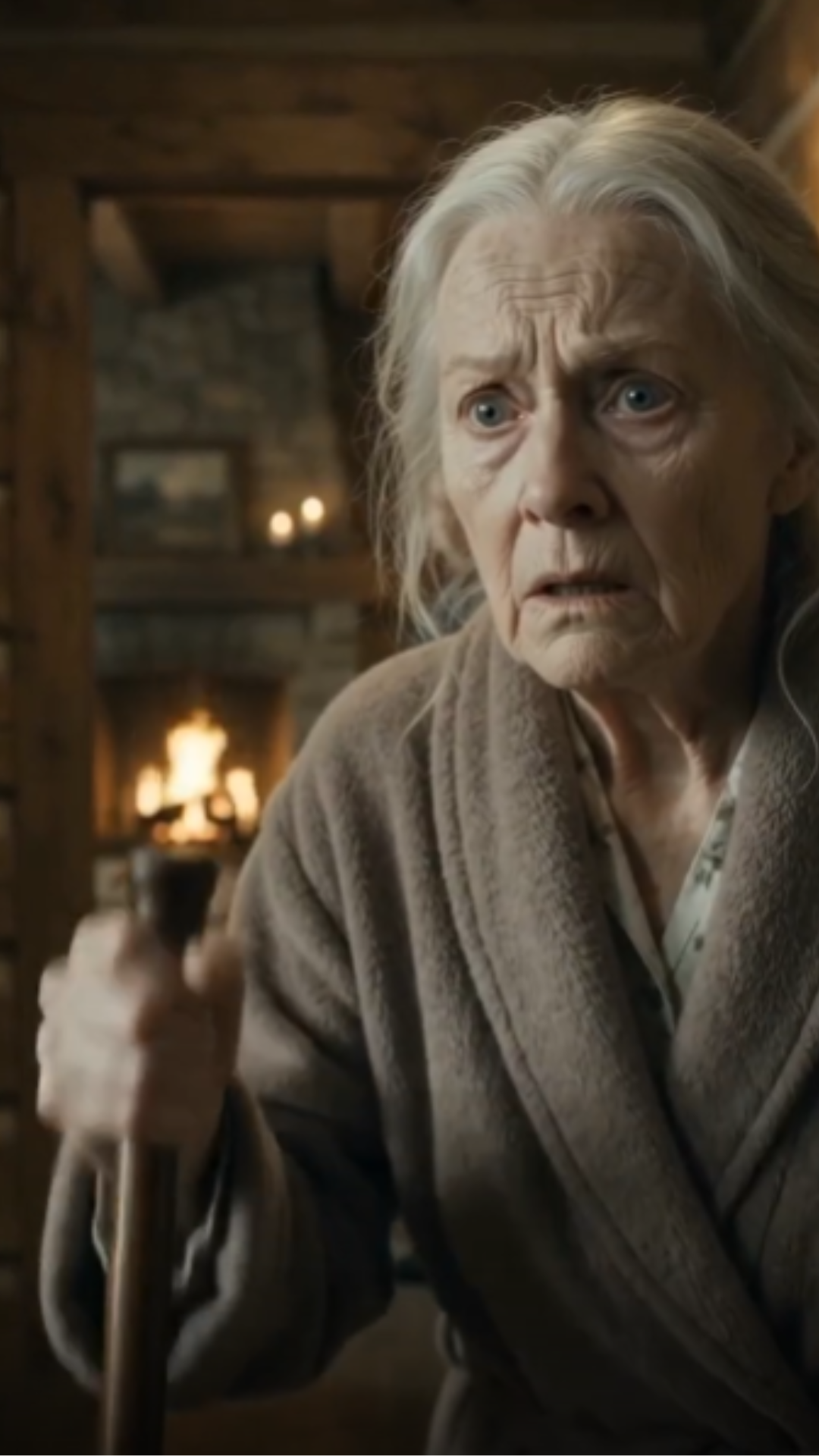
My son Aaron stood in the doorway of my own home, holding my suitcase, three days after I was discharged from open-heart surgery.
Behind him, my late husband’s sister, Aunt Miriam, was already placing cult incense burners on my bedside table.
I gripped my walking cane, looked my son straight in the eye, and said, “Then both of you have ten minutes to find a new place to pray.”
The last three days had been a blur of release papers, careful driving, and the quiet, almost painful, relief of the familiar Blue Ridge Mountains drawing closer with every mile. The drive from Charlottesville felt longer than it ever had, each bump in the road a jarring reminder of the fresh incision across my chest. All I craved was the soft familiarity of my own bed, the scent of lavender and old paperbacks that clung to my master bedroom.
My 140-acre timber estate, with its sprawling 1890 farmhouse, had always been my sanctuary. My late husband, Robert, and I had raised Aaron within its sturdy timber walls, a place where the scent of pine and woodsmoke was as comforting as a mother’s lullaby. Now, returning after emergency heart valve replacement surgery, I pictured myself sinking into that haven, letting the quiet mountain air heal what the surgeons had cut.
Aaron had met me at the front door, offering a perfunctory hug that felt more like a duty than an embrace. His eyes, usually soft and gentle, held a strange, almost distant glaze.
He picked up my single suitcase, the one I had packed for the hospital, and gestured vaguely down the hall.
“Just leave it, Aaron,” I said, my voice hoarse from disuse and exhaustion. “I’ll take it to my room.”
I clutched my cane, the familiar weight a comfort against the lingering weakness in my legs. Each step was a conscious effort, a careful calibration to avoid aggravating the tender stitches beneath my breastbone. The hallway, usually so clear, was now cluttered with an assortment of cardboard moving boxes, their flaps haphazardly taped down. My name, Evelyn Hensley, was scrawled on a few in black marker.
A knot tightened in my stomach. Why were my boxes out here?
A faint, cloying scent, sweet and unfamiliar, drifted from the direction of my bedroom. It wasn’t the usual apple blossom or woodsmoke. It was heavy, musky, like stale incense.
I pushed past Aaron, my cane tapping a rhythmic, urgent beat on the old pine floorboards. My eyes immediately went to the open door of my master bedroom.
A gasp caught in my throat, not from the exertion, but from the sudden, sharp shock.
My room was unrecognizable.
Where my antique four-poster bed had stood, a low, intricately carved wooden altar now dominated the space. Its surface was crowded with dozens of flickering beeswax candles and small, dark clay censers from which thick plumes of the unfamiliar incense rose, swirling towards the ceiling like a silent prayer. Tapestries, depicting stylized trees and abstract symbols I didn’t recognize, draped over what used to be my walls.
Cousin Cassie Hensley, my late husband’s niece, sat cross-legged on a velvet cushion on the floor, her eyes closed in a meditative trance. Her usually bright, irreverent clothing was replaced by a flowing, rough-spun tunic of undyed wool. She swayed gently, her lips moving in a low, unintelligible chant.
My meticulously organized bookshelves were gone, replaced by narrow, unadorned wooden shelves holding rows of identical, leather-bound books. Every trace of my life, my memories, my personality, had been systematically erased.
My pulse quickened, a dangerous thrum against my raw chest. I fought to control my breathing, reminding myself of the surgeon’s warnings about undue stress.
Aaron stepped into the doorway behind me, his voice flat, devoid of emotion.
“Cassie needs this bedroom for her spiritual purification retreats. Your medical recovery bed is set up in the hallway.”
He gestured to a narrow cot folded against the far wall of the main corridor, tucked in a shadowy alcove next to the coat rack. A thin blanket was draped over it, promising no comfort, no warmth. The hallway was known to be the coldest spot in the house, particularly when the winter wind whipped through the mountains.
My Aunt Miriam, Robert’s older sister and a senior deaconess in “The Order of the Living Covenant,” emerged from behind the altar in my former bedroom. She moved with a stiff, almost ceremonial grace, her face composed in a placid, unreadable mask. She carried a small, smoking censer, its tendrils of smoke curling around her.
She looked at me, her eyes devoid of any familial recognition or sympathy, as if I were a stranger who had stumbled into a sacred space.
“Sister Evelyn,” she intoned, her voice surprisingly strong. “It is a blessing that the Covenant has found you a place to recuperate, even in your spiritual distress.”
My hand instinctively tightened around the silver grip of my walking cane. The exhaustion that had been weighing me down was suddenly replaced by a surge of pure, cold fury. My son, my own flesh and blood, stood by and watched this desecration.
I looked at Aaron, his face carefully blank.
Then I shifted my gaze to Miriam, whose lips were now pursed in what looked like a self-satisfied smile. Cassie continued her low chanting, oblivious.
“My spiritual distress?” I managed, my voice trembling not from weakness, but from the effort of holding back a scream. “This is my home. This is *my* room.”
Miriam took another step forward, closing the distance between us. The air around her smelled overpoweringly of the strange incense.
“The Covenant has made a decision, Evelyn. It is for your own good. We have reallocated resources to ensure proper spiritual alignment for all members.”
Aaron finally spoke again, his voice softer, but no less chilling. “Mother, Aunt Miriam is right. Your resistance is a sign of cardiac delirium. You need rest. The cot is prepared.”
His words hit me harder than any physical blow. Cardiac delirium. He was dismissing my entire reality, pathologizing my anger, reducing me to a patient too sick to know her own mind.
I pushed myself taller, despite the protest of my stitches. My eyes narrowed on Aaron, then on Miriam. My vision swam for a second, but I fought through it. I wasn’t just tired; I was fighting for my life, for my sanity, for my home.
“Then both of you have ten minutes to find a new place to pray,” I repeated, my voice now low and steady, laced with an iron will I hadn’t known I still possessed. “And Cassie can take her spiritual purification and her incense burners with her.”
A faint, almost imperceptible tremor ran through Miriam’s composure. The corners of her mouth tightened.
Then, with a deliberate, almost theatrical movement, she reached into the deep pocket of her rough-spun tunic. She pulled out a crisp, folded piece of paper, thick and official-looking.
It bore a prominent red stamp and a formal seal.
Miriam’s eyes met mine, a triumphant gleam flickering deep within their usually placid depths.
“I’m afraid, Sister Evelyn,” she said, her voice dripping with false sympathy, “this isn’t your home anymore.”
Part 2
Miriam unfurled the thick, official-looking document with a snap. She held it out, not to my son Aaron, but directly to me.
My hand trembled as I took it, the paper feeling oddly heavy, substantial. My eyes, still trying to focus through the lingering fatigue, locked onto the bold lettering at the top.
“QUITCLAIM DEED.”
Below it, in a block of legalese, it stated the grantor as Evelyn Hensley. The grantee was clearly “The Order of the Living Covenant.” My $1.2 million home. All 140 acres.
My gaze dropped to the bottom of the page. A signature I didn’t recognize, looping and exaggerated, was scrawled over my printed name. Beneath it, a prominent red notary seal bore the name Lyle Pemberton, appraiser and notary public.
Then, the date.
My breath caught in my throat. Four days ago. This past Tuesday.
That was the exact morning I was in intensive care, 80 miles away in Charlottesville, my chest cut open, my heart exposed, under heavy anesthesia. My mind reeled. How could I have signed this? I was unconscious.
It was a forgery.
Aaron stepped forward, his voice softer now, almost coaxing. He gently placed a hand on my shoulder, but the gesture felt hollow.
“Mother,” he said. “Please. This resistance, this anger. It’s the cardiac delirium acting up. You need to calm yourself.”
He squeezed my shoulder, a subtle pressure.
“You should accept your humbled status in the community. It’s for the best. The Covenant will care for you.”
I looked from the crumpled deed in my hand to Aaron’s impassive face. Delirium? No. This was not a delusion. He stood there, knowing. He had allowed this to happen.
A cold, hard resolve settled deep in my chest, a pain far sharper than any incision. They thought they had taken everything.
But I would find every single lever, every hidden weakness, every fracture in their scheme. And I would pull them all down.
More Stories



+ There are no comments
Add yours