
My Mother-in-Law's Nightly 'Herbal Tea' Hid a Dark, Ancient Ritual That Was Slowly Draining My Life


Part 1
🍵 **My Mother-in-Law’s Nightly ‘Herbal Tea’ Was Slowly Draining My Life — Then My Daughter Revealed the Chilling Truth.**
I merely accepted my mother-in-law’s offer of nightly herbal tea.
Ten years later, my own eight-year-old daughter revealed that white powder was being added to it.
It took months to unravel, but the truth was far stranger and far more terrifying than a simple poisoning plot.
It ultimately cost me everything I held dear.
For years, a creeping fatigue had been my constant companion. Doctors had shrugged, suggesting stress, low iron, or simply the demands of motherhood. My memory, once sharp, felt foggier by the day. It was just a part of getting older, I told myself, another consequence of life’s relentless pace.
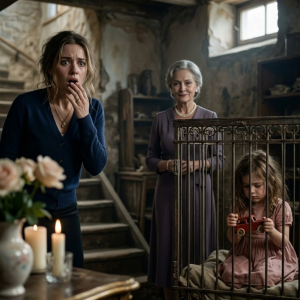
Then, one Tuesday evening, as I helped Maya, my eight-year-old daughter, with her homework at the kitchen counter, she looked up with wide, serious eyes.
“Mommy,” she whispered, her voice barely audible.
I leaned closer. “What is it, sweetie?”
“Grandma Evelyn puts white powder in your tea every night,” she said, her gaze fixed on her spelling book.
My breath hitched. “What did you say?”
She repeated it, a little louder this time. “Grandma. The white powder. In your special cup.”
My heart pounded in my chest, a frantic drum against my ribs. Had I heard her right? Evelyn, my charming, traditional mother-in-law, who insisted on preparing my “calming herbal blend” every night without fail?
“Maya, are you sure?” I asked, trying to keep my voice steady. “When does she do this?”
“When you’re in the shower. Or upstairs in your room,” she explained, looking up at me now, her innocence unwavering. “She thinks I’m not looking, but I see her. With the little spoon.”
A cold knot formed in my stomach. The fatigue, the fogginess – it all rushed back, suddenly taking on a sinister new meaning. I swallowed hard, forcing myself to seem calm for Maya’s sake.
“Thank you for telling me,” I managed, gently squeezing her hand.
That night, I didn’t drink the tea Evelyn brought to my bedroom. Instead, I poured a small sample into a sterile container I found in our first aid kit. As an ethnobotanist, even though I hadn’t actively practiced in years, I still had a few contacts from my university days. It took a week, a strained phone call, and a discreet cash payment to one former colleague to get the sample analyzed. I had expected to hear about sedatives, maybe some kind of slow-acting poison, or even immunosuppressants. Anything mundane, however horrifying.
But the lab results returned not with pharmaceuticals, but with a highly unusual report: a significant concentration of Lycopodine, an obscure plant alkaloid known in folklore for its “sleep-binding” properties.
Part 2
The word “sleep-binding” echoed in my mind. It sounded less like science and more like something out of a forgotten fable.
Disturbed, I knew I needed more than a chemical report. I had to see it for myself.
The next day, I installed a tiny hidden camera in the kitchen, carefully positioned to capture Evelyn’s nightly tea ritual without detection.
For three evenings, nothing happened. On the fourth, the footage showed Evelyn, not just adding powder, but moving with a deliberate, hushed intensity over my tea cup.
She chanted under her breath, a strange, guttural stream of words I couldn’t understand, her movements repetitive and precise.
After the ritual, her eyes darted around the kitchen.
She then slipped a crumpled piece of paper behind a loose tile next to the stove.
I retrieved the paper after she went to bed.
It was a receipt.
The receipt reads “Solstice Blends – Old Ways Apothecary.”
More Stories
















+ There are no comments
Add yours