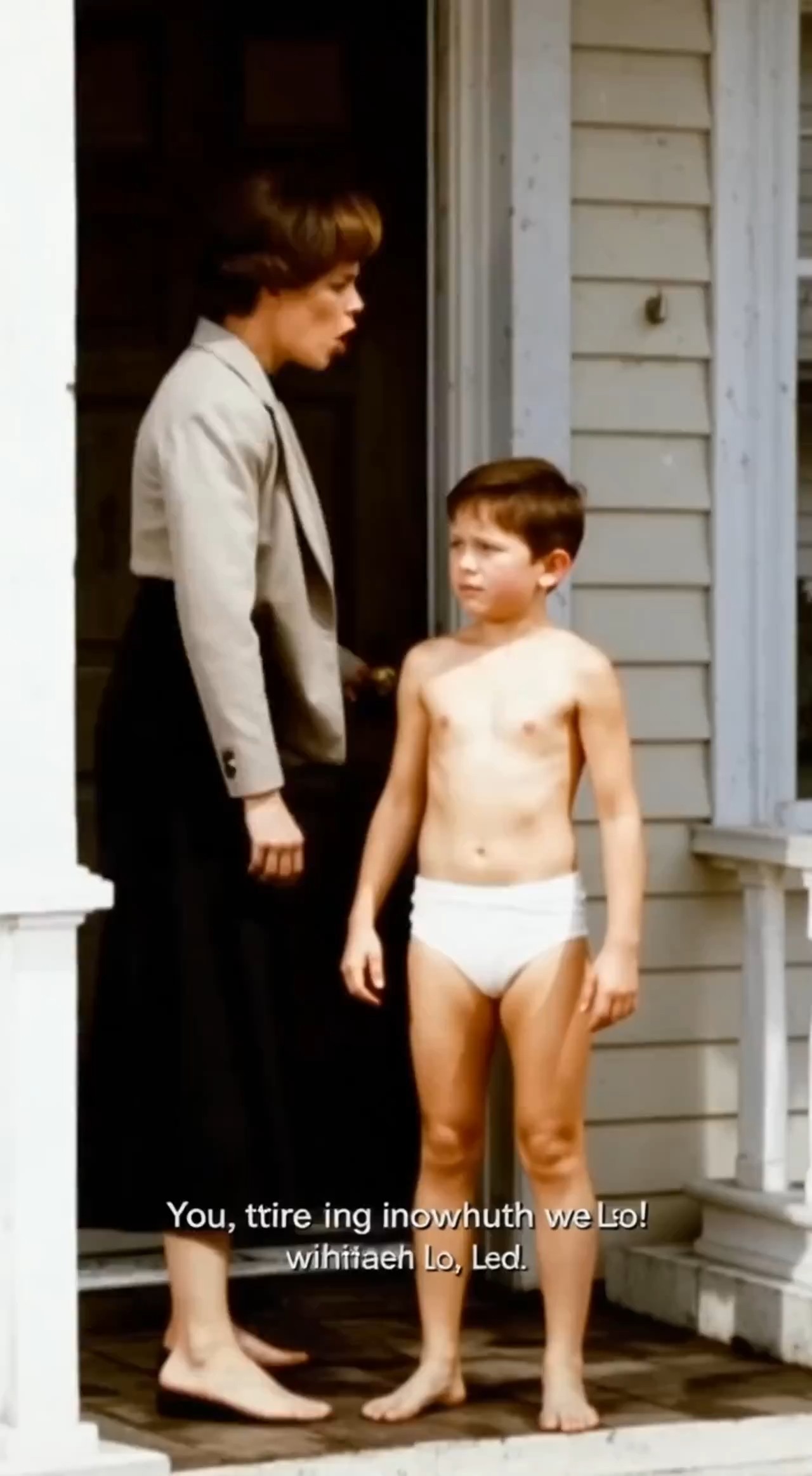
Seven-Year-Old Orphan Leo Garrison Exposed to Public Porch Humiliation by Stepmother Sarah Over His Late Father's $1.2 Million Estate Until Rural Grandmother Evelyn Fights to Heal His Shattered Youth


The letter stayed tucked in my desk drawer, revisited occasionally, its words becoming a balm rather than a trigger. Two more years passed. I was now growing into a thoughtful young adolescent, nearly twelve years old, finding my voice and my place in the world. The farm, Evelyn’s unwavering love, and the quiet rhythm of Vermont had given me the space to heal.
Sarah continued her counseling. Chloe, who had become a regular visitor to the farm, bringing updates and occasionally staying for a weekend, confirmed Sarah’s steady progress. She was working part-time, volunteering at a local animal shelter, and had built a quiet life for herself. The frantic, panicked woman was gone, replaced by someone calmer, humbler, and genuinely dedicated to her own well-being.
One afternoon, during one of Chloe’s visits, Evelyn approached me.
“Sarah would like to meet, Leo,” she said, her voice gentle. “Just for a short, quiet conversation. In a neutral place. No pressure, no expectations.”
I hesitated. The thought still brought a knot to my stomach. But it wasn’t fear anymore. It was more like stepping onto an unknown path.
“She understands if you say no,” Evelyn added. “This is entirely for you.”
I thought about the letter, about the years of quiet healing, about Chloe’s consistent reports. I wasn’t a frightened seven-year-old anymore. I was stronger. And a part of me, a deep, quiet part, wanted to close this chapter, not just with a letter, but with a final, real conversation.
“Okay,” I said, my voice surprising me with its steadiness. “I’ll meet her.”
The meeting took place a week later, at a small, unassuming coffee shop halfway between the farm and Sarah’s apartment. Evelyn and Chloe were present, sitting at a nearby table, giving us space but remaining within sight. Sarah was already there, sitting by a window, nursing a cup of tea. She looked thinner, her face lined with an unspoken history, but her eyes were clear, not darting with panic.
She stood when I approached, her hands clasped in front of her. “Leo,” she whispered, a slight tremor in her voice.
“Sarah,” I replied.
We sat down. The silence stretched, filled only by the quiet hum of the coffee shop, the clinking of mugs, the murmur of distant conversations. It was an ordinary setting for an extraordinary moment.
“Thank you for agreeing to meet me,” Sarah began, her gaze fixed on her teacup. “It means… it means a lot.”
She took a deep breath. “I wanted to tell you again, in person, how truly sorry I am. For everything. For the fear, the isolation, for making your childhood so difficult after your father died. There’s no excusing it, and I carry that regret every day.”
She looked up, her eyes meeting mine, vulnerable and earnest. “I know I hurt you terribly. And I hope, one day, you can truly move past it.”
I just nodded. I didn’t know what to say. The anger was gone, replaced by a quiet acceptance.
“I also wanted to assure you,” she continued, her voice gaining a little strength, “about the estate. The full $1.2 million. It’s completely secure, held in trust as your father intended. Evelyn and the financial advisor have done an excellent job. It’s all for your education, your future. I have absolutely no claim to it, and I wouldn’t want to.”
She paused, then offered a faint, sad smile. “Your father loved you more than anything, Leo. He wanted you to have every opportunity. And I… I lost sight of that.”
The confirmation about the money, though I already knew it, felt important, a final practical detail tied off. It wasn’t just an apology; it was a testament to her healing, a reassurance that my father’s careful planning had survived her breakdown.
“Thank you, Sarah,” I managed to say. “For everything.”
She nodded, tears welling in her eyes, but she didn’t let them fall. “You’ve grown into such a fine young man, Leo. Your father would be so proud.”
We sat for a few more minutes, the conversation petering out, but the air was lighter. When it was time to go, she simply stood, offering a small, respectful nod. There was no hug, no forced warmth, just a quiet acknowledgment of the shared past and the separate, hopeful futures. It was enough. More than enough. It allowed me to move forward, knowing the past was truly laid to rest.
More Stories
















+ There are no comments
Add yours