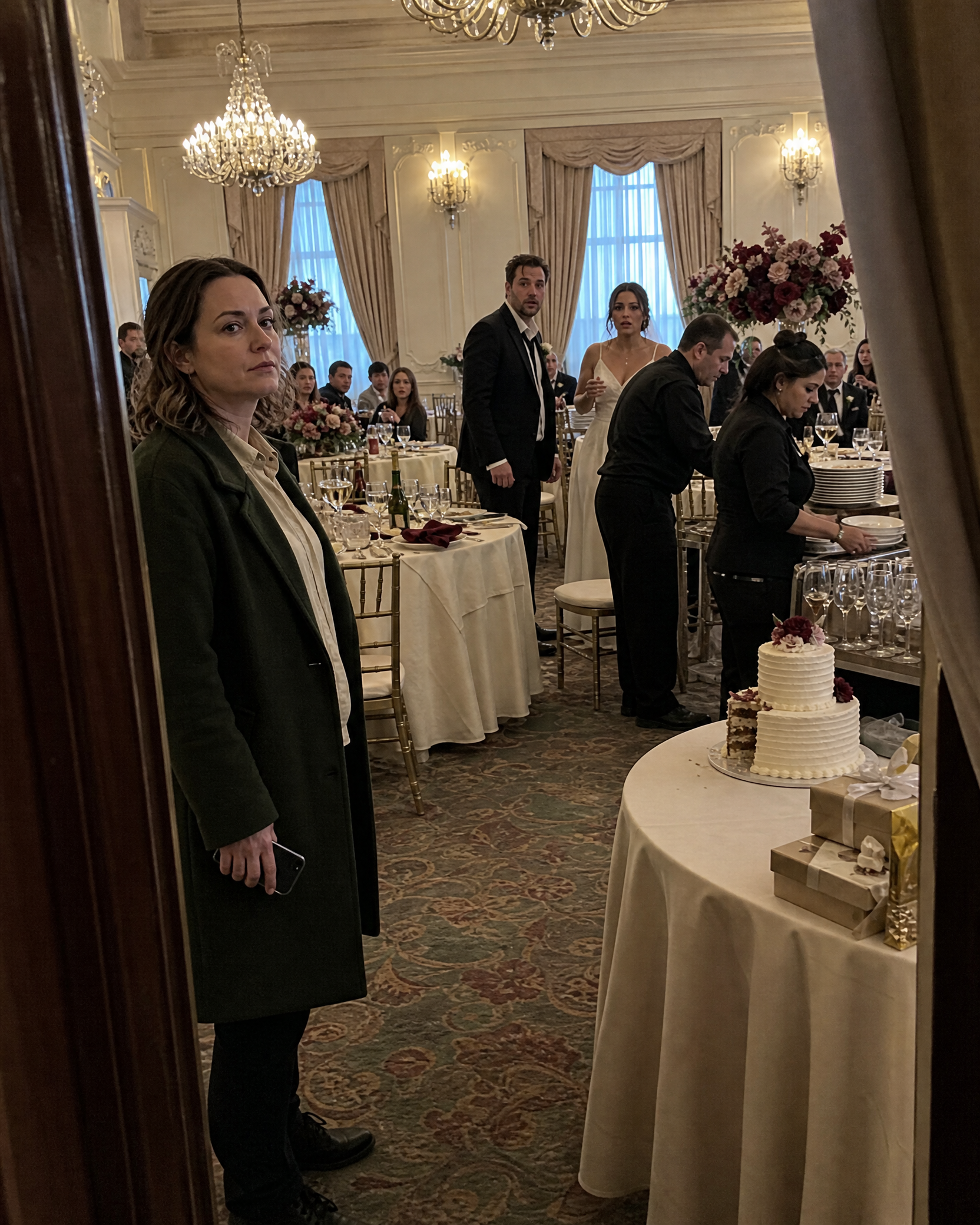
A Local Historian Discovers Her Ex-Boyfriend Paid for His Grand Wedding with Her Credit Card and Preservation Funds


Arthur, still reeling from Bethany’s testimony, offered a weak, mumbled protest about “forged documents.” He was trying to regain some footing, but his eyes darted nervously around the room, betraying his panic. His PR advisor looked increasingly uncomfortable.
I allowed his futile attempts to dissipate. “Thank you, Ms. Carter,” I said, my voice cutting through the lingering tension. “Your courage in stepping forward is truly appreciated.” Bethany offered a small, knowing nod before taking a seat in the back.
I then picked up a single, crisp printout from the table. “Mr. Finch,” I began, my voice clear and firm, “claims that any financial anomalies were due to my ‘confusion’ or ‘outdated methods.’ He suggested my credit card freeze was an attempt to cover my tracks regarding Historical Society funds.”
I held up the printout. “This, however, tells a very different story.”
I projected the image onto the screen: a detailed copy of my frozen credit card statement. My finger pointed to the specific entry. “$985.00. Dated three weeks prior to Mr. Finch’s wedding. Charged to ‘Vintage Cellar Imports.'”
A murmur of recognition rippled through the room. Several board members recalled Arthur’s extravagant pre-wedding boasts. The specific name, the specific amount, the specific date, all clicked into place.
Then, I clicked to the next slide. It was a photograph I had meticulously sourced from social media, a candid shot from one of Arthur’s lavish pre-wedding gatherings. In the photo, Arthur was beaming, surrounded by guests, holding aloft a distinctively shaped, dark-green bottle. The label, clearly visible even in the slightly blurry image, unmistakably read “1998 Louis Roederer Cristal Brut Millésimé.”
“This photograph,” I explained, my voice devoid of emotion, “shows Mr. Finch proudly displaying this very bottle of champagne at a pre-wedding celebration. A bottle, I might add, purchased with *my* credit card.”
The gasps were audible. A collective shock permeated the room. The board members exchanged wide-eyed glances, their faces reflecting disbelief and dawning outrage. The direct, undeniable link between my stolen personal finances and Arthur’s opulent, private celebration was now starkly, visibly clear. This wasn’t abstract financial maneuvering; this was blatant, personal theft, displayed for all to see.
Arthur’s face, already pale, turned a sickly shade of grey. His smugness had completely vanished, replaced by an expression of pure, unadulterated horror. His mouth opened and closed, but no sound came out. He looked like a cornered animal, exposed and desperate.
The petty cruelty was laid bare. Arthur’s vanity, his need to flaunt his wealth and status, was now his undoing. He had used my stolen money not just for a necessity, but for a symbol of his pretense, for a boastful display that now served as irrefutable evidence against him. He had proudly displayed the very instrument of his betrayal. The irony was devastating.
“So, Mr. Finch,” Mr. Davison interjected, his voice cold, hard, “you used Ms. Harding’s personal credit card, weeks before your wedding, to purchase a nearly one-thousand-dollar bottle of champagne for your celebration? While simultaneously attempting to frame her for financial mismanagement of the Historical Society?”
Arthur mumbled something unintelligible, running a hand through his perfectly coiffed hair. He tried to speak, but his words caught in his throat. He looked utterly defeated, his carefully constructed façade crumbling around him.
“This is not a case of an ‘elderly volunteer’ being ‘confused’ about finances, Mr. Finch,” Mrs. Sterling stated, her voice sharp with indignation. “This is a deliberate, premeditated act of fraud.”
The board members were now openly speaking, their whispers turning into angry accusations. The atmosphere had completely shifted. Arthur’s control, his narrative, his carefully crafted persona, had all dissolved under the weight of a single champagne receipt and a photograph.
I felt a grim satisfaction. This was the moment of direct, personal consequence for his brazen arrogance. He had underestimated me, dismissed me, and now his own hubris was devouring him whole. The champagne, meant to symbolize his triumph, had become the bitter taste of his downfall. He had no defense, no plausible explanation for such a specific, lavish purchase on my card for his wedding.
This single piece of physical evidence was far more powerful than any complex financial report. It was simple, undeniable, and utterly devastating to his credibility. Arthur Finch, the charming real estate developer, was exposed as a common thief and a cruel manipulator. And I still had one more punch to land.
More Stories

















+ There are no comments
Add yours