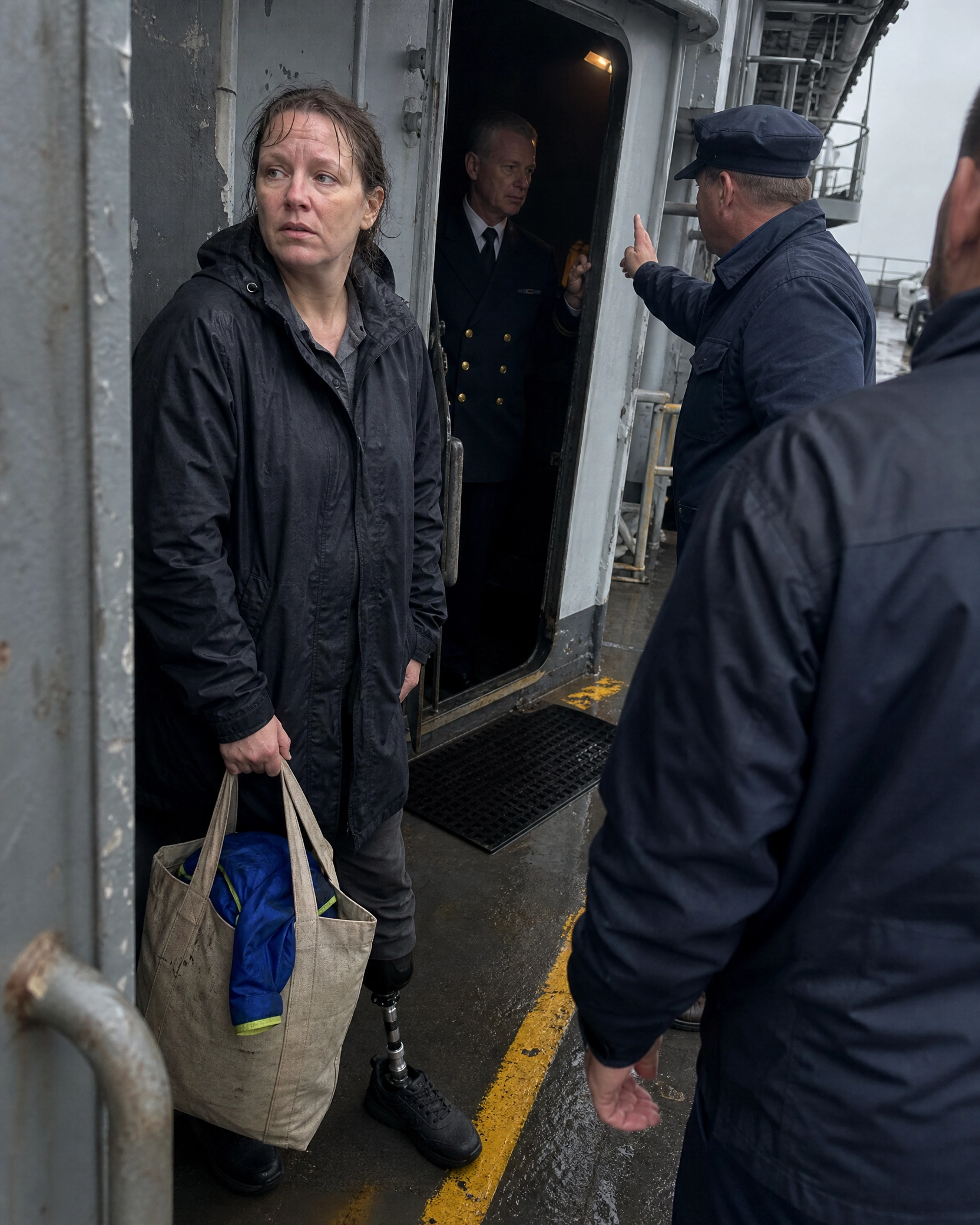
Her Esteemed Father Publicly Disinherited Her at His Own Gala, Calling Her an "Intruder" — But His Business Partner Was the Real Threat


Nine days had passed since the upheaval at the Beaumont Estate. The small, functional office of my veteran’s community center had become my sanctuary, a place of purpose amidst the ongoing turmoil. I sat at my desk, my prosthetic leg propped comfortably, reviewing proposals for a new outreach program, the familiar rhythm of work a grounding force. News of Cynthia Albright’s arrest and the ensuing corporate scandal had rocked the maritime industry, but here, in this quiet space, the focus remained on the veterans we served.
My phone rang, pulling me from a budget spreadsheet. It was my father. His voice, when I answered, was quieter than I had ever heard it, laced with a genuine remorse that softened his usually authoritative tone.
“Eleanor,” he began, a tremor in his voice.
“I hope I’m not interrupting.”
“No, Father,” I replied, the title feeling more natural than it had in years.
“I was just working.”
“I’ve been working too,” he said, a faint, weary laugh.
“Untangling Cynthia’s mess is a monumental task. But it’s almost done.”
He cleared his throat.
“I wanted to let you know, officially, that the Beaumont Foundation is prepared to offer a full, immediate endowment for Veterans’ Anchor.”
My breath caught. It wasn’t just a donation; it was a vast sum, enough to secure the non-profit’s future for years, to expand programs, to truly make a difference. It was a gesture of immense financial support, far beyond what I had ever dreamed. But it wasn’t just about the money; it was a concrete acknowledgment of my work, a validation of the very endeavor he had scorned.
“It’s not a payout, Eleanor,” he added, his voice regaining a touch of its familiar gravitas, but now infused with a profound humility.
“It’s a genuine gesture of reconciliation. A way for me to support your purpose, to contribute to the legacy you are building.”
“Thank you, Father,” I said, my voice thick with emotion.
“That means more than you know.”
“There’s something else,” he continued, his voice dropping, almost hesitant.
“I was hoping… if you might consider having dinner with me, just us. No lawyers, no business. Just to talk.”
A wave of warmth spread through me, gentle and unexpected. It wasn’t just about the money, or even the apology. It was the simple, vulnerable invitation for connection. This was the true act of mending, not through grand gestures, but through quiet, personal reach.
“I accept the funding, Father,” I told him, a quiet strength in my voice.
“But I want to earn my place as your daughter through shared purpose, not just your generosity. And yes, I would like to have dinner.”
Later that afternoon, after a productive meeting with my board, I met Marcus at a small cafe down the street. The air was crisp, the city sounds a familiar hum around us. We sipped our coffees, discussing the growth potential for Veterans’ Anchor, now bolstered by the endowment. We talked about new programs, new possibilities, the future stretching out before us, filled with quiet, shared ambition.
Marcus listened, his empathetic gaze steady, offering insights and encouragement. The easy rhythm of our conversation, the comfortable companionship we had found amidst the chaos, was a quiet testament to a different kind of connection forming. We spoke of tentative steps toward a future they might build together, one based on mutual respect and shared values, not on obligation or manipulation. True legacy wasn’t built on rigid tradition or pristine reputation, but on the courage to mend what was broken, even within your own heart.
More Stories
















+ There are no comments
Add yours