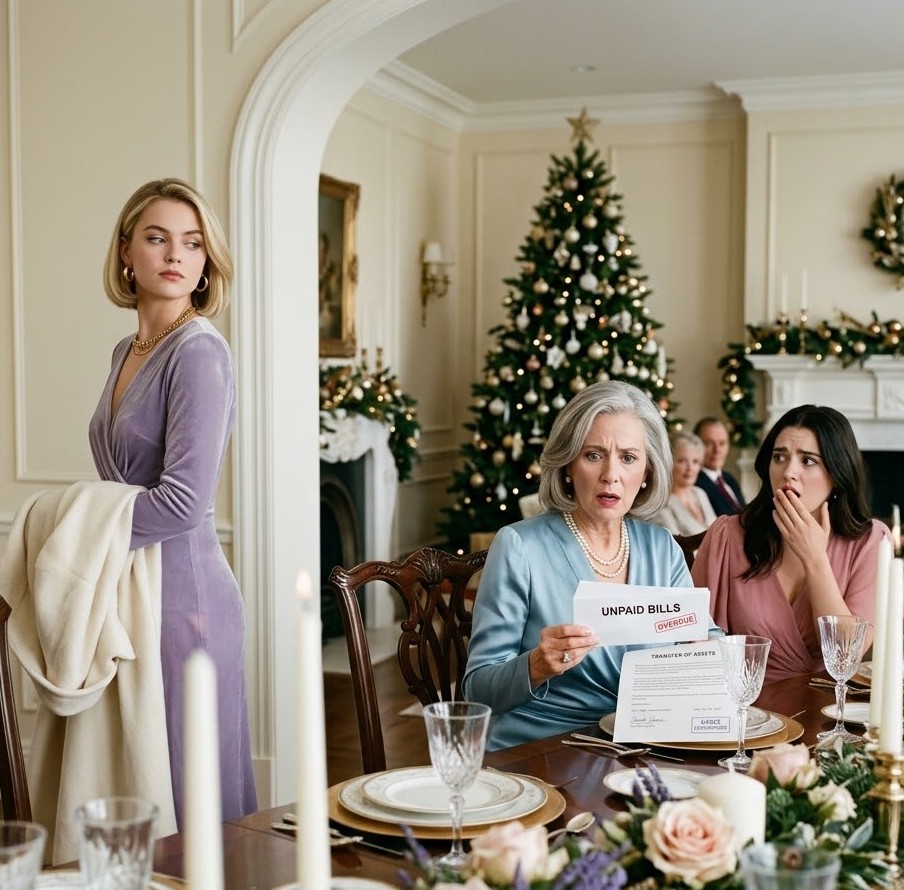
At Our Family Firm's Gala, My Mother And Sister Mocked Me, Then Found Themselves Staring At My Final Payment For Their Secrets
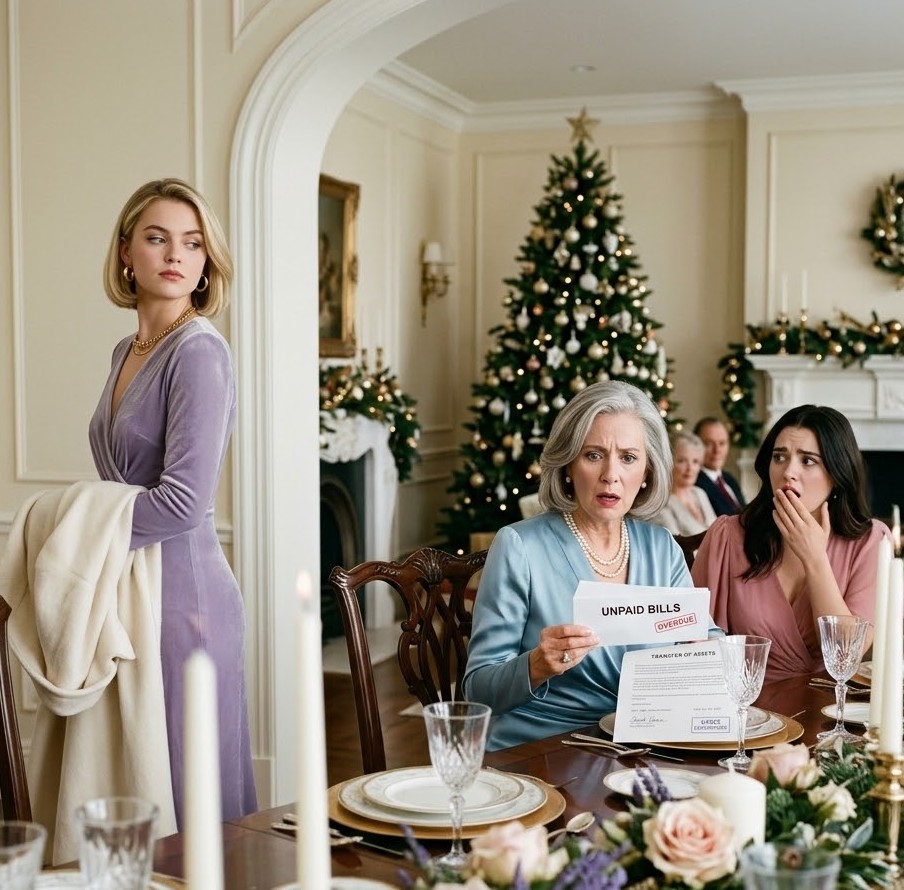


The day after the hearing was strangely quiet. The phone, which I expected to ring off the hook, remained mostly silent, a testament to the shockwaves that had rippled through the architectural community. The Guild’s abrupt adjournment and the Notary Board’s intervention were undoubtedly the talk of the town, but no one seemed to know quite what to say to me directly.
I spent the day trying to process the emotional fallout, the lingering image of Eleanor’s furious, tear-streaked face burned into my memory. Her hatred, raw and undisguised, felt like a fresh wound.
Late that afternoon, an email arrived. It was from Eleanor’s attorney, the same unctuous man who had represented her at the hearing. The subject line was chillingly terse: “Regarding Caldwell Legacy Trust.”
I opened it, my stomach clenching. The email was brief, formal, and devoid of any emotional appeal. It stated Eleanor’s unequivocal intent to fight the trust’s provisions in court. Her attorney cited various technicalities and challenged the validity of Arthur’s mental capacity at the time the trust was drafted. This was a clear signal: Eleanor would not yield. She would not apologize. She would drag this out, prolonging the pain, simply to avoid admitting her wrongdoing and to avoid the personal humiliation of a formal apology to me. This was the ultimate petty cruelty, an extension of her vindictiveness through legal channels.
I forwarded the email to Ms. Davies with a heavy sigh. The legal battle, it seemed, had only just begun. The resolution I craved, a clean break from their manipulation, remained elusive.
An hour later, Marcus called. His voice was strained, heavy with weariness.
“Amelia,” he started, without preamble. “I just wanted to check in. How are you holding up?”
“As well as can be expected,” I admitted, gazing out my window at the darkening sky. “Eleanor’s attorney just sent me an email. She’s fighting the trust.”
“I figured she would,” Marcus said, a bitter note in his voice. “She’s always been incapable of admitting fault. It’s truly pathetic.”
He paused, and I could hear him sigh deeply. “I also wanted to… to express my regret for Bethany’s actions. I know it’s not enough, but I am truly sorry for the part she played in all of this.”
His apology, however sincere, brought little comfort. Bethany’s complicity had been a betrayal, not just of me, but of the firm, and of Marcus himself.
“How is Bethany handling everything?” I asked, hesitantly. I truly had no idea what her reaction would be, having seen her storm out of the hearing in silent shock.
Marcus’s laugh was humorless. “She’s… shut down. Completely. She’s in denial, still blaming you for everything. She refuses to discuss any of it. Says it’s all ‘a misunderstanding caused by your selfishness.'”
His words confirmed my deepest fears. Bethany, instead of facing the consequences of her choices, had retreated further into the comfort of blame and delusion. There was no remorse, no understanding of the damage she had inflicted. This profound lack of accountability was a specific, personal wound, confirming that their behavior was not a mistake, but ingrained character.
“She hasn’t spoken to me about any of it,” Marcus continued, his voice growing distant. “She’s packing a bag. Says she needs to ‘clear her head’ at her friend’s lake house. But I think she’s just running.”
He paused for a long moment, and when he spoke again, his voice was laced with a new, profound sadness. “Amelia, I’m… I’m considering my own options. For Caleb’s sake. And for mine.”
My heart went out to him. “Your options?”
“Yes,” he said, his voice quiet but firm. “I can’t live like this, Amelia. I can’t be married to someone who actively participates in fraud and then refuses to acknowledge it. I’m thinking about… about a separation. For now, at least.”
The revelation was shocking, yet not entirely surprising. The weight of Bethany’s complicity, coupled with her unwavering denial, had finally broken Marcus’s resolve. He had chosen integrity over a marriage built on lies. His decision, born of painful necessity, brought a new layer of sadness to the already complex aftermath.
“I’m sorry, Marcus,” I said, genuinely.
“Don’t be,” he replied. “It’s not your fault. This is her choice. Their choice.”
We ended the call, the silence that followed even heavier than before. The immediate crisis of the hearing might be over, but the fallout was just beginning. Legal battles, marital strife, and the enduring poison of family resentment would continue to cast long shadows. The wounds, I realized, were far from healed.
More Stories














+ There are no comments
Add yours