
The Unseen Strings of Willow Creek: How a Juice Spill Exposed a Mother-in-Law's Secret Legacy


The following week, the quiet hum of Willow Creek was occasionally punctuated by the distinct whir of a drone, a new sound in our sleepy town. It belonged to Sarah Chen, a tenacious reporter for the *Willow Creek Gazette*. I’d seen her around, always with a camera or a notepad, often with a curious glint in her eye. She was known for her deep dives into local history, and apparently, her current project was about Willow Creek’s founding families.
I heard about her from Sam. He was working on Mayor Thompson’s old pickup truck at his garage.
“You won’t believe who’s stirring things up now, Dave,” Sam had said, wiping grease from his hands with a rag. “That reporter, Sarah Chen. She’s been down at the town hall archives for days, digging through old deeds and land records.”
“Oh yeah?” I replied, trying to sound nonchalant. “What’s she looking for?”
“Something about the Beaumont family, actually,” Sam said, casting a glance my way. “She was asking about Evelyn’s father-in-law, your late father-in-law. Apparently, she found some really old land deed that she thinks is ‘unusual.’”
My stomach clenched. *Unusual land deed. Beaumont family.* It felt too coincidental after what I’d found in Sarah’s journal.
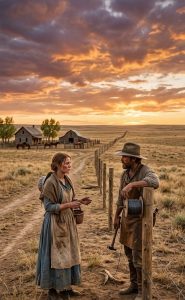
Sarah, meanwhile, was indeed buried in the dusty, cramped archives of the Willow Creek Town Hall. The air hung thick with the scent of aging paper and forgotten stories. Her initial goal had been to find an interesting angle on the Beaumonts, one of Willow Creek’s oldest and most influential families, for her historical series. She envisioned a charming piece about their pioneering spirit and community contributions.
But as she meticulously sifted through ledger after ledger, her eyes, trained to spot discrepancies, snagged on a document from the 1960s. It was a land deed for a substantial tract on the outskirts of town, currently part of what everyone understood to be the Beaumont estate. What made it unusual was the convoluted language, the almost deliberately obscure phrasing of a co-ownership clause.
The deed listed David’s late father-in-law, Evelyn’s husband, as a co-owner, but not with Evelyn, nor with any other direct Beaumont relation. Instead, it cited a completely unfamiliar name: the “Oakhart family.” The Oakharts weren’t a founding family, not in any records Sarah had seen. They were practically unknown in Willow Creek’s modern history.
Her brow furrowed. Why would a prominent Beaumont share ownership with an unrelated, obscure family? And why had this never come up in any public records or property transfers she’d seen since? Evelyn had always presented herself as the sole, unchallenged inheritor of all Beaumont lands and wealth.
Sarah pulled out her notebook, scribbling notes. The deed hinted at a suppressed financial agreement, a complex arrangement for shared proceeds or a delayed transfer of ownership, one that seemed to have been deliberately obscured or quietly dissolved. It raised more questions than answers. It suggested a hidden, perhaps even contested, legacy.
She was skeptical, of course. Old legal documents could be notoriously confusing. But her journalistic intuition, a persistent itch she’d learned to trust, told her there was more to this. It felt like a loose thread in a tapestry everyone assumed was perfectly woven.
“This is strange,” she muttered to herself, pushing her glasses up her nose. “Very strange. Why keep this quiet?”
The thought sparked a new line of inquiry. What if the Beaumont family’s history wasn’t as straightforward as Evelyn presented it? What if her public narrative of unassailable wealth and sole inheritance was incomplete, or worse, deliberately misleading?
Meanwhile, Sam, ever the town gossip conduit, had seen my reaction.
“You know, Dave,” he’d said, leaning back against a tire, “Sarah Chen isn’t the kind to let a puzzle go. If she thinks something’s off, she’ll dig until she finds it. Could be good for you, could be bad. Reporters are a mixed bag.”
I considered his words. A reporter, digging into Evelyn’s past, specifically something related to land and inheritance. It sounded almost too good to be true, a potential ally in a fight I hadn’t even fully defined yet. But the idea of involving a journalist, a stranger, in the delicate and intensely personal family drama that was rapidly engulfing Leo and me, sent a shiver down my spine.
What if she uncovered something that backfired? What if Evelyn, with her vast influence, twisted the narrative against me even further? The Mayor’s zoning review was still hanging over my head, a constant reminder of her reach.
Still, the image of Leo’s frightened face during his nightmares, and the chilling words from Sarah’s journal, spurred me on. I needed answers. And if a reporter’s curiosity was a path to those answers, however risky, I couldn’t ignore it. I just had to be careful.
That night, I opened Sarah’s journal again, rereading the fragmented lines about the “arrangement” and Evelyn’s fear of “losing everything.” The thought of Evelyn’s father-in-law, a man known for his quiet generosity, having such a complicated, hidden land deal, felt like another piece of the puzzle. It certainly didn’t fit with Evelyn’s narrative of the Beaumont family being above reproach, a bastion of clear-cut, unchallenged legacy. Sarah Chen’s inquiries might be dangerous, but they also felt like destiny, a chance to finally understand the unseen strings Evelyn had been pulling for so long.
I knew I needed to talk to Sarah, but I just wasn’t sure how to approach her without looking desperate or, worse, like I was trying to manipulate her own investigation. The thought of Evelyn’s reaction if she found out I was actively working with a reporter was enough to make me pause. But I couldn’t stop thinking about what that old deed might truly mean.
More Stories













+ There are no comments
Add yours