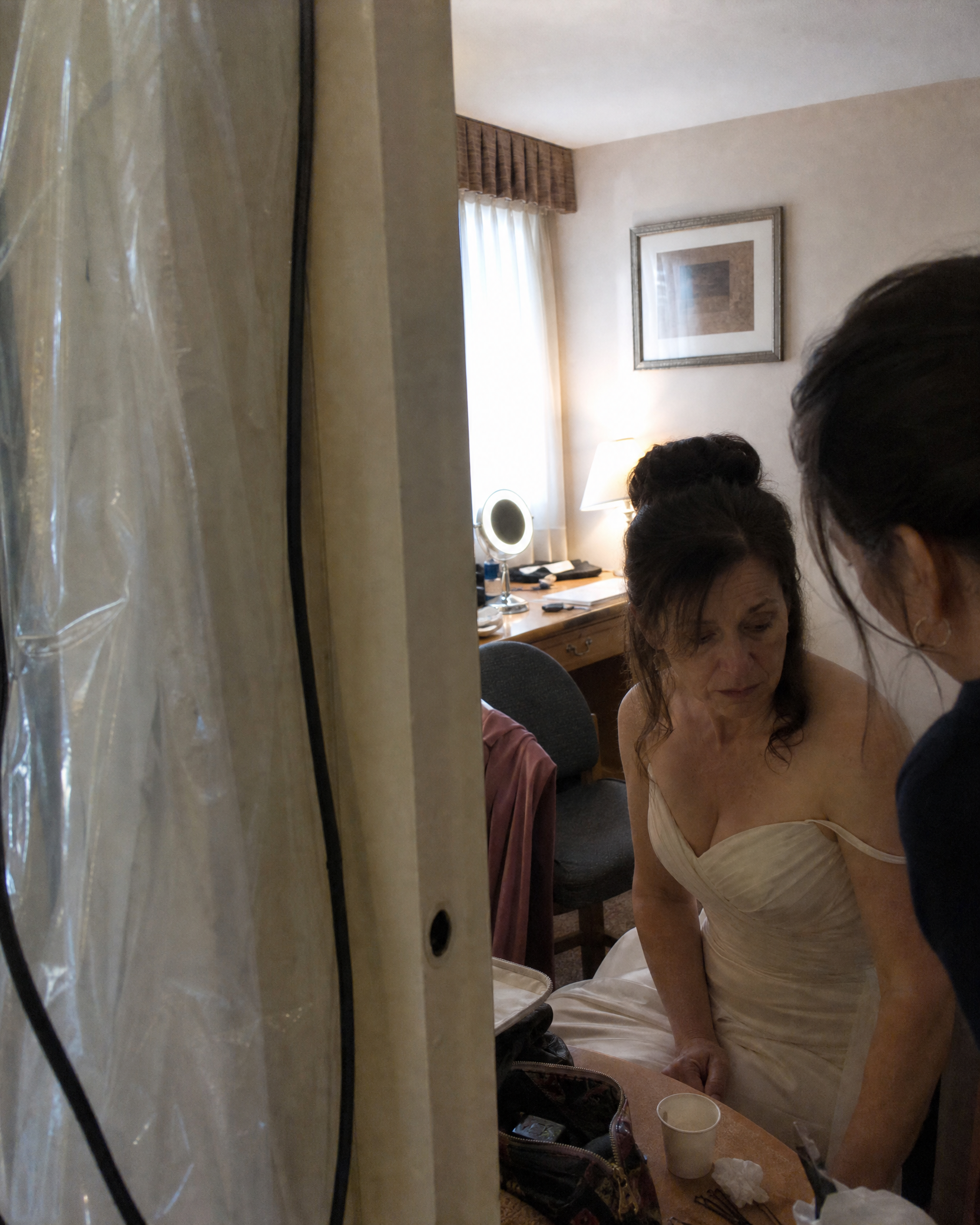
On her wedding day, a bride’s best friend refuses to wear the dress, revealing a chilling secret about the fiancé’s debt and the house deed.


Despite Thomas’s convincing explanation and the warmth of his embrace, that tiny, insistent whisper of doubt refused to be silenced. It clung to the edges of my thoughts, a discordant note that jarred against the harmony of my desire to believe him. I watched him more closely in the days leading up to the postponed wedding, a habit I hadn’t realized I’d developed.
I told Chloe that Thomas had a reasonable explanation, that it was a misunderstanding with an old business partner named Mark. Chloe just stared at me, her expression a mix of frustration and profound sadness. She said nothing more about it, but her usual easygoing banter was replaced by a quiet, watchful distance. The silence between us, the unspoken accusation in her eyes, was a constant, subtle sting.
Thomas, meanwhile, seemed to have bounced back completely. He was charming, attentive, eager to put the “unfortunate incident” behind us. He seemed to dismiss Chloe’s actions as an overzealous attempt to protect me, subtly implying she had misunderstood something very personal and private. It felt like a small, deliberate wedge driven between my closest friend and me.
I started to notice little things. His phone, which he usually left lying around, was suddenly always in his pocket, face down. When it rang, he’d quickly excuse himself, stepping into another room or out onto the small balcony, his voice hushed. I’d occasionally catch snippets of his conversations. Words like “timeline” and “final figures” would drift back, always followed by his quick, uneasy silence when he realized I was nearby.
One evening, as we sat discussing our revised wedding plans, he became uncharacteristically preoccupied with the guest list. He kept scanning the names, his brow furrowed, as if searching for something or someone specific.
“Are you sure all the RSVPs are in?” he asked, tapping a finger against the list. “We need to have a clear headcount for everything.”
His focus seemed less on celebrating with our loved ones and more on a precise calculation. I mentioned that a few of my distant relatives hadn’t confirmed yet, but he waved it off.
“No, no, that’s fine,” he said, too quickly. “I just want to make sure everyone important is there. The people who matter most.”
His eyes lingered on certain names, then flickered to the empty columns beside them. It was a small, unsettling detail, a subtle shift in his usual enthusiasm for our shared future. The way he casually dismissed the absence of my family members felt like another small dismissal of my own connections.
Later that week, while going over the updated registry, he suddenly became very interested in the value of the gifts.
“Are we expecting cash gifts from certain attendees?” he asked, almost offhand, as he scrolled through our online registry. “It’s standard practice, of course, but it helps with budgeting.”
He wasn’t usually so focused on the financial aspect of things, always preferring to talk about the sentimental value. His sudden, intense interest in the monetary contributions of our guests felt jarring, an out-of-place greed in what should have been a romantic conversation. It pricked at that tiny seed of doubt, making it swell a little larger.
Another evening, I was cleaning out a drawer in his desk, looking for some misplaced documents for our insurance. I came across a stack of old, crumpled envelopes. Tucked inside one, almost hidden, was a faded, typewritten letter. It was addressed to Thomas, from a company called “Sterling Ventures,” and dated almost five years ago. It mentioned a “repayment schedule” and threatened “further action” if a “delinquent balance” wasn’t addressed.
My heart gave a jolt. Thomas had always presented his past as having been neatly resolved. This letter suggested otherwise. I quickly folded it back up, placing it exactly as I’d found it, my fingers trembling slightly. It was a tangible crack in the facade he had built, a silent confirmation of something hidden.
That night, lying in bed beside Thomas, I found myself staring at the ceiling, unable to sleep. I tried to convince myself that the letter was old, irrelevant, just another piece of the “Mark” story. But the unease persisted, a cold, hard knot in my stomach. The way he’d dismissed Chloe, the hushed phone calls, the unusual focus on the wedding’s financial aspects – it all coalesced into a disturbing pattern.
I had always prided myself on my intuition, on my ability to read people, especially after two decades of navigating life as a single mother. Now, it felt like my senses were screaming at me, but I was stubbornly trying to cover my ears. I wanted so desperately for Thomas’s version of events to be true, for my hope for a stable, loving marriage to be realized.
But the silence from Chloe, who was usually so open with her thoughts, was deafening. Her unwillingness to engage, to argue, to even voice her concerns directly anymore, spoke volumes. It was a loyalty that hurt, because it meant she believed I was blind, or worse, unwilling to see.
The small, insidious ways Thomas had begun to subtly erode my trust in Chloe, my best friend, also felt like a deliberate strategy. He hadn’t directly insulted her, but his casual suggestions that she was “overreacting” or “misunderstanding” were a quiet form of poisoning. He was trying to isolate me, to make me question my own judgment and the judgment of the one person who truly had my back. This realization sent a chill down my spine.
I closed my eyes, a sense of foreboding settling over me. The wedding, once a symbol of new beginnings, now felt like a ticking clock, counting down to something I couldn’t quite name, but instinctively feared. The seeds of doubt had been planted, and they were beginning to sprout, thorny and unsettling.
More Stories














+ There are no comments
Add yours