
Harlem Maid's Grief Turns to Shock as Gangster's Baby Calls Her "Mama," Exposing a Sinister Truth in the Shadows of 1940s Organized Crime


The mansion felt colder, the air thicker with unspoken tension. I could feel the shift in the other staff. Their glances, once pitying, now held a mix of apprehension and something akin to fear. They avoided my eyes, their conversations hushed whenever I entered a room. I knew it wasn’t just Bernice’s observations anymore. Something new had begun to spread through the household, a chilling rumor.
Dr. Bellamy arrived for his regular check-up on Baby Isaiah, his presence always a stark reminder of the lie he had signed into existence. He carried his black leather bag with an air of professional gravitas, his spectacles perched on his nose, giving him an air of distinguished authority. He had a smooth, confident way about him, always impeccably dressed, his movements precise.
I watched him from the periphery, sweeping the grand staircase while he was in the nursery. He emerged, speaking in low tones to Mrs. Gable, the head housekeeper, who always hovered near the nursery during his visits. I couldn’t make out all the words, but snippets drifted down to me.
“…profound sorrow,” I heard him say, his voice pitched just low enough to require leaning in. “Such a tragic loss for poor Lena Mae.”
Mrs. Gable nodded, her face creased with concern. She was a stern woman, but her heart, I knew, was generally kind. This made the next part all the more insidious.
“Yes, Dr. Bellamy,” she murmured. “It breaks my heart to see her.”
He paused, then lowered his voice further, though I could still catch the words.
“We must be understanding, of course,” he continued, a subtle sigh escaping him. “But I’ve observed her myself. She seems… terribly fragile. Speaks often of visions, of her own child. Sometimes, grief can manifest in unsettling ways.”
My hand, holding the feather duster, froze. My breath caught in my throat. He was doing it. He was laying the groundwork, subtly poisoning the well. He wasn’t accusing me directly, but he was planting the seeds of doubt, weaving a narrative that I was unstable, hallucinating. It was a calculated, petty cruelty, undermining my very right to question.
Mrs. Gable’s eyes widened slightly. “Visions, doctor? You mean… she sees her child?”
Dr. Bellamy nodded gravely, adjusting his spectacles. “A mother’s heart, Mrs. Gable. It’s a powerful thing. But sometimes, in its brokenness, it can lead one astray. To imagine connections, to project onto others.”
He glanced in my direction, a quick, almost imperceptible flicker in his eyes. He knew I was there. He knew I could hear. It was a deliberate performance, designed to be overheard. He wanted me to know that he was aware of my suspicions, and that he was already working to discredit me.
The words hung in the air, cold and heavy. Dr. Bellamy, sensing Silas’s quiet inquiries about me, had chosen his weapon: my grief. He was using my sorrow, the very thing that drove me, to make me seem mad. It was a devastating blow, far more effective than any direct confrontation. If I was deemed “unstable,” who would believe me?
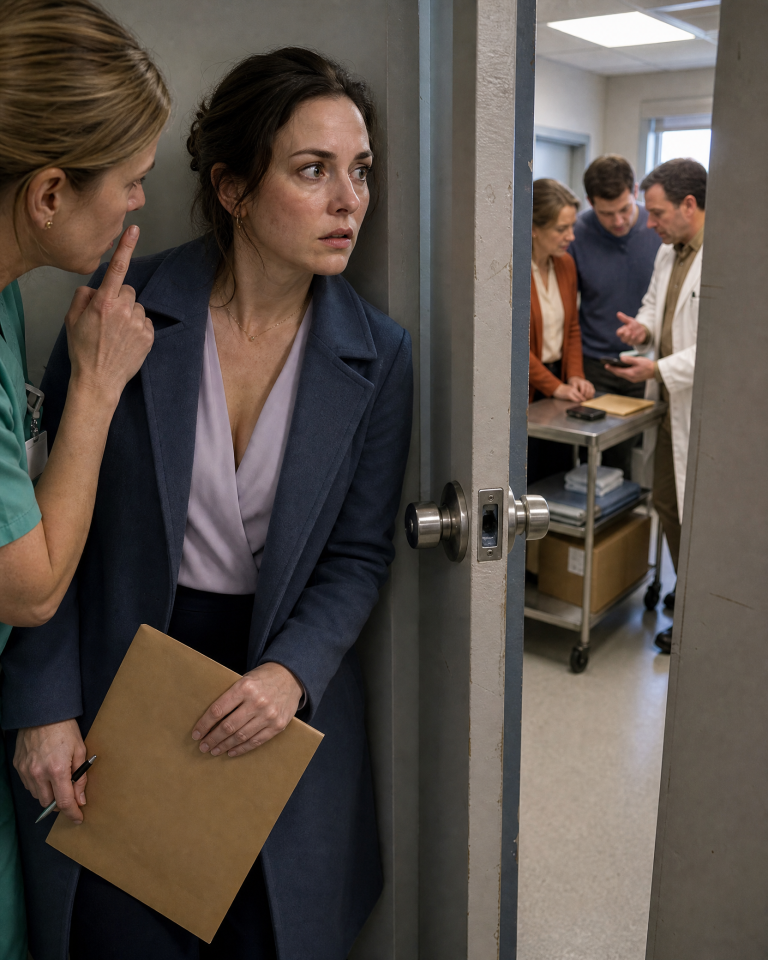
Later that day, as I carried laundry down to the basement, I overheard two of the younger maids whispering in the laundry room.
“Did you hear what Dr. Bellamy told Mrs. Gable?” one whispered, her eyes wide.
“About Lena Mae?” the other replied, her voice hushed. “That she’s seeing things? Imagining connections?”
“Poor thing,” the first maid said, shaking her head. “Losing her child must have broken her mind. It’s a sad, sad thing.”
They didn’t see me, hidden in the shadow of the linen closet. Their words, laced with pity and fear, were like daggers in my heart. The rumors were spreading like wildfire, fueled by the doctor’s insidious whispers. I wasn’t just grieving anymore; I was becoming “that unstable maid,” the one who saw ghosts.
My isolation deepened. Even the quiet nods of acknowledgment I used to receive from the kitchen staff vanished. Their faces now held a distant, worried look, their eyes avoiding mine. I was being turned into an outcast, my credibility systematically dismantled by the very man who held the key to my son’s true fate. It was a suffocating pressure, an attempt to silence me before I could even find my voice. The mansion, once a place of quiet work, had become a prison of whispers and wary glances, each one a reminder of my fragile standing.
More Stories








+ There are no comments
Add yours