
Nineteen-Year-Old Native Bride Winona Humiliated in $50,000 Frontier Saloon by Her Cruel Mother-in-Law Until a Decorating General Kneels to Reveal Her Secret Sacrifice That Saved an Entire U.S. Arm...


My timber fraud investigation had stalled. The ledgers were confusing, the local officials cagey. But Winona’s story, the injustice I’d witnessed, kept gnawing at me. I couldn’t shake it.
I decided to try the territorial land archives, a dusty, cavernous room behind the courthouse. Perhaps there, amidst property deeds and mining claims, I might find something related to Robert Kincaid’s estate that would shed light on Eleanor’s greedy machinations.
The air was thick with the smell of old paper and mildew. Rows of heavy, metal-bound ledgers lined the shelves, each one a testament to the slow, relentless grind of bureaucracy.
Hours passed in a haze of turning brittle pages, cross-referencing names, my fingers coated with fine brown dust. Robert Kincaid. Timber rights. Mining syndicates. Nothing helpful.
Then, tucked away in a mislabeled box marked “Expired Quartermaster Logs – 1887,” I found it. It wasn’t a land deed, nor a lumber invoice. It was a military file.
The cover was faded, the ink almost entirely gone. It felt out of place among the property records. My initial thought was that it was just another dead end.
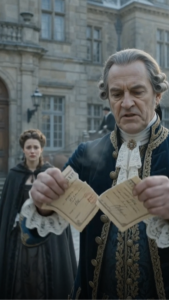
I blew dust off the brittle parchment within. It was an official dispatch letter, dated December 1888. The paper crackled in my hands.
My eyes scanned the elegant, looping script. The words “7th Cavalry” jumped out, then “General Marcus Bradley.” My heart gave a jolt.
It was a personal commendation. Addressed to the Department of War. It detailed the harrowing blizzard, the frozen troops, the desperate situation. And then, it named her.
“Winona of the Lakota tribe,” the letter read. “Acting as federal military guide. Displayed extraordinary bravery and unparalleled knowledge of the terrain, leading our detachment to safety and sustenance.”
My finger traced the words. “Her exceptional service, performed under direct federal commission, was instrumental in saving the lives of over two hundred men.”
Federal military guide. Commission. The words were a lightning bolt. This wasn’t just a brave act General Bradley was acknowledging out of respect. It was a formal, documented status.
The letter explicitly stated that her service rendered her “eligible for all federal protections and remunerations afforded to commissioned personnel.” It even mentioned a specific provision for land ownership.
It was signed, unmistakably, by General Marcus Bradley himself. My hands trembled as I carefully folded the dispatch.
This wasn’t just a personal story anymore. This was a legal document. A forgotten piece of history, buried in the wrong file, that could change everything.
More Stories











+ There are no comments
Add yours