
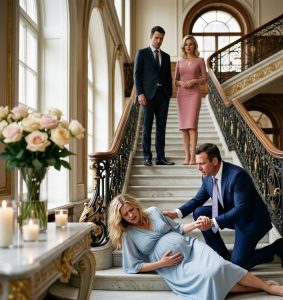
A pregnant woman's desperate plea to her father after her husband and mother-in-law deny her medical help, leading to a profound loss.


The discovery of Eleanor’s texts galvanized me. I spoke with my father again, his voice tight with controlled fury. “This is it, Anya. This is what we needed. Now, we move.”
We began to lay the groundwork, planning how to release the damning messages. The details were intricate, involving secure channels and careful timing, all to bypass the Caldwells’ pervasive local influence. I felt a surge of defiant hope for the first time in months. Justice felt within reach.
But the Caldwells, it seemed, anticipated my every move. They were always a step ahead, their intelligence network far more extensive than I initially realized. Just as we finalized our strategy, the first blow landed.
It started subtly. A local gossip column, usually filled with society events, ran a piece hinting at “tensions” within the Caldwell household. Then, a more prominent local news site picked up the story, citing “anonymous sources close to the family” who spoke of a “fragile young woman prone to emotional outbursts.”
My blood ran cold. This was it. The smear campaign.
The articles escalated quickly. They described my artistic background as “temperamental,” my quiet nature as “withdrawn,” my grief as “a cry for attention.” But the real gut-punch came a few days later.
A major local newspaper, one that usually treated the Caldwells with deference, published a front-page story. The headline blared: “Tragedy Strikes Caldwell Family: Mental Health Concerns Emerge.” The article featured carefully chosen quotes from unnamed “medical professionals” and “former associates” who painted a devastating portrait of me.
It claimed I had a history of “unstable emotional states,” “fabricated narratives,” and “delusional tendencies.” It even cited “therapy notes” and “family conflicts” from years prior, twisting innocent details into damning evidence of psychological instability. They had doctored medical records. They had fabricated therapy notes.
“Anya Petrova,” the article stated, “has a documented history of severe psychological issues, which may have contributed to the unfortunate events surrounding her pregnancy. Sources suggest a pattern of emotional exaggeration and a tendency to create dramatic scenarios for attention.”
I stared at the words, my hands shaking. They had gone for the jugular. They weren’t just discrediting me; they were pathologizing me, erasing my reality. The local community, which had initially offered a trickle of anonymous sympathy, now turned its back. Calls to my few remaining contacts in town went unanswered. My name became synonymous with “unstable.”
Even some of the house staff, who had shown me small kindnesses before, now looked at me with pity mixed with suspicion. They had been told a story, a manufactured narrative, and they believed it.
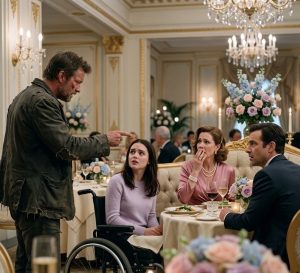
Marcus, during one of our staged dinners, watched me with a cruel satisfaction. “You see, Anya,” he said, his voice deceptively gentle, “the truth is often far more complicated than simple accusations. People believe what they want to believe, especially when presented with… evidence.”
He tapped a finger on the newspaper, which lay open on the dining table between us. Eleanor, at the head of the table, sipped her wine, her expression unreadable.
“Your father, with his network,” Marcus continued, “might be able to dig up some things. But what good is it, if everyone already believes you’re delusional?”
It was a brilliant, vicious tactic. By painting me as mentally unstable, they were undermining any future evidence I might produce. Who would believe the word of someone with a “documented history of fabricated claims”? Any text message, any testimony, could be dismissed as the rambling of a disturbed mind.
My father called, his voice strained. “Anya, this is worse than we anticipated. They’ve weaponized your medical history. My contacts are struggling to counter this without direct, undeniable proof of fabrication.”
He explained that without the original, untampered documents, it would be difficult to prove the ones they leaked were doctored. The Caldwells had covered their tracks meticulously, creating a parallel, false narrative so convincing that it overshadowed the truth.
The public smear campaign had taken a cruel, unexpected turn. It wasn’t just an attack on my character; it was an assault on my sanity, designed to isolate me completely and strip me of all credibility. I was not only a victim of physical abuse but also a target of psychological warfare, meticulously orchestrated to make me doubt myself and ensure no one would ever believe my story.
I felt a profound sense of helplessness. Every door I tried to open, they slammed shut. Every accusation I might make, they had already pre-emptively discredited. They had turned my own mind into a weapon against me, a silent prison of public perception.
But as I looked at Eleanor across the table, her face devoid of remorse, something hardened within me. They wanted me to break. They wanted me to believe their lies. But I knew the truth. And the truth, no matter how obscured, had a way of fighting back. This wasn’t the end. This was just a different kind of war, fought not with fists, but with narratives, and I would not surrender my own.
More Stories














+ There are no comments
Add yours