
My Husband Signed Separation Papers While I Fainted After Giving Birth To Our Triplets — Then My Grandfather's Trust Triggered And Stripped Him Of Everything


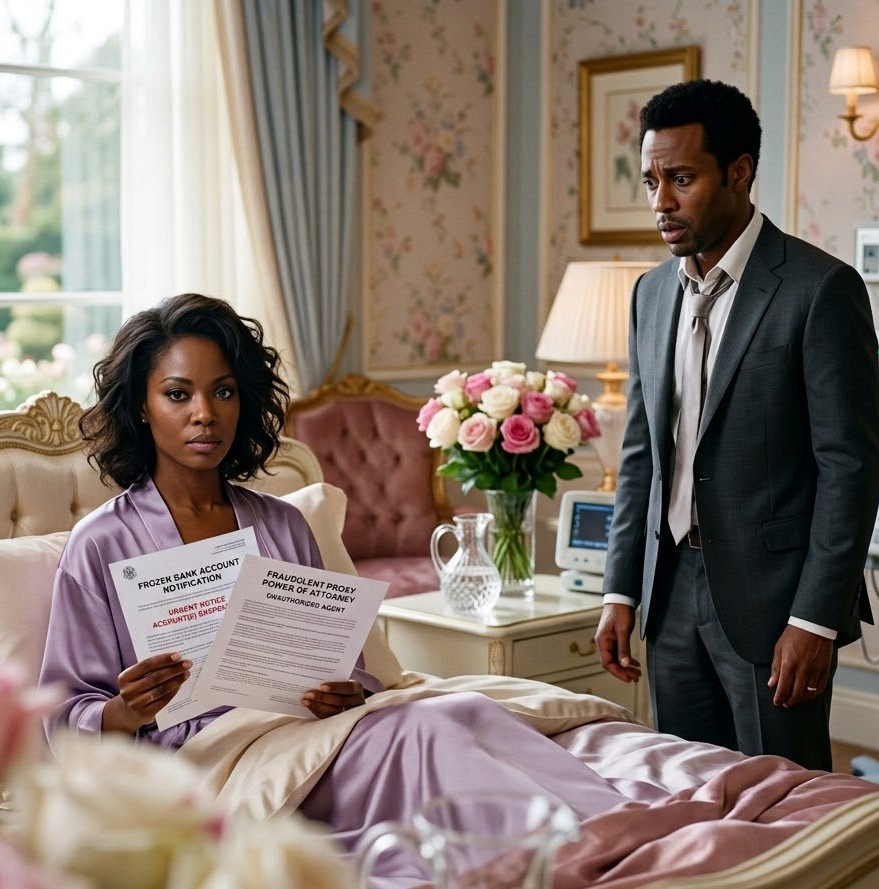


My fingers flew across the keyboard, pulling up old files, searching for the core documents of my family’s legacy. My grandfather, Arthur DuBois, had been a visionary architect and a shrewd businessman. He’d built DuBois & Gaines from the ground up, and he’d foreseen every possible challenge.
I called my Aunt Teresa, her number already programmed into my speed dial. Her voice, usually booming with life, was clipped with concern.
“How are the babies, sweetie?” she asked, her priority always clear.
“They’re hanging in there, Auntie,” I replied, the endearment feeling a little thin. “Listen, I need your help with something important. The DuBois Family Trust. Specifically, Clause 14-B from Grandfather’s original 1984 draft.”
Aunt Teresa was the co-trustee, a steadfast guardian of Arthur’s legacy. She knew the trust document intimately, perhaps even better than I did. She was blunt, pragmatic, and fiercely protective of our family honor.
“14-B?” Aunt Teresa repeated, a pause on the line. I could almost hear the rustle of papers as she likely pulled her own copy. “Ah, yes. The ‘In-Law Indemnity’ clause. A rare gem. Why?”
I explained everything: Marcus’s actions, the forged power of attorney, the deceased witness, Janelle’s evidence, and the terrifying $1.2 million unauthorized loan he’d taken. I laid out the full scope of his betrayal and his desperation.
Aunt Teresa listened in silence, a rare feat for her. When I finished, the silence stretched, heavy and profound.
“That damn fool,” she finally muttered, her voice low and dangerous. “Trying to steal Arthur’s legacy on his deathbed.”
“He was trying to cover a massive loan,” I clarified, though it made little difference to her assessment.
“Doesn’t matter what he was trying to cover,” she snapped, a familiar fire igniting in her tone. “It’s an involuntary corporate buyout. A hostile takeover, plain and simple, while you were incapacitated.”
“That’s exactly what I thought,” I confirmed, “and why I remembered Grandfather had a clause for exactly this kind of situation.”
We reviewed the specific wording together, each of us reading from our respective copies. The language was meticulously crafted, reflecting Arthur DuBois’s foresight and his deep understanding of human nature.
Clause 14-B of the 1984 DuBois Family Trust agreement read:
*Should any married partner to a direct DuBois heir attempt an involuntary corporate buyout, unauthorized execution of family equity, or other hostile transfer of management control while said DuBois heir is biologically incapacitated or medically unable to provide informed consent, all marital claim to DuBois & Gaines Architectural Group shares, voting rights, and corporate assets held in trust shall be instantly and irrevocably extinguished. Management power shall immediately transfer exclusively to the designated backup trustee.*
And the designated backup trustee was me. Maya DuBois-Gaines.
My grandfather, even from beyond the grave, had protected his bloodline, his firm, and now, my children. Marcus’s signature on the emergency separation papers, combined with his attempt to seize control using a fraudulent power of attorney during my medical incapacitation, directly triggered this clause.
It meant his voting stock, his claim to DuBois & Gaines, was gone. Just like that. Instantly.
A cold sense of justice settled over me. He thought he had leverage. He thought he had trapped me. But my grandfather, a man who built an empire on integrity, had laid a trap of his own.
Aunt Teresa let out a triumphant huff. “Arthur always did cover all his bases. That man thought of everything. Your husband just walked right into it, didn’t he?”
“He did,” I agreed, a grim satisfaction rising within me. “And now, Auntie, it’s time to make sure this clause is enforced.”
The path forward was clear. I wouldn’t call the police. Not yet. This was a matter for the family trust, for the courts that upheld legacy and estate law. This was a chancery court matter.
More Stories













+ There are no comments
Add yours