
Eleanor Hawthorne, a Matriarch of Old Money, Tried to 'Cleanse' My Daughter's Blood — Now We're All Facing the Family's Darkest Truth


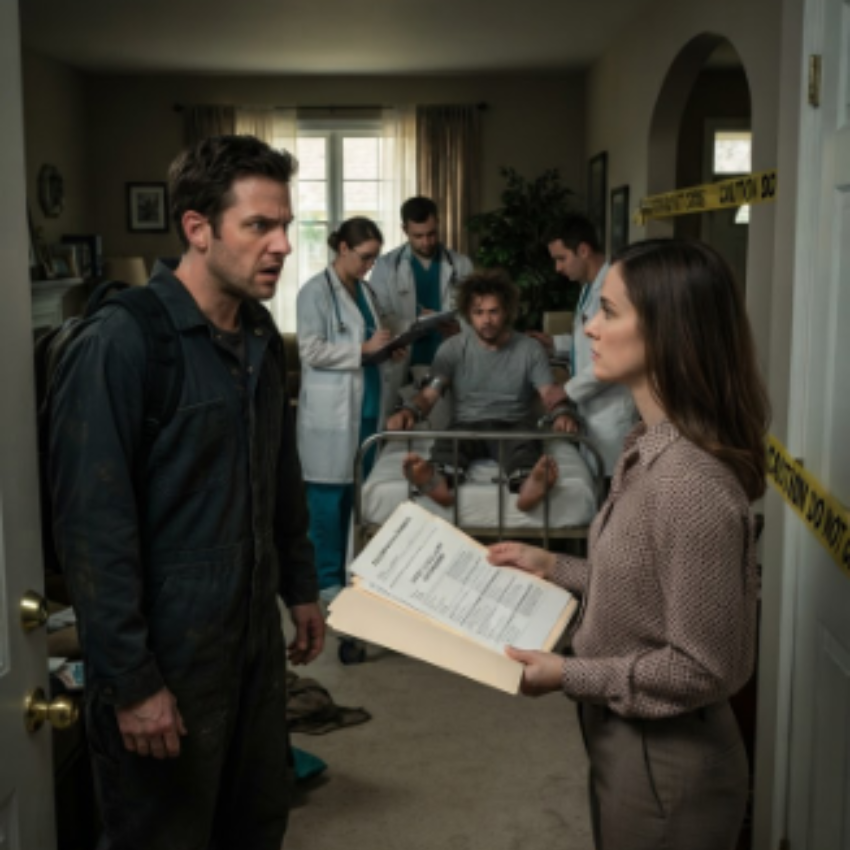


Years blurred into a fragile truce, a tense quiet settling over the Hawthorne household. Eleanor maintained her icy distance, her financial noose loosened slightly after Arthur Finch’s subtle warning, but her gaze on Lily remained sharp, scrutinizing.
Marcus and I navigated our marriage with a quiet understanding, the scars of our past arguments still raw. He now saw the depth of Eleanor’s manipulation, but his fear of confronting her head-on remained.
Lily grew into a bright, introspective young woman, her artistic spirit flourishing. She went off to college, studying art history and finding her own path, far from the suffocating expectations of the Hawthorne name.
She carried vague memories of the “cleansing ritual,” hazy images of a frothy black liquid and a feeling of being unwell, but they were like half-forgotten dreams, easily dismissed as childhood fantasies. The family, myself included, had shielded her from the full, brutal truth.
During her senior year, Lily was home for winter break. Eleanor, in a rare moment of decluttering, had decided to clear out some old family papers from the attic, a task she delegated to Lily with the air of bestowing a great honor.
Lily, ever curious, approached the task with enthusiasm, seeing it as an archaeological dig into her family’s past. She hummed as she sifted through stacks of ancient tax documents, faded photographs, and letters from forgotten relatives.
Tucked away in a dusty cedar chest, beneath a pile of antique lace linens, she found a bundle of brittle, yellowed correspondence. The letters were tied with a silken ribbon, addressed to Eleanor, from an “Elias Thorne, Esquire.”
The name rang a faint bell. Thorne. An old family lawyer, estranged from the Hawthornes for years, his name whispered only in hushed tones.
Lily untied the ribbon, the letters crinkling in her hands. They dated back almost fifty years, detailing complex and archaic conditions of the primary Hawthorne inheritance.
Her artistic eye, attuned to details, caught a specific legal term repeated several times: “the Hawthorne Lineage Purity Clause.” She skimmed through the dense legalese, her brow furrowing.
The letters spoke of a requirement for heirs to be “free of specific, rare genetic markers.” They detailed how a claim to the main Hawthorne fortune could be “severely diminished” if these markers were present.
A specific genetic marker. The phrase echoed the language of Eleanor’s coded journal, the same phrase Arthur Finch had used.
Lily paused, a chill spreading through her. She vaguely recalled Marcus mentioning something about a “bloodline defect” once, dismissed as a family eccentricity.
The letters described generations of efforts to “safeguard the inheritance” from what was referred to as “the ancestral blight.” It was the same term Eleanor used in her journal.
One letter in particular, dated almost fifty years ago, caught her attention. It outlined the disinheritance of Eleanor’s eldest brother, Thomas Hawthorne, due to his “failure to meet the Purity Clause requirements.”
His claim had been “severely diminished,” the letter stated, reducing him to a mere stipend. The letter contained a specific, petty cruelty: a detached, clinical assessment of Thomas’s “unsuitability” as if he were a flawed piece of property.
Lily read about the family’s frantic efforts to keep Thomas’s disinheritance quiet, to protect the family’s image. It painted a picture of a dynasty obsessed with its own perceived perfection.
She felt a wave of unease, a growing sense that these old documents were not just dry legal history. They felt intensely personal.
These were not just vague rumors; this was concrete, legal proof of a deeply ingrained family secret, directly tying inheritance to a genetic flaw. The existence of this clause was a fundamental twist in the narrative she thought she knew.
The old letters, brittle with age, felt heavy in her hands, loaded with generations of unspoken truths. The “ancestral blight” and the “Purity Clause” now seemed to explain Eleanor’s intense focus on Lily, a silent, terrifying puzzle piece falling into place.
Lily looked out the dusty attic window, the winter sun casting long shadows across the floor. The family’s immense wealth, the very foundation of their old money status, was tied to a hidden, centuries-old clause about genetic purity.
Her own vague, troubling memories of childhood, the hushed tones surrounding Eleanor, suddenly took on a sinister new meaning. She was no longer just curious; she was on the verge of uncovering a truth that might shatter her understanding of her own family and her own identity.
More Stories















+ There are no comments
Add yours