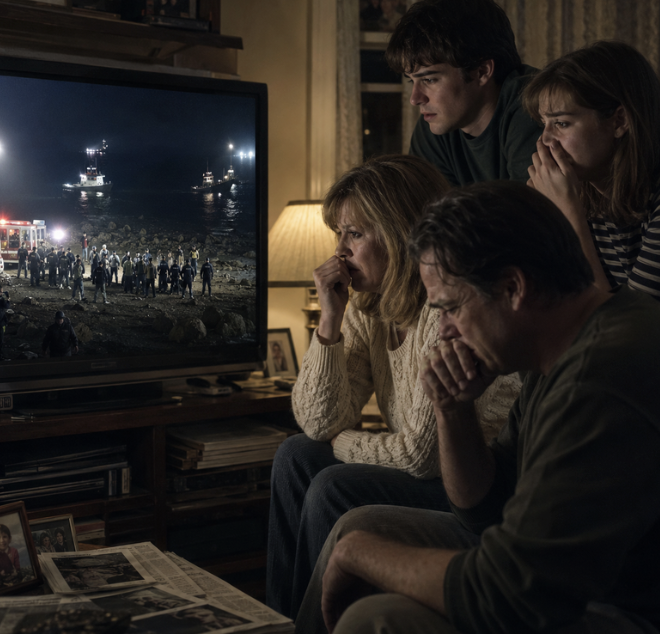
On the morning of February 1, 2003, people across Texas looked up and saw streaks of bright light racing across the sky.
At first, many assumed they were watching a meteor shower.
Others thought it might be a military aircraft.
Within minutes, the truth became clear.
The lights were the remains of Space Shuttle Columbia.
One of America’s most iconic spacecraft was breaking apart during its return to Earth.
And seven astronauts were about to lose their lives.
Columbia was the first operational space shuttle in NASA’s fleet.
Since its first mission in 1981, it had become a symbol of American space exploration.
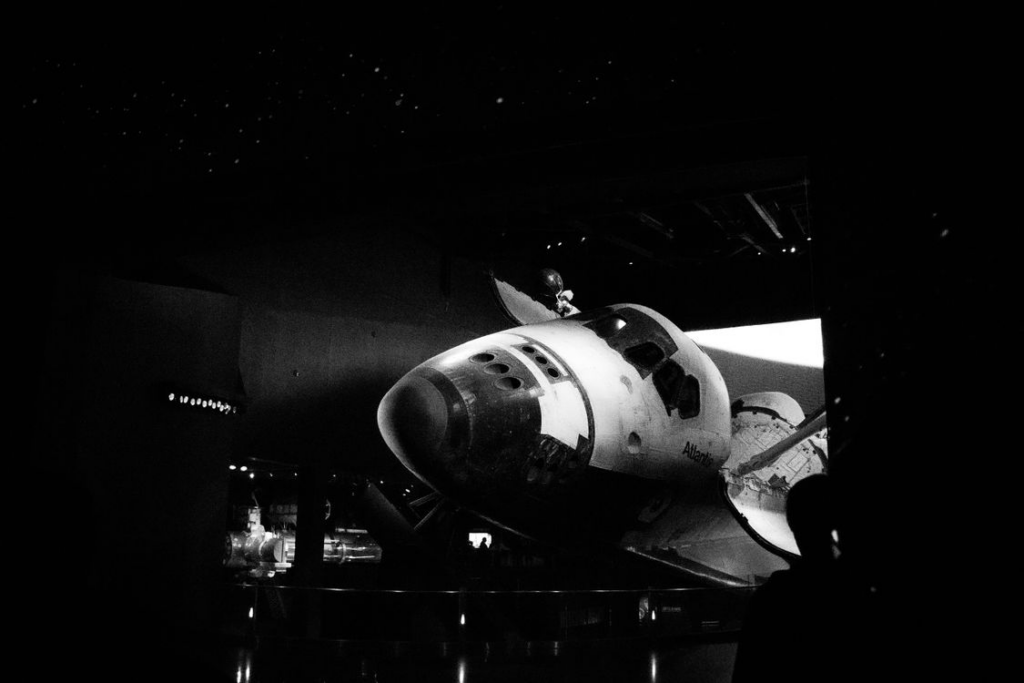
By early 2003, Columbia was completing mission STS-107, a sixteen-day scientific research flight that carried seven astronauts from different backgrounds and specialties.
Unlike many shuttle missions of the era, STS-107 was focused primarily on science.
The crew conducted dozens of experiments involving biology, physics, medicine, and materials research while orbiting Earth.
By all appearances, the mission had been successful.
The astronauts completed their objectives and prepared for the final phase of the journey.
Returning home.
On February 1, Columbia began its descent from orbit.
The spacecraft traveled at thousands of miles per hour as it approached Earth’s atmosphere.
Inside the shuttle, the crew followed standard procedures.
Outside, NASA engineers monitored the vehicle’s systems.
At first, everything appeared routine.
Then small anomalies began to appear.
Sensors in the left wing started providing unusual readings.
Some temperature measurements disappeared.
Others showed unexpected increases.
Engineers noticed the irregularities but had little time to determine exactly what was happening.
As Columbia continued descending, more data was lost.
Additional sensors stopped responding.
Then communications became increasingly unstable.
At Mission Control in Houston, controllers attempted to contact the crew.
No response came back.
Moments later, Columbia disappeared from radar.
Across Texas and parts of Louisiana, witnesses watched as multiple bright trails spread across the sky.
The shuttle had broken apart.
The spacecraft disintegrated at high altitude while traveling at tremendous speed.
Debris scattered across hundreds of miles.
The nation quickly realized that a major disaster had occurred.
There were no survivors.
All seven crew members lost their lives:
Commander Rick Husband.
Pilot William McCool.
Payload Commander Michael Anderson.
Mission Specialists David Brown, Kalpana Chawla, and Laurel Clark.
Payload Specialist Ilan Ramon, the first Israeli astronaut.
The tragedy shocked the United States and much of the world.
For many Americans, it was the first shuttle disaster since Challenger in 1986.
Questions immediately followed.
How could a mission that appeared successful end in catastrophe only minutes before landing?
Investigators began examining every aspect of the flight.
The answer eventually traced back to launch day.
Sixteen days earlier, as Columbia lifted off from Kennedy Space Center, a piece of insulating foam broke away from the shuttle’s external fuel tank.
Video footage showed the foam striking the shuttle’s left wing.
Foam shedding had occurred on previous missions and was often treated as a known risk.
At the time, engineers could not fully determine whether serious damage had occurred.
As a result, the mission continued.
What investigators later discovered was devastating.
The foam strike had created a breach in the wing’s protective thermal shield.
During re-entry, temperatures around the shuttle reached thousands of degrees.
Superheated gases entered the damaged wing through the opening created at launch.
As Columbia descended through the atmosphere, the internal structure of the wing began to fail.
Eventually, the damage became catastrophic.
The shuttle could no longer maintain structural integrity.
Within moments, it broke apart.
The Columbia Accident Investigation Board concluded that the foam impact caused the disaster.
However, the investigation also examined organizational issues within NASA.
The report found that the accident was not only a technical failure.
It also involved decision-making processes, risk assessment practices, and communication challenges that contributed to the tragedy.
The disaster led NASA to suspend shuttle flights for more than two years.
New safety procedures were implemented.
Inspection methods were improved.
Future missions included detailed in-orbit examinations of shuttle surfaces before re-entry.
The loss of Columbia became a turning point for the entire shuttle program.
Perhaps the most haunting aspect of the disaster is how early the chain of events began.
The fatal damage occurred just eighty-one seconds after launch.
At the time, the mission continued for more than two weeks.
The crew carried out experiments.
Communicated with Earth.
Photographed the planet below.
And prepared for a safe return.
No one aboard knew that a critical part of the shuttle had already been compromised.
When Columbia finally came home, the consequences of those few seconds at launch became impossible to stop.
The tragedy remains one of the most significant disasters in the history of human spaceflight.
It serves as a reminder that even the smallest failure in a complex system can have enormous consequences.
A brief impact.
A piece of foam.
A hidden breach.
And sixteen days later, a spacecraft that had traveled millions of miles around Earth was lost just minutes from landing.
More than two decades later, the story of Columbia continues to be remembered not only because of how the mission ended, but because of the seven astronauts who dedicated their lives to exploration, science, and discovery.
Their mission succeeded.
Their return did not.
And the lessons learned from that morning in 2003 continue to influence spaceflight to this day.


