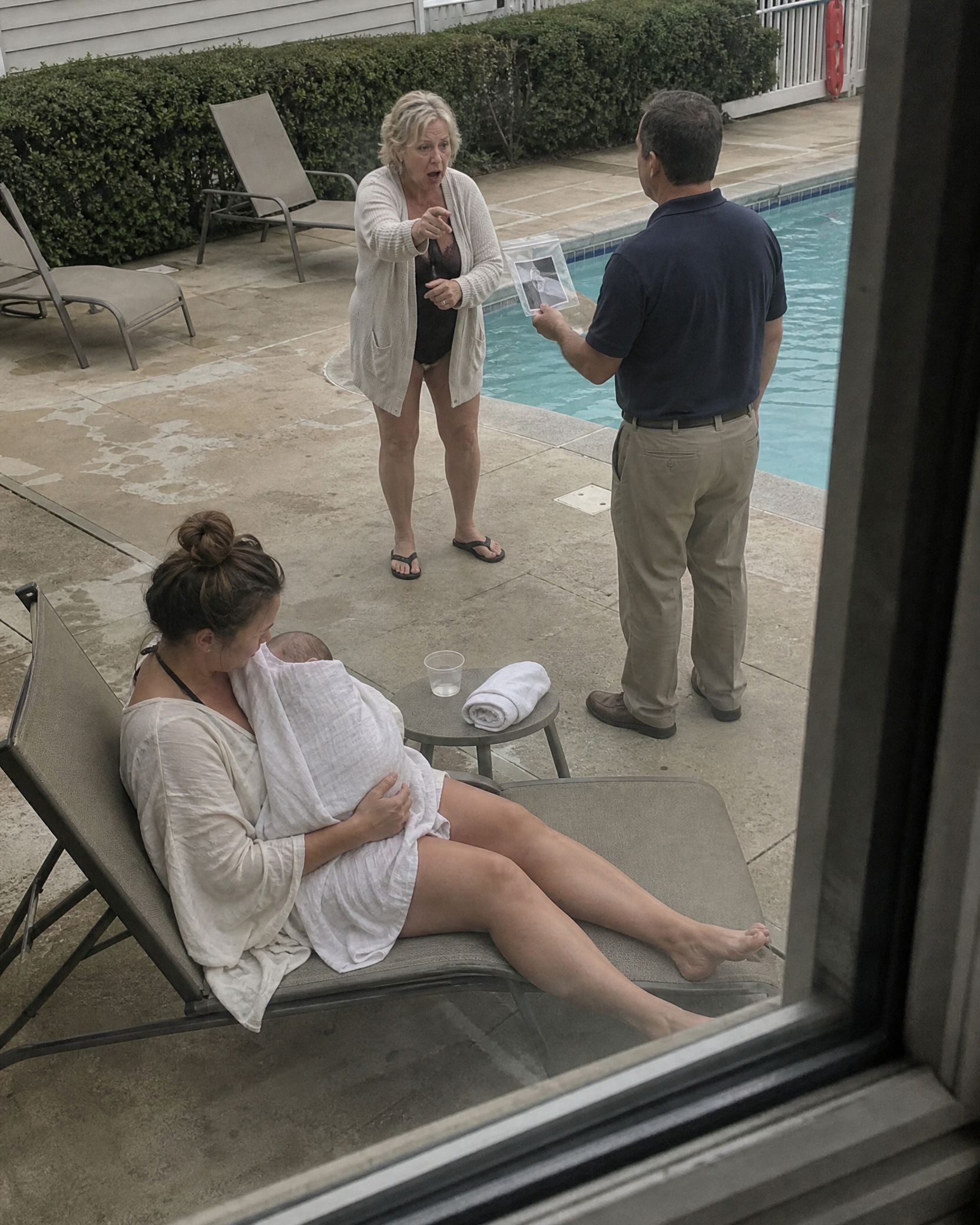
Stepmother Called My Career-Defining Project a 'Personal Embarrassment' to the Board, But Her Past is Hiding Something Much Worse


Part 1
🤫 **My Stepmother Called My Career-Defining Project a ‘Personal Embarrassment’ to the Board — Then Her Own Past Began to Unravel.**
I poured six months of my life into a presentation for the company’s biggest client, our “Community Connections” campaign. This wasn’t just a marketing strategy; it was a vision for Albright & Sons’ future, blending social responsibility with solid profits.
I stood before the executive board, the projector humming, feeling a surge of pride. Then, three days after I submitted it, my stepmother, Valerie Albright, called it a ‘personal embarrassment’ in front of everyone.
The room, a sleek expanse of mahogany and glass, went silent. Valerie, seated at the head of the table next to Mr. Chen, fixed me with a stare that could curdle milk.
She began to dissect my strategy, her words precisely aimed. She dismissed its innovative core, the very heart of my proposal, as “unprofessional sentimentality.”
“Are we running a charity, Eliza,” she asked, her voice dripping with condescension, “or a multinational corporation? This is Albright & Sons, not a neighborhood bake sale.”
Her gaze swept across the bewildered faces of the board. My cheeks flushed with heat, but I held her gaze. It felt like a public execution.
Then, unexpectedly, Mr. Chen, our CEO, spoke up. “Innovation often requires looking beyond conventional metrics, Valerie,” he stated, his voice calm but firm. “Eliza’s creative approach has merit.”
Valerie’s jaw tightened, a barely perceptible flicker of rage in her eyes. Her icy glare promised retribution, a chilling unspoken threat.
The humiliation burned, yet deep down, a resolve hardened. She wouldn’t break me. Not here, not now, not ever.
The meeting concluded in a tense, unnatural quiet. Board members hurried out, avoiding eye contact as I gathered my presentation notes.
The sting of Valerie’s words lingered, echoing in the polished halls. I retreated to my office, the evening light fading outside my window.
Liam O’Malley, my friend and colleague, found me still at my desk much later. He leaned against my doorframe, his expression grim.
“That was brutal, Eliza,” he said, his voice low and sympathetic. “But Mr. Chen backed you up.”
“For now,” I replied, the bitterness sharp in my throat. “It just makes me a bigger target.”
“Your work speaks for itself,” Liam insisted, trying to offer comfort. I tried to believe him.
Later that night, back in my quiet apartment, I was exhausted. I scrolled through emails one last time before bed.
A new message popped up. No sender, no subject line. Just a single, anonymous line of text.
My breath hitched in my chest. The screen glowed, illuminating the stark words: “Know your place.”
My hands started to tremble, the phone almost slipping from my grip. This wasn’t just Valerie’s usual cruelty anymore.
This felt like something far more sinister, a deeper corporate resistance. An unseen enemy, now making their presence known, warning me to back down.
Who else wanted me out, and what were they truly capable of?
Part 2
The next morning, I told Liam about the message. He listened, his brow furrowed.
He immediately suspected Valerie’s hand. I tried to focus on my revised presentation, but the unsettling feeling persisted.
A few days later, a call came from the “Community Arts First” board. They informed me, vaguely, of my removal from the project.
They cited ‘professional conduct concerns,’ a phrase that felt hollow and utterly false. My stomach clenched.
Liam, noticing my distress, offered to look into it. He spent the afternoon quietly digging.
“Eliza,” he said later, his voice tight. “There’s a financial connection between Valerie Albright and Mrs. Davies.”
Mrs. Davies was a senior board member at Community Arts First. Valerie wasn’t just targeting me at work; her reach extended far beyond the office.
More Stories

















+ There are no comments
Add yours