
Stepmother Called My Career-Defining Project a 'Personal Embarrassment' to the Board, But Her Past is Hiding Something Much Worse


The elusive “Phoenix Holdings” remained a tantalizing, unprovable lead. While Liam continued to poke at the digital walls, Valerie launched her next, more direct assault on my standing within Albright & Sons. This time, it wasn’t a subtle isolation or a vague whisper. It was a precise, calculated strike designed to undermine my professional integrity.
The attack came in the form of a project budget overrun. I was spearheading the development of a new digital platform for client engagement, a complex undertaking with many moving parts. A minor cost spike occurred when a third-party software license unexpectedly increased its annual fee. It was a small deviation, easily explainable and re-absorbable within the overall budget.
But Valerie didn’t see it that way.
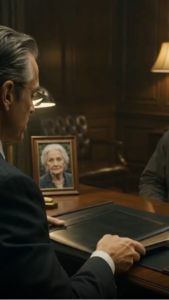
I received an urgent summons from Mr. Chen’s office. When I arrived, his expression was grim. Valerie sat opposite him, a picture of serene concern, a thin folder placed neatly on the table between them.
“Eliza,” Mr. Chen began, his voice devoid of its usual warmth. “We have an issue regarding the Digital Engagement Platform budget. This report indicates a significant overrun, approved under your direct oversight.”
He slid the folder across the table. My eyes scanned the printouts: carefully compiled spreadsheets, seemingly official, detailing the cost increase. And there, at the bottom of one page, was a digital signature, appearing to be mine, approving the revised figures.
My stomach dropped. I remembered the email, a routine request for approval. It had been buried in a flurry of other communications, and the revised figures had been subtly altered, just enough to appear legitimate but to inflate the numbers. Valerie had framed me, meticulously altering records to make it appear I had approved excessive spending. The subtle manipulation of figures, the digital sleight of hand, was a cold, cruel precision.
“Mr. Chen, this isn’t right,” I said, my voice trembling with a mix of shock and indignation. “I approved a budget for this increase, yes, but not these figures. These have been artificially inflated.”
Valerie chimed in, her voice dripping with false empathy.
“Eliza, I understand you’re under pressure, but accuracy is paramount in our financial reporting. Perhaps you were simply… distracted?”
The implication of carelessness, of being “distracted,” was a specific, petty cruelty. It undermined my attention to detail, a core professional strength. It chipped away at my reputation for meticulous work, suggesting I was not to be trusted with financial oversight.
Mr. Chen held up a hand, silencing Valerie with a look.
“Eliza, the evidence here is quite clear,” he stated, tapping the digital signature. “We rely on our senior strategists for sound financial management. This reflects poorly on your judgment.”
He paused, his gaze hardening.
“Consider this a formal warning. While I understand the complexities of these projects, we cannot tolerate financial discrepancies of this nature, especially after recent discussions about integrity.”
His words, especially the reference to “recent discussions about integrity”—his own memo—felt like a betrayal. He was losing patience, and his disappointment was palpable. The irony was suffocating: Valerie, the true architect of deception, was walking away clean, while I, the one who championed integrity, was being reprimanded for her machinations. It was the injustice of it all that truly stung, a personal wound inflicted by her unseen hand.
“I can prove these figures were manipulated,” I insisted, my voice rising. “I can pull the original email, the server logs, the metadata…”
Mr. Chen sighed, running a hand over his face.
“Eliza, we appreciate your diligence, but we also expect our executives to catch these things before they become ‘discrepancies.’ Please rectify this immediately and ensure it doesn’t happen again.”
He dismissed me with a weary wave, his message clear: he didn’t want to hear it. He wanted the problem to go away.
I walked out of his office, my mind reeling. The air felt thin, suffocating. Valerie’s smug, unreadable expression as I left was a final, triumphant jab. She had not only framed me but made Mr. Chen doubt my integrity. My hard-won reputation, the foundation of my career at Albright & Sons, was eroding beneath my feet.
Liam found me later, staring out my office window, the city lights blurring before my eyes.
“What happened?” he asked, his voice full of concern.
I recounted the meeting, the fabricated evidence, Mr. Chen’s cold disappointment.
“She’s trying to force you out,” Liam said, his voice grim. “This isn’t just a warning; it’s a message. She’s making Albright & Sons untenable for you.”
“I poured six years of my life into this company,” I whispered, the words catching in my throat. “Every late night, every innovative idea, every sacrifice. It was all for this.”
The thought that my position, the company I had dedicated so much to, was becoming untenable filled me with a profound sense of loss. Valerie wasn’t just trying to win; she was trying to systematically dismantle my career, brick by painstaking brick. Her subtle alterations of records, her unseen hand in my downfall, was a particularly insidious form of cruelty. It made me question not just her malice, but the very system that allowed such deception to flourish. I felt a sharp, bitter pang of irony. My journey to this firm had been a testament to independence, to building my own path, and now that independence was being used against me, making me an easy target for Valerie’s machinations. The price of that independence, I realized, was higher than I had ever imagined.
More Stories















+ There are no comments
Add yours