
Trapped on My Own Farm by My Son, I Used My Late Wife's Secret Phone to Fight for Her Legacy


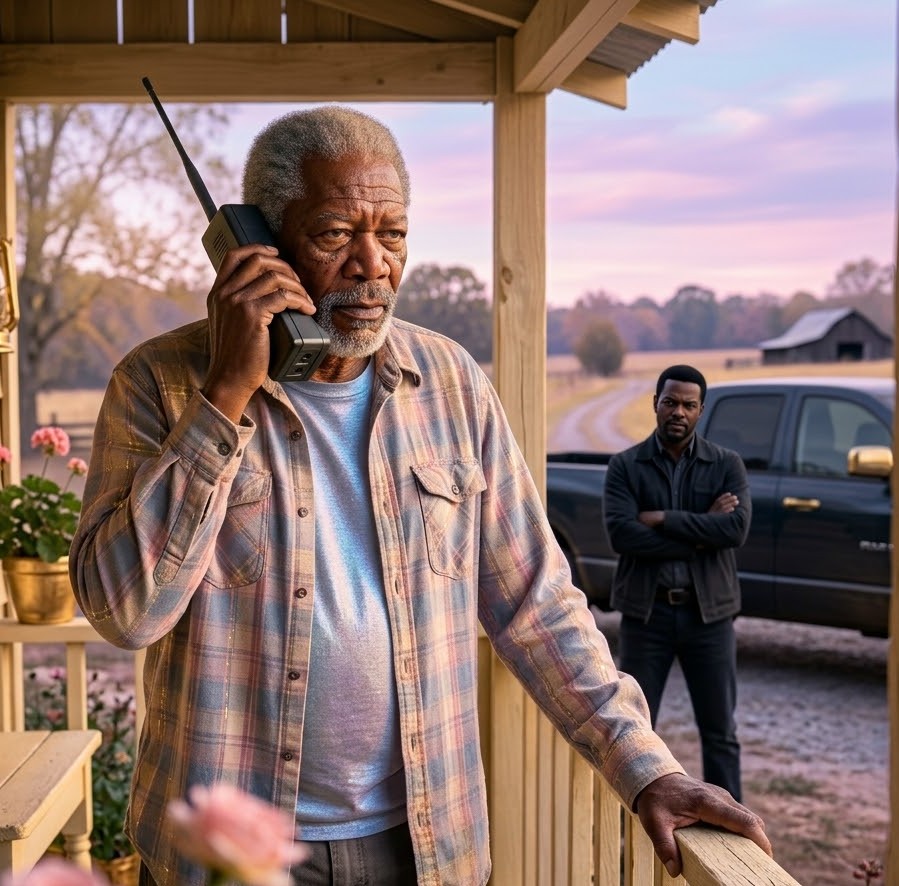

The air on the farm felt heavy, thick with unspoken tension. We were still refining our strategy, gathering every last piece of evidence. Imani had just confirmed that another community council meeting was scheduled for next week, an ideal platform for our revelation.
I was in the middle of preparing a batch of fresh produce for the CSA boxes when a county vehicle, emblazoned with the familiar seal, pulled up the driveway. My stomach clenched. Gus’s warning about sudden inspections echoed in my mind.
Two officials, stern-faced and unsmiling, stepped out. One of them, a stout man with a neatly trimmed mustache, held a clipboard. He introduced himself as a representative from the county zoning office. Officer Jenkins was not among them, but his presence was felt.
“Mr. Thorne?” the man asked, his voice flat. “We’re here to deliver an official notice regarding Thorne Heritage Farm.”
My heart hammered against my ribs. This was it. Marcus’s plan, put into motion by Jenkins, was unfolding.
He handed me a thick envelope. My fingers trembled as I took it. The paper felt cold, official, and ominous. It was a Stop Work Order.
“Effective immediately,” the official stated, his gaze sweeping over the bustling farm, “Thorne Heritage Farm’s Community Supported Agriculture operations are to cease. All sales, deliveries, and processing of produce are suspended until further notice.”
I stared at him, dumbfounded. “Cease operations? Why? What are the grounds?”
The second official, younger and visibly uncomfortable, cleared his throat. “The order cites multiple environmental violations, Mr. Thorne. Contaminated runoff, inadequate waste management, unauthorized land use. Based on a recent county appraisal report and subsequent inspections.”
The words hit me like a physical blow. Contaminated runoff? Inadequate waste management? Sarah had meticulously maintained every aspect of this farm, adhering to the highest environmental standards. These were blatant lies, manufactured accusations.
“King’s appraisal,” Imani murmured from beside me, her voice tight with anger. She had rushed out when she saw the county vehicle. “And Jenkins’s ‘inspections.'”
The first official ignored her. “The order also mandates a public hearing within 72 hours to address these violations. Failure to comply or resolve the issues could result in fines up to $500,000, or the forced sale of your most valuable adjacent land parcels.”
Half a million dollars. The very land Sarah had designated for future expansion, the untouched acreage adjacent to the thriving farm. Marcus wasn’t just trying to devalue the farm; he was trying to seize it, to force me into selling off its most valuable assets under duress.
The sheer audacity of it, the cold-blooded calculation, left me speechless. They were using King’s fraudulent appraisal, cooked up by Marcus, to declare my farm a blight, a public health hazard. This was the specific, personal cruelty: transforming Sarah’s legacy of health and community into a supposed source of contamination and illegality.
The two officials finished their delivery, their faces impassive, then turned and left, their vehicle kicking up gravel as it sped away.
I stood there, clutching the Stop Work Order, the words blurring before my eyes. Stop Work. It wasn’t just a legal document; it was a declaration of war. It meant the farm, Sarah’s vibrant, living legacy, was effectively frozen, its lifeline cut. The CSA members, the community garden, the educational programs—all ground to a halt.
Imani gently took the order from my hands. “Dad, this is a direct attack. They want to starve us out, make us desperate.”
Gus, who had arrived just as the county vehicle was leaving, read over her shoulder. “They’re really playing hardball, Elias. Putting immense pressure on you before the hearing. They want you walking in there already defeated.”
A surge of protective fury washed over me. Marcus wanted to destroy everything. He wasn’t just targeting the land or the money; he was targeting the very spirit of Thorne Heritage Farm, its connection to the community, its reputation for integrity. This wasn’t a misunderstanding; it was pure malice, weaponized bureaucracy.
The clock was ticking. 72 hours until the public hearing. We had the recording, we had the documents, but now we also had an immediate, devastating threat. The Stop Work Order wasn’t just a legal hurdle; it was a direct assault on our livelihood, a profound shock that solidified my resolve to fight back with every fiber of my being.
More Stories















+ There are no comments
Add yours