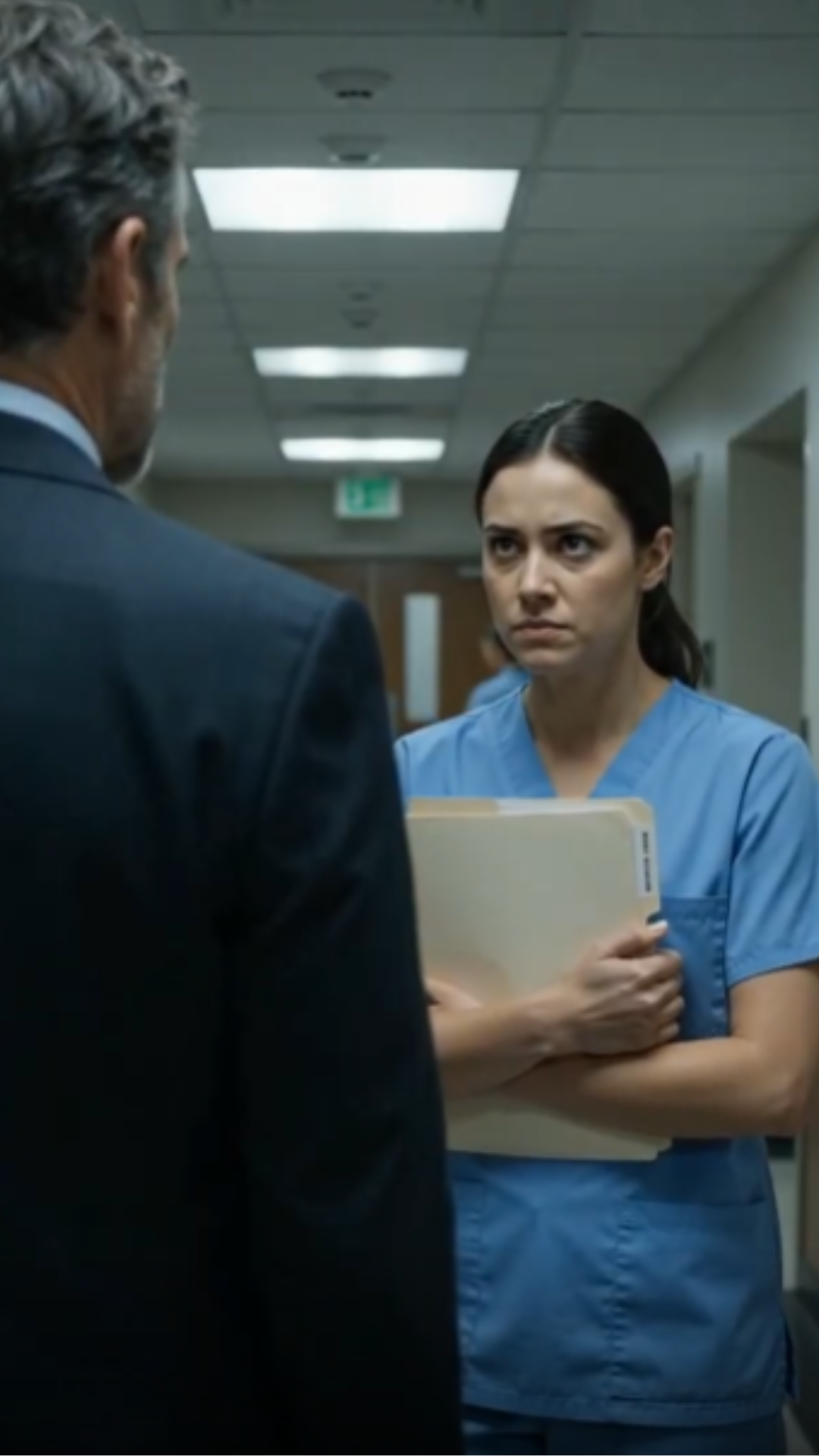
My former medical mentor, Dr. Harrison Croft, told the entire hospital board that I was preying on an incapacitated 78-year-old patient named Eleanor Wright.


The next morning, the grand rotunda of Metropolitan Hospital, usually a scene of bustling medical activity, became the backdrop for an emergency press conference. Hospital management, their faces grim and strained, stood before a phalanx of cameras and microphones.
The CEO, a nervous-looking man named Mr. Thompson, cleared his throat. “It is with immediate effect that Metropolitan Hospital announces Dr. Harrison Croft’s abrupt and permanent resignation from his position as Chief of Surgery, citing unforeseen personal matters.”
A flurry of murmurs and camera flashes erupted. “Unforeseen personal matters” was the official line, a carefully crafted euphemism for his complete and utter removal. His chair at the morning briefing, a symbol of his power, was conspicuously empty.
Within hours, the public narrative began to shift dramatically. News outlets, sensing the sudden administrative vacuum and perhaps receiving discreet but firm communications from Attorney Davenport’s office, began to retract their sensationalized stories.
“New evidence has emerged,” one anchor reported, a complete reversal from her previous condemnation, “suggesting that all previous allegations against hospice nurse Maya Connelly were unsubstantiated and based on fabricated evidence.” Under the threat of massive defamation lawsuits, the networks scrambled to salvage their credibility.
I received an official email from the Massachusetts Medical Board. My nursing license, the one that had been provisionally suspended, had been fully restored. “With full honors and zero administrative marks,” the email read. Not just restored, but cleared, absolved.
My phone, which had been buzzing with death threats just days before, now received apologies from former colleagues, tentative messages of support, and even a few job offers from hospitals eager to distance themselves from the Croft scandal.
The vindication was swift, absolute, and publicly declared. Croft was gone, erased from his position, his reputation in tatters, replaced by a bland corporate statement. His name would disappear from the hospital’s history, swallowed by the carefully managed crisis. The power he wielded had vanished overnight, leaving only an empty chair.
More Stories






+ There are no comments
Add yours