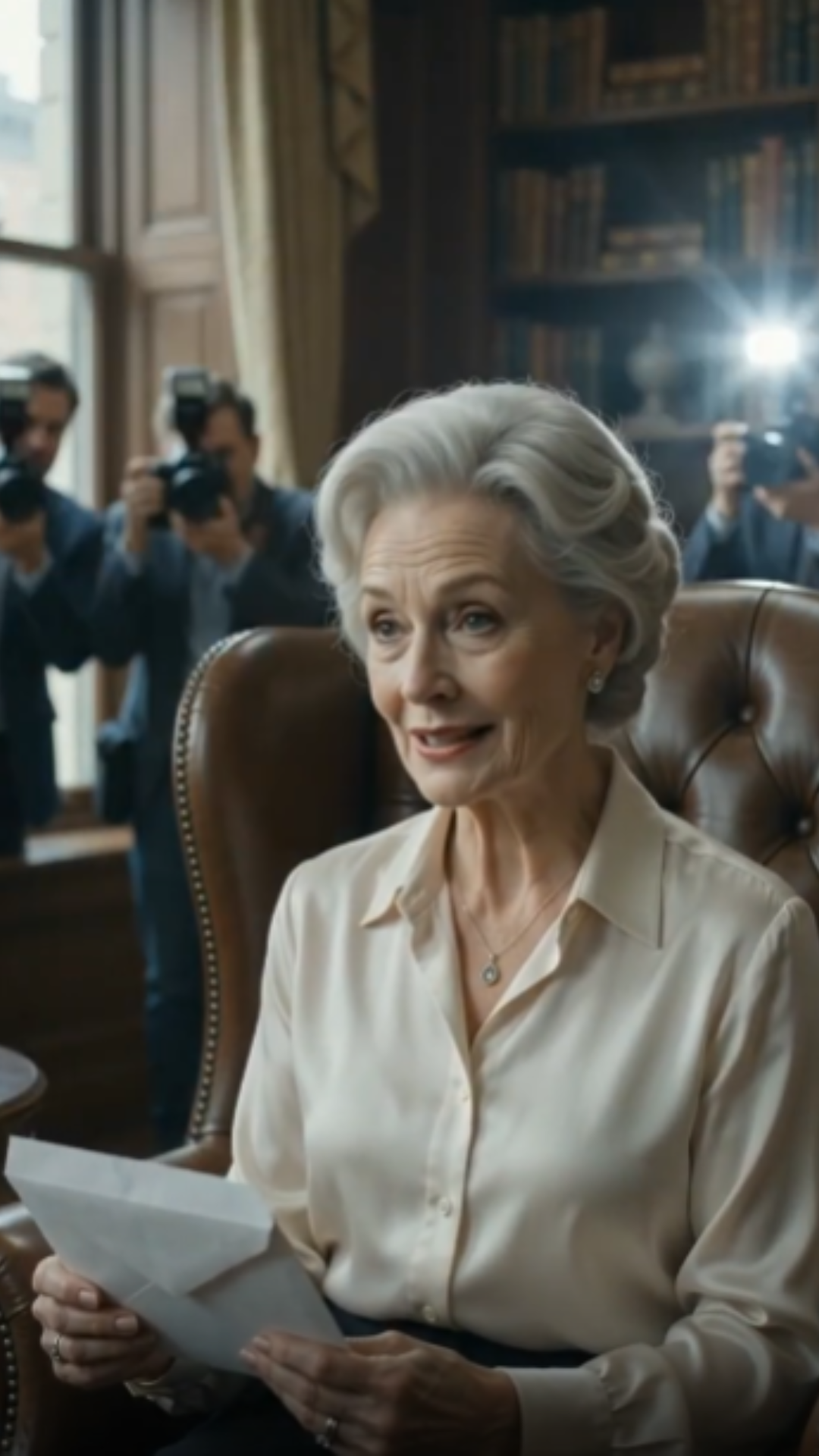
My former medical mentor, Dr. Harrison Croft, told the entire hospital board that I was preying on an incapacitated 78-year-old patient named Eleanor Wright.


Eight months later, the scent of antiseptic and stale coffee filled the crowded, fluorescent-lit staff breakroom of Metropolitan Hospital. The hum of vending machines and distant call buttons created a constant, low drone.
It was my 28th birthday. I sat alone at a laminate table, unwrapping a plain turkey sandwich. Around me, nurses and residents chattered, clinked ceramic mugs, and laughed about their morning rounds. Life in the hospital, for most, had moved on.
But for me, everything had changed.
I unfolded a crisp, personalized letter from Eleanor Wright, delivered by Attorney Davenport just this morning, on my birthday. It was her final personal message to me, meant to be read only now.
“Maya,” it began, her elegant script instantly recognizable, “If you are reading this, then you have done it. You have navigated the storm, upheld your integrity, and proven yourself worthy of the true meaning of care.”
She went on to explain her long game, her absolute trust in my moral compass, and her belief that I would be the only one to truly understand her legacy. She spoke of the Wright Community Hospice Wing, now flourishing within the hospital, built with funds from her $40,000,000 foundation. It provided free, dignified end-of-life care to dozens of patients who would otherwise have no options.
“Croft,” she wrote, “is repaying his debt in a place far removed from public scrutiny. He will spend the remainder of his days learning the true cost of avarice, far from the grand lobbies and the accolades he so craved.”
I took a bite of my sandwich, savoring the simple taste. I looked around the breakroom, at the tired but dedicated faces of the staff, at the cheerful artwork on the walls put up by patients’ families. This wing, Eleanor’s true legacy, was alive. It was a place where dignity was paramount, where lives were honored, not commodified.
Eleanor’s words resonated in my mind: “Healing has never lived in grand marble lobbies or press conferences; it begins in the quiet rooms where nobody is calculating what a life is worth.”
More Stories












+ There are no comments
Add yours