
At His Retirement Gala, My Father Disowned Me Publicly — Not Knowing I'd Saved His Fortune From Ruin


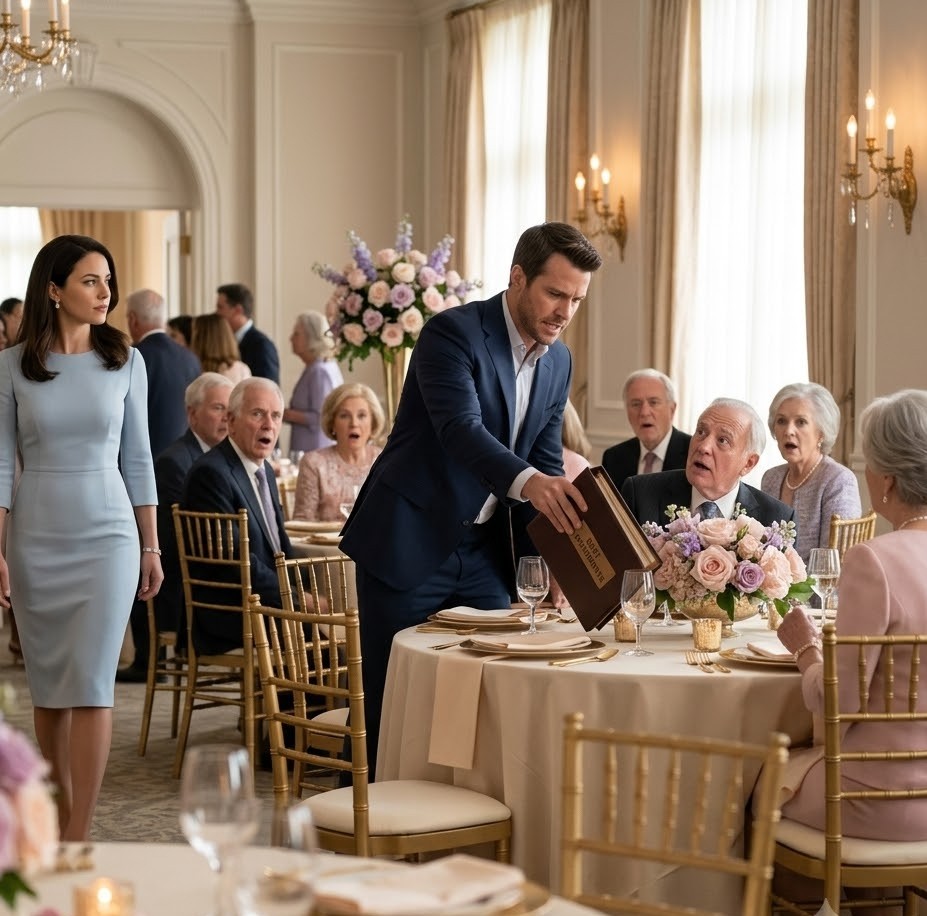

Thomas’s lawyer, Mr. Davies, rose for his final argument, his face pale but determined. This was his last chance to salvage something from the wreckage, to shift blame and muddy the waters one last time.
“Your Honor,” Mr. Davies began, his voice surprisingly steady, “we concede that some of Mr. Robert Harrison’s investments, guided by Mr. Thomas Harrison, unfortunately did not yield the anticipated returns.”
He was attempting to downplay the fraud as mere bad investments, a tactical retreat from outright denial. It was another specific, cynical cruelty, trying to reframe blatant theft as an honest business mistake.
“However,” he continued, turning to face Judge Carter directly, “we maintain that Mr. Robert Harrison was at all times fully aware of his financial decisions. He is a competent adult, a man who prides himself on his business acumen, as has been attested to by many family members and associates.”
He then referred to the various documents Robert had signed: the “Investment Authorization” and other forms that had granted Thomas broad discretion. He argued that Robert, in his desire for high returns, had willingly taken on the risks, and therefore bore ultimate responsibility for the outcome.
“Mr. Harrison freely and willingly signed these documents,” Mr. Davies insisted, his voice gaining strength. “He trusted his brother, yes, but he also understood the nature of investment. To suggest he was a completely naive victim is to insult his intelligence and his long-standing business experience.”
He was attempting to shift blame back to Robert, subtly implying that Robert’s pride and desire for quick wealth had made him a complicit participant in his own downfall, thus diminishing Thomas’s culpability. This was a direct attack on Robert’s intelligence, using his own vanity against him.
“Furthermore, Your Honor,” Mr. Davies continued, glancing briefly at me, “Mrs. Callahan’s legal action has been driven by what can only be described as a personal vendetta, fueled by resentment and a desire for control over her father’s affairs. Her attempts to portray herself as a selfless savior are belied by her aggressive pursuit of legal action.”
His words were a final, desperate attempt to revive the “greedy daughter” narrative, to make me out to be the instigator of this entire familial conflict. It was a profound, personal cruelty, seeking to undermine my core motivation and justify Robert’s initial disownment. He was trying to cast the entire ordeal as a misunderstanding driven by my malice, rather than by Thomas’s greed.
Judge Carter listened impassively, her face giving no hint of her thoughts. Her gaze swept across the courtroom, lingering briefly on Robert, then on Thomas and Beatrice. The sheer audacity of Mr. Davies’s argument, in the face of such overwhelming evidence of fraud, was stunning. But it was a calculated gamble, hoping to capitalize on Robert’s pride and my perceived vindictiveness. The courtroom held its breath, waiting for the Judge’s verdict, wondering if this final, desperate argument could possibly sway her.
More Stories















+ There are no comments
Add yours