
My son's wife told my grandkids I was a stranger; I cut their money, and his true colors came out


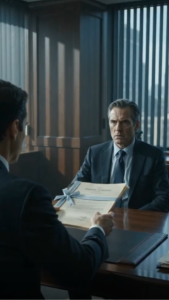
I sat across from Mr. Arthur Henderson, my lawyer, in his quiet, tastefully decorated office. The faint smell of old paper and leather filled the air, a stark contrast to the chaotic emotion churning inside me. He was calm, methodical, his gaze steady behind wire-rimmed glasses.
“Mrs. Petrova,” he began, “your son’s actions are certainly… unfilial. But legally, these were gifts, correct? You don’t have a signed loan agreement for the fourteen years of support?”
I shook my head. “No. In my culture, you don’t make your family sign papers. It’s an understanding. A mother helps her son.” My voice felt tight.
“I understand your perspective,” Mr. Henderson said gently. “But in American law, that makes it complicated. Without explicit terms, financial support between family is generally considered a gift.”
He proposed a strategy. “We can send a formal letter, outlining the years of support, and subtly suggest these were ‘advances’ against his future earnings, now due to his breach of family trust. It’s a soft approach, a way to gauge their reaction. It might prompt them to reconsider their entitlement.”
I hesitated. “A letter? It sounds… so formal. Can’t we just talk?”
Mr. Henderson leaned forward, his expression earnest. “Mrs. Petrova, after their behavior on Christmas Eve and Marek’s subsequent demand, ‘talking’ has proven ineffective. This is a business matter now, masquerading as a family dispute. We need to apply legal pressure, however gentle, to remind them of the reality.”
We discussed the specifics: the amount—hundreds of thousands of dollars over the years—the explicit dates of large payments for his mortgage, his car, even Tiffany’s business ventures. It felt like laying bare the very fabric of my life, exposing how much I had sacrificed.
“This letter will also establish a paper trail,” Mr. Henderson explained. “Should this escalate, it shows your attempt to resolve it amicably.”
I agreed, albeit reluctantly. The thought of confronting Marek this way, through legal correspondence, felt alien and painful. It was a step further away from the son I had nurtured. I imagined the letter arriving, Marek’s indignant reaction, Tiffany whispering in his ear. I braced myself for the next round of accusations.
But the next round came not as a whispered accusation, but a bombshell.
Less than forty-eight hours later, before Mr. Henderson’s letter could even be drafted, his office received a package. It wasn’t an apology, nor a desperate plea. It was a summons.
Mr. Henderson called me immediately, his voice betraying a rare flicker of surprise. “Elena,” he said, using my first name, “Marek and Tiffany have filed a lawsuit.”
My heart pounded. “A lawsuit? Against me? For what?” The question felt absurd. What could they possibly sue me for?
“They’re alleging elder abuse,” he stated flatly. “Financial coercion. Emotional distress. They’re painting you as a controlling matriarch who used your money to manipulate their lives.”
I dropped the phone, my hand trembling so violently I couldn’t hold it. The receiver clattered against the kitchen counter, its plastic shell rattling. My breath hitched in my throat, a dry, rasping sound. Elder abuse? Me? The woman who had given them everything?
My mind reeled. The kulebyaka, the locked door, Marek’s arrogant demands—it all suddenly clicked into place, pieces of a puzzle I hadn’t understood. This wasn’t about disrespect. This was a calculated attack.
Anya rushed in, drawn by the sound of the phone dropping. “Mama, what is it? What happened?” she asked, her eyes wide with concern.
I picked up the phone, my fingers still clumsy. “They’re suing me,” I whispered, the words tasting like ash. “Marek and Tiffany. They say I abused them. Manipulated them with money.”
Anya’s face hardened, her jaw clenching. “I knew it,” she muttered, a dark intensity in her voice. “I knew Tiffany was up to something.”
Mr. Henderson was still on the line, patiently waiting. “Elena, are you there? This is a serious development. They’re claiming you purposefully withheld funds to punish them, that your financial support came with conditions, and that your sudden cessation of it caused them significant distress and financial hardship.”
“But it’s a lie,” I insisted, my voice gaining strength through sheer indignation. “I never put conditions. I gave them money because I wanted to help them. To see them succeed.”
“They’re alleging the opposite,” Mr. Henderson explained. “Their complaint paints a picture of a controlling mother, constantly interjecting herself into their lives through financial dependency, and that your Christmas Eve visit, followed by the cut-off, was a culmination of this ‘abusive’ pattern.”
He said it with a professional detachment, but I heard the unspoken implications. This wasn’t merely a misunderstanding; it was a complete perversion of the truth. It was a vicious twisting of my generosity into a weapon against me.
Anya took the phone from me. “Mr. Henderson, what are our next steps? What kind of evidence do they have?” she asked, her tone sharp and precise, entirely unlike my own shock.
“Their evidence will likely center on their interpretation of events, supported by any emails or texts where Mrs. Petrova discussed their finances, which they will reframe as ‘conditions’,” he replied. “We need to prepare a robust defense, detailing the true nature of your mother’s generosity and dissecting their claims. This confirms Tiffany’s long-game manipulation, Elena. This isn’t just about money anymore. This is about discrediting you completely.”
The audacity of it left me breathless. They weren’t just demanding money; they were attempting to rewrite our family history, to transform my unconditional love into a sinister plot. It was a betrayal far deeper than Christmas Eve. It was an attempt to strip me of my dignity, my reputation, everything I had rebuilt after my divorce.
Anya ended the call and turned to me, her hand gripping my shoulder tightly. “Mama, we fight this. We have to. This is beyond Marek’s entitlement. This is Tiffany. She’s cunning. She’s always been angling for something more.”
Her words echoed what I now understood in my gut. This wasn’t a reactive outburst from a spoiled son. This was a carefully orchestrated campaign, a legal trap set with deliberate intent. My initial hurt morphed into a cold, hard resolve. They had picked a fight, not just with a mother, but with a survivor. And I had faced far worse than this.
“How can they even make such claims?” I mumbled, still trying to process the sheer audacity. “Everyone knows I helped them. Their friends, your friends, Sofia. They all saw it.”
Anya sighed. “Perception, Mama. Tiffany is good at shaping perception. They’ll spin it. They’ll say your ‘help’ was always about controlling Marek, about keeping him dependent. And cutting off the money? They’ll say it was punishment for their independence, for daring to assert themselves.”
The words felt like a physical blow. The irony was suffocating. I had spent years working tirelessly to build my deli, to provide for my children, to ensure they never knew the hardship I had endured. And now, that very provision was being used to paint me as an abuser.
I paced my small kitchen, the wooden floorboards creaking under my weight. “But why? What do they gain by this lie?”
“Your assets, Mama,” Anya said, her voice grim. “They want control. They want to scare you into settling, into giving them a large sum to make it all go away. Or worse, if they could actually win, they might try to get a judge to declare you unfit to manage your own finances, or claim restitution for ‘damages’ from years of alleged abuse.”
The thought sent a shiver down my spine. Declare me unfit? Take my deli, my savings, the fruits of decades of labor? This wasn’t just about money for them; it was about dominion. It was a power play, ruthless and without conscience.
“Mr. Henderson sounded confident we can fight it,” I said, trying to reassure myself, though my voice wavered.
“He’s a good lawyer, Mama,” Anya replied, her hand still firm on my arm. “But this won’t be easy. Tiffany will have built her case carefully. She wouldn’t do this unless she thought she had a chance.”
The weight of their accusations settled over me like a shroud. How could a mother’s love, expressed through financial generosity, be twisted into elder abuse? How could they look at themselves in the mirror after concocting such a monstrous lie? The thought made my stomach churn.
I looked at Anya, her young face etched with worry but also a fierce determination. She had always been the pragmatic one, the one who saw through superficial pleasantries. Her early suspicions about Tiffany now seemed tragically prescient.
“So, what do we do now?” I asked, my voice barely a whisper, the question hanging heavy in the air. The legal battle loomed, cold and unforgiving, a stark contrast to the warmth of the family I had always strived to maintain. How could I prove my generous support was not a form of control, when their entire strategy was built on twisting reality itself?
More Stories







+ There are no comments
Add yours