
The Ashwood House demanded obedience, and when I suggested thyme, my mother-in-law broke my leg with an ancient rolling pin.


Dr. Thorne’s words echoed in my mind, a terrifying explanation for the cold, unhealing ache in my leg. “Claimed as its own.” The hospital discharged me into a bewildering world where my story was dismissed, but a stranger saw a deeper truth.
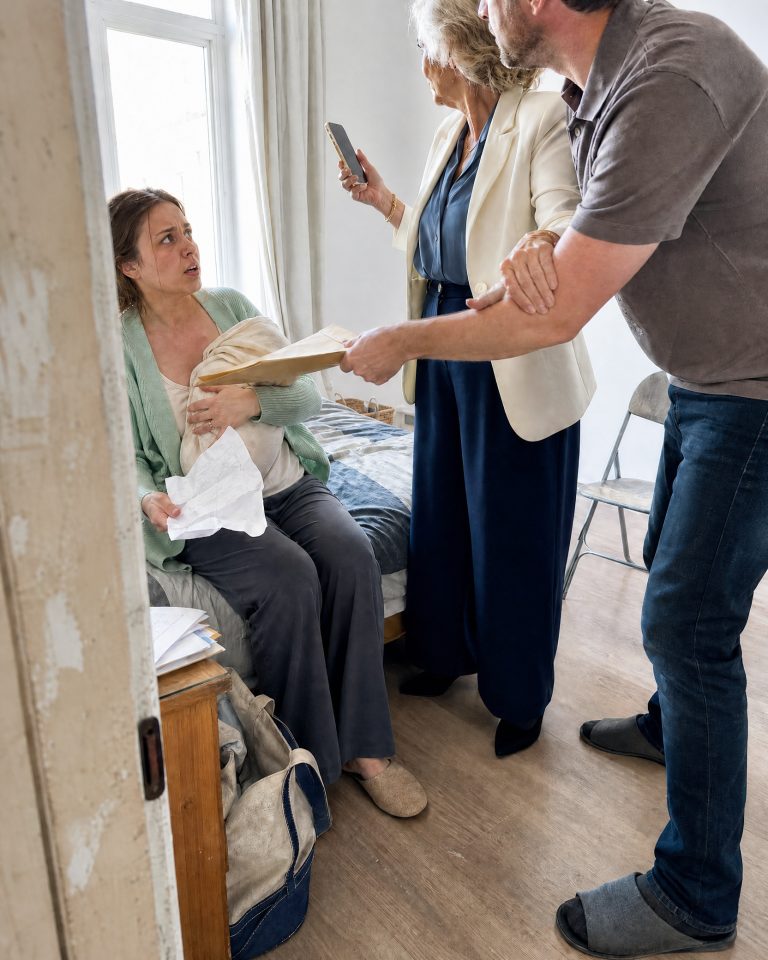
I had no money, no car, and nowhere to go. Dr. Thorne, seeing my desperate situation, offered me a spare room in his small, cluttered apartment above his archive office. He was a man of books and history, not hospitality, but his compassion was undeniable.
“You’re not just a subject of academic interest anymore, Mrs. Beckett,” he confessed, helping me carefully into his passenger seat. “This is… unsettling. I can’t just leave you.”
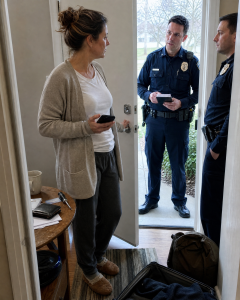
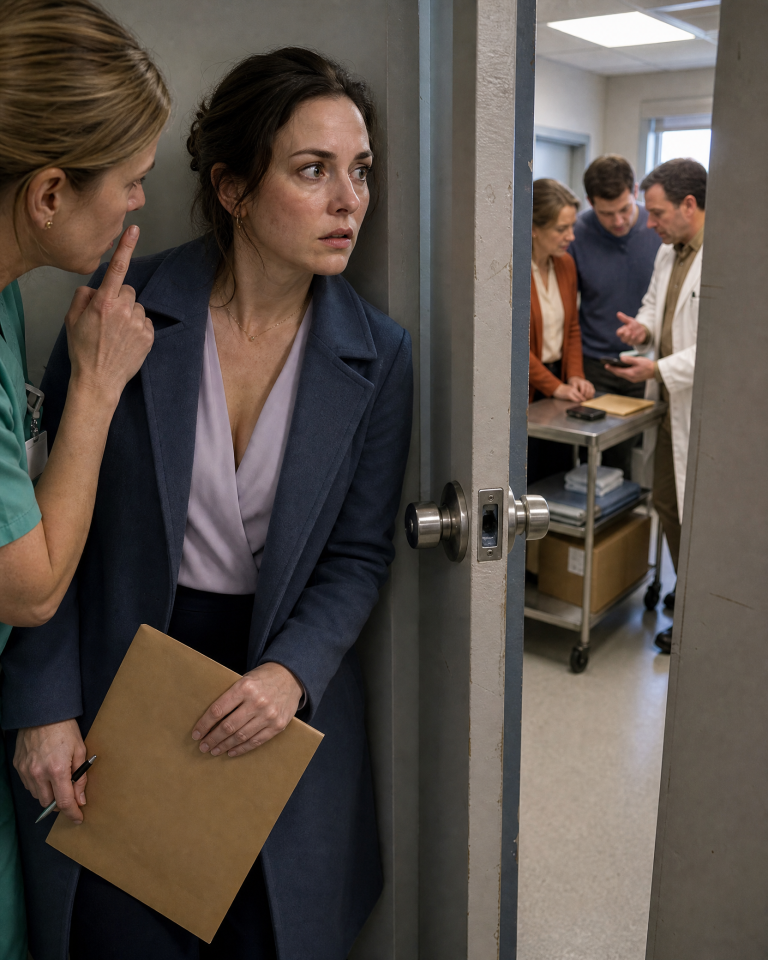
In the days that followed, while I rested my leg, Dr. Thorne became my lifeline. He spent hours poring over old texts and dusty ledgers in his office below, his frown deepening with each passing day. The police, meanwhile, sent a single, dismissive follow-up officer who took a few perfunctory notes and left, clearly uninterested in challenging the Ashwoods’ narrative.
One evening, Dr. Thorne emerged from his archives, a thick, leather-bound book clutched in his hand, his usually calm demeanor replaced by a look of grave concern. He sat opposite me, the book resting on his lap.
“Clara,” he began, using my first name for the first time, his voice low. “I’ve been digging. It’s not just Elara Ashwood. It’s never just one person with these old families, not when the stories run so deep.”
My heart pounded. I leaned forward, ignoring the ache in my leg.
“I found it,” he continued, pushing the book towards me. “A pattern. It started subtly at first, in the late 1800s. Casual mentions of Ashwood wives ‘retiring to the country’ or ‘succumbing to a delicate constitution’.”
He pointed to an entry, faded ink on yellowed parchment. “Martha Ashwood, 1888. ‘A spirited woman, known for her independent thought, regrettably passed on after a short, unexplained illness.'”
“Spirited,” I whispered, thinking of my own supposed “erratic behavior.”
“Exactly,” Thorne said. “Then, in the early 1900s, it becomes more direct. ‘Disappeared under mysterious circumstances.’ ‘Left abruptly after a domestic dispute.’ Always women, always those who, by all accounts, sought some form of independence or defied tradition.”
He flipped more pages. “Evelyn Ashwood, 1927. ‘Found wandering the grounds, incoherent, before being sent to an asylum where she later died.’ The reports from the asylum noted her obsessive fear of the Ashwood house.”
“They’ve been doing this for generations,” I said, a cold dread washing over me. “The ‘disappearing wives’.”
“Precisely,” Thorne confirmed, his eyes grim. “But it gets worse. In the earliest records, I found repeated mentions of a specific ancestor: Morwen Ashwood.”
He showed me an engraving in the book. A stern-faced woman in a high-necked dress, her eyes piercing. “Morwen was married into the Ashwood family in the early 1800s. The family history paints her as a ‘troubled’ woman, prone to ‘hysteria’ and ‘disobedience’.”
“Sound familiar?” I asked, a bitter taste in my mouth.
“Indeed,” Thorne replied. “But digging deeper, past the official eulogies, I found old private journals and letters. Morwen Ashwood was a fiercely intelligent woman who chafed under the repressive traditions of her era and, specifically, her cruel, controlling husband. She sought to defy him, to exert her own will.”
He paused, letting the implication sink in. “Her disappearance was never explained. She simply vanished from the records. But the mentions of ‘house’s will’ and ‘obedience to Morwen’s traditions’ started appearing in family documents *after* her vanishing.”
“So she became the ‘house’?” I breathed, the hair on my arms standing on end. “A vengeful spirit, punishing independent women like me?”
“It seems she’s not just a ghost haunting the halls,” Thorne explained, adjusting his glasses. “She’s an insidious influence, shaping the family’s ‘traditions,’ perpetuating the very abuse she suffered. Elara isn’t just cruel; she’s a conduit, a vessel for Morwen’s twisted will.”
He tapped the book. “This symbol on your leg, the one from the bottle opener… it’s a variant of a sigil Morwen herself used in some of her personal effects. It’s a sign of a binding ritual, a claim of ownership. When you tried to escape using that opener, you didn’t just injure yourself, Clara. You awakened something ancient and powerful, something that now sees you as a direct challenge.”
The weight of generations of suffering pressed down on me. I wasn’t just fighting Elara; I was fighting an entire lineage, a malevolent ghost enforcing its will through the living.
“The Ashwoods’ influence in this town runs deep,” Thorne warned, his voice serious. “They own much of the land, they fund civic projects, they pull strings. Simply running away won’t be enough, Clara. They will come for you. They will try to drag you back. They always do.”
I thought of the police’s dismissive tone, the quick discharge from the hospital. Thorne was right. They weren’t just concerned about my “mental state.” They were protecting a dark secret, one that had claimed wives for over a century. The cold in my leg wasn’t just a physical symptom; it was the chilling touch of Morwen Ashwood, reaching out from the past, ensuring I understood my place. The house hadn’t just claimed me; it wanted to make me another disappearing wife. I had to fight back, not just for myself, but for all the women who came before me.
More Stories







+ There are no comments
Add yours