
Post-Civil War Betrayal: Paralytic Wife's Secret Ledger Exposes Husband's Plot to Seize Her Family's Estate, With Unexpected Aid From His Past


The days that followed Maeve’s secret visit transformed my sickroom from a prison of despair into a clandestine command center. My body still refused to cooperate, confining me to the bed, but my mind was clearer, sharper, invigorated by the unexpected alliance. The weight of isolation had lifted, replaced by a quiet sense of purpose.
I often lay awake in the quiet hours, planning my next move, rehearsing how I would gather my own evidence. Adelia and Silas, convinced of my mental deterioration, had grown careless in their conversations, often speaking freely just outside my door, assuming my infirmity rendered me deaf to their machinations.
One afternoon, Maeve brought me a small, leather-bound ledger, similar in size to the one she kept, along with a slender pen and a tiny bottle of ink. These were ordinary objects, easily disguised as account books for household expenses, should Adelia ever grow suspicious. Maeve’s ingenuity was truly remarkable.
“It belonged to your father, ma’am,” she whispered, placing the items on my bedside table. “He kept his garden notes in it. No one will think twice about it.”
The feel of the leather against my trembling fingers was oddly comforting, a tangible connection to my late father, whose meticulous nature I now sought to emulate. This was more than just a book; it was a symbol of continuity, of defiance.
My fingers, though still weak, could manage the delicate task of writing. It was slow, painstaking work, each letter a small victory against the paralysis that still held me captive. I started by documenting the coercion itself, the exact date and time Silas and Adelia had presented the papers.
I recalled the cold gleam in Silas’s eyes, the condescending set of Adelia’s jaw. Their faces, etched in my memory, became the silent witnesses to my burgeoning record. I wrote about the specific clauses, especially the one concerning the ancestral burial grounds, the ultimate desecration.
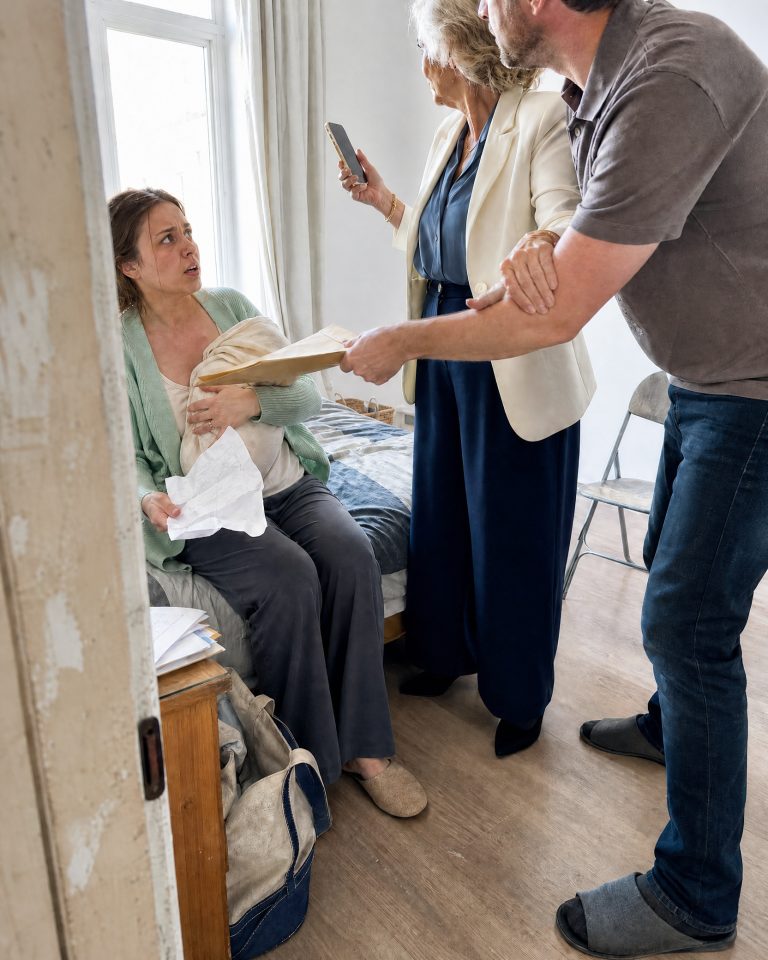
Adelia would often enter my room, her gaze sweeping over my still form, assessing my condition. She would find me staring blankly at the ceiling, or sometimes with my eyes closed, feigning a deeper despair than I actually felt. Her lips would thin into a satisfied line, confirming her belief in my helplessness.
“Still lost in thought, Eleanor?” she would scoff, her voice laced with mock sympathy. “Pity, such a vibrant mind, now so… dimmed.”
Her words were meant to wound, to reinforce my supposed incapacity, but they only fueled my quiet resolve. Each dismissive comment, each patronizing glance, was carefully noted in my ledger. They were building their case against me, and I was building mine against them, using their own words.
I began to record every detail of their new routine. Silas’s frequent trips to Charleston, ostensibly for “business,” but always followed by hushed, urgent conversations with Adelia upon his return. I jotted down the names of the unfamiliar men who sometimes accompanied him, their faces grim and their clothes dusty from travel.
The ledger became my silent confidante, holding the inventory of my suffering and their escalating avarice. I transcribed conversations I overheard from the hallway, filtering out the mundane to capture snippets of their sinister plans. My ears had become acutely attuned to the subtle shifts in their tones, the revealing pauses.
“Arthur Gaines is proving more troublesome than expected,” Silas had muttered one evening, his voice tight with frustration. “The old fool insists on abiding by Beaumont’s idiotic trust.”
I carefully inscribed this into my ledger, noting the date and time. It was crucial evidence, showing their clear intent to bypass legal protections, confirming their fraudulent motives. This validated Arthur Gaines’s suspicions.
“He respects Eleanor’s father’s wishes too much,” Adelia had replied, her tone sharp. “We’ll have to find another way to circumvent this… inconvenience.”
Another entry, another piece of the puzzle. They saw the trust as an “inconvenience,” not a sacred protection of family legacy. Their disregard for the law and for my father’s intentions was blatant, and now, it was recorded.
My focus on the ledger was intense, absorbing, consuming the long, solitary hours. When Adelia would visit, I would quickly slide the book beneath my mattress, the pen tucked discreetly under my pillow. She never looked closely enough to notice the faint ink stains on my fingertips, or the subtle glint of resolve in my eyes.
She misinterpreted my quiet demeanor, my concentrated stillness. She saw it as a sign of deepening depression, of a mind retreating further into itself, broken by circumstance. This perception, born of her arrogance, was my shield.
“She’s wasting away,” I once heard her tell Silas, just outside my door. “Hardly eats, barely speaks. Her mind is surely gone.”
This specific, petty cruelty, the casual dismissal of my very being, solidified my purpose. They were actively broadcasting a false narrative, attempting to rewrite my reality for their own gain. My ledger would be the truth.
I continued to add entries: the declining quality of my meals, reflecting their stinginess; the infrequent visits from the doctor, likely under Adelia’s strict instruction; the general neglect that slowly began to settle over the house, betraying their shift in priorities from care to acquisition. Each detail was a small wound, now carefully documented.
One afternoon, I heard Silas arguing heatedly with Adelia in the drawing-room below. Their voices, usually hushed, were raised in a tense exchange. I strained to listen, my ear pressed against the wooden headboard, every nerve alert.
“The gambling debts are mounting, Mother!” Silas exclaimed, his voice cracking with desperation. “Old Man Henderson is threatening to call in his markers. I need funds, and Eleanor’s estate is the only solution!”
My breath hitched. Gambling debts. This was a new layer of their treachery, a direct financial motive beyond mere ambition. It wasn’t just about rebuilding the Cromwell name; it was about bailing Silas out of a deepening personal crisis. This specific, concrete detail about his gambling debts was critical.
I quickly pulled out my ledger, my hand shaking slightly as I scrawled the new information. “Silas’s gambling debts. Henderson. Urgent need for funds.” These raw notes would be deciphered later, refined into formal entries.
Adelia’s reply was sharp, cutting through Silas’s panic. “Then we make sure the trust doesn’t stand in our way, Silas. We press harder. We make her incapacity undeniable.”
Her words solidified their strategy: dismantle my mental standing to bypass the legal trust. The threat of institutionalization, once a vague fear, now felt chillingly real, a desperate measure they were willing to employ. I meticulously recorded this, knowing it would expose their true intent.
The ledger grew thicker with each passing day, a silent testament to their unfolding conspiracy. It contained dates, overheard dialogue, observations of financial documents, and the precise times of their increasingly urgent discussions. It was a mosaic of their greed, assembled piece by agonizing piece.
My once-frail hands, though still trembling, grew stronger with each stroke of the pen. The act of writing, of actively fighting back, filled me with a quiet strength that defied my physical limitations. I was not helpless; I was meticulously preparing for war.
Adelia, observing my quiet concentration, would often sigh dramatically before leaving my room. She mistook my fierce focus for a deep melancholy, a woman lost in the haze of illness and sorrow. She saw a sign of surrender.
“Poor Eleanor,” she would muse aloud, loud enough for me to hear. “She scarcely seems to recognize her own child these days.”
This particular lie, the suggestion that I was a neglectful mother, cut me to the quick. It was a direct attack on my most sacred bond, a cruel attempt to diminish my worth. But even that, too, went into the ledger, a record of her depravity.
Her misinterpretation, her blindness to my true resilience, was a strategic advantage. It allowed me to continue my work undisturbed, my secret ledger growing in scope and detail, becoming an irrefutable chronicle of their deceit. They were underestimating me, and that was their gravest error. I closed the ledger, a grim satisfaction settling in my heart. They had no idea what quiet fire lay beneath my placid exterior.
More Stories










+ There are no comments
Add yours