
Driven by Wild Donkeys to a Bullet-Riddled Carriage, He Uncovers a Murder Plot Connected to His Own Ruin and a Close Friend


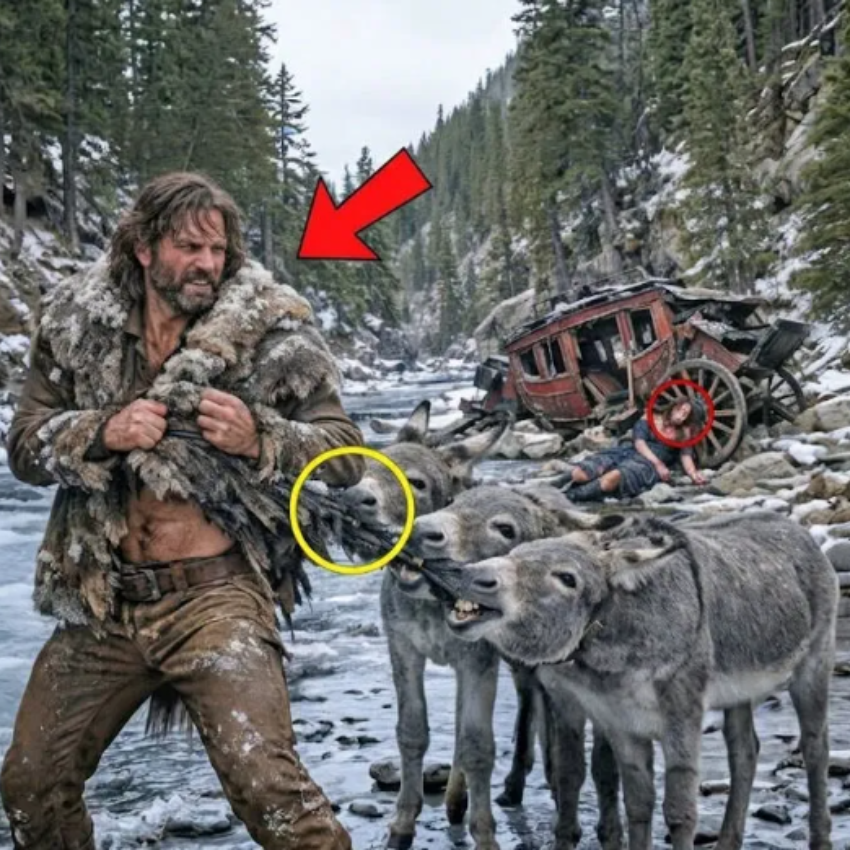
The sun was dipping below the distant mesas, casting long, purple shadows across Calvin O’Connell’s porch. We sat on rocking chairs, the rhythmic creak of the wood a familiar comfort. Calvin, my closest friend in this new land, held a glass of whiskey, its amber liquid glinting in the fading light. He’d given me a generous loan after my bankruptcy in Ireland, an act of kindness that had solidified our bond. He was more than a friend; he was a lifeline.
“Still stewing about that carriage, Lucas?” he asked, taking a slow sip. His voice was warm, tinged with concern.
I explained everything: the insignia ring, Abernathy’s identification of the defunct Russian mercantile guild, and the sickening realization that it was the same guild that had been implicated in Bartholomew Finch’s fraud, the very scheme that had ruined me. I told him about Higgins’s chilling dismissals and veiled warnings.
Calvin listened intently, his expression a mixture of sympathy and mild apprehension. He ran a hand through his sandy hair, then leaned forward, resting his forearms on his knees.
“Look, Lucas,” he began, his voice dropping to a serious tone. “I know this is hard to hear, but maybe you should just… let it go.”
He shook his head slowly.
“Bad luck, friend. Pure and simple bad luck. You’ve had enough of it.”
He gestured vaguely towards the setting sun.
“This new life you’re building here, it’s a good one. Honest work, honest people. Why stir up ghosts from the past? Ghosts that clearly bring nothing but trouble.”
His words, meant as reassurance, felt like a cold splash of water. He was trying to protect me, I thought. He was worried that my old wounds would reopen, that I would fall back into the same traps. It felt like the genuine concern of a true friend.
“But Calvin, this isn’t just about my past,” I argued, the frustration rising in my throat. “This is about a young woman. Elara. She was shot. It wasn’t an accident. And now I find this connection to my own ruin. It feels… fated, somehow.”
Calvin sighed, a sound that seemed heavy with weary wisdom. He leaned back in his chair again, the rocking resuming its gentle rhythm.
“Fated, aye,” he said, his voice laced with a subtle sarcasm that I missed at the time. “Or perhaps just a warning. A warning that some things are best left buried, Lucas. Some wells are poisoned no matter how deep you dig.”
He took another sip of whiskey. The ice clinked softly against the glass.
“You came here for a fresh start,” he reminded me, his eyes earnest. “To put Ireland and all its miseries behind you. Don’t let this drag you back into that darkness. Don’t go looking for trouble where there is none.”
His advice, I believed, was born of genuine care. He’d seen me at my lowest, after the bankruptcy, after Bartholomew’s betrayal. He knew the pain of losing everything. He was merely cautioning me against repeating old mistakes, against inviting misfortune. The very act of him offering this “sage advice” over a glass of whiskey, in the comfort of his home, felt like a true gesture of friendship. It was the kind of counsel you’d expect from a man who had stood by you when others had turned away.
“You need to focus on your new ranch, Lucas,” Calvin urged, his tone shifting to one of practical advice. “That little spread outside town, it has potential. Focus on the cattle, the crops. Build something solid here, something that can’t be taken from you by some far-off guild or shady partner.”
He even implied that my past troubles might follow me if I stirred up old ghosts. “It’s funny how trouble has a way of finding the same folk, isn’t it?” he remarked, a casual statement that pricked at my insecurities about being a magnet for misfortune. It was a subtle, insidious way of suggesting that I, not the external circumstances, was the cause of my own problems. This was the precise moment of misunderstanding, the carefully crafted bait. I saw concern; he was planting fear.
I still held onto the idea that he was a loyal friend, a staunch supporter. The idea that Calvin, the man who’d offered me a hand when I had nothing, could be anything other than a sincere well-wisher, was unthinkable. The trust I placed in him was absolute. It was a foundation of my new life.
“I appreciate your concern, Cal,” I told him, a knot forming in my stomach. “I truly do. But something about this feels… unfinished. I can’t just ignore it.”
Calvin merely shrugged, a practiced gesture of resignation.
“Your call, friend,” he said, but his eyes held a flicker of something I couldn’t quite place – not anger, but perhaps a calculating disappointment. “Just don’t say I didn’t warn you.”
He took a final, long drink from his glass, then stood up, signaling the end of our conversation.
“Come on,” he said, with a forced cheerfulness. “Let’s grab some dinner. Forget about this for a bit. A man needs to eat.”
As we walked towards the house, the last rays of sunlight painted the horizon in hues of orange and deep red. The vastness of the Western sky usually brought me a sense of peace, a feeling of endless possibility. But tonight, it felt overwhelming, almost threatening. Calvin’s words echoed in my mind. Was he right? Was I foolish to pursue this, risking my fragile new beginning?
His casual dismissal of a potential murder as “bad luck” was a cruel trivialization of Elara’s suffering. It was a subtle form of gaslighting, making me question my own moral compass. The way he made me feel that my investigative impulse was somehow a personal flaw, a weakness that would attract misfortune, was a particularly insidious form of manipulation. He didn’t shout; he merely whispered doubt into my ear, disguised as friendship.
The conversation left me feeling uneasy, yet still convinced of Calvin’s good intentions. I wrestled with his advice. He was my friend. He wanted the best for me. Yet, Elara’s face, pale and broken, haunted my thoughts. The mystery of the ring, the lawyer’s threats, the hidden sampler—they all screamed of something more profound than mere “bad luck.”
I was caught between loyalty to a friend and an unyielding sense of justice. The very foundation of my new life, built on trust and honest work, felt like it was beginning to crack. I trusted Calvin. I wanted to trust him. But a small, persistent voice in the back of my mind whispered that some warnings, even from friends, are not always what they seem. I just couldn’t imagine then the true nature of the deceit.
More Stories

















+ There are no comments
Add yours