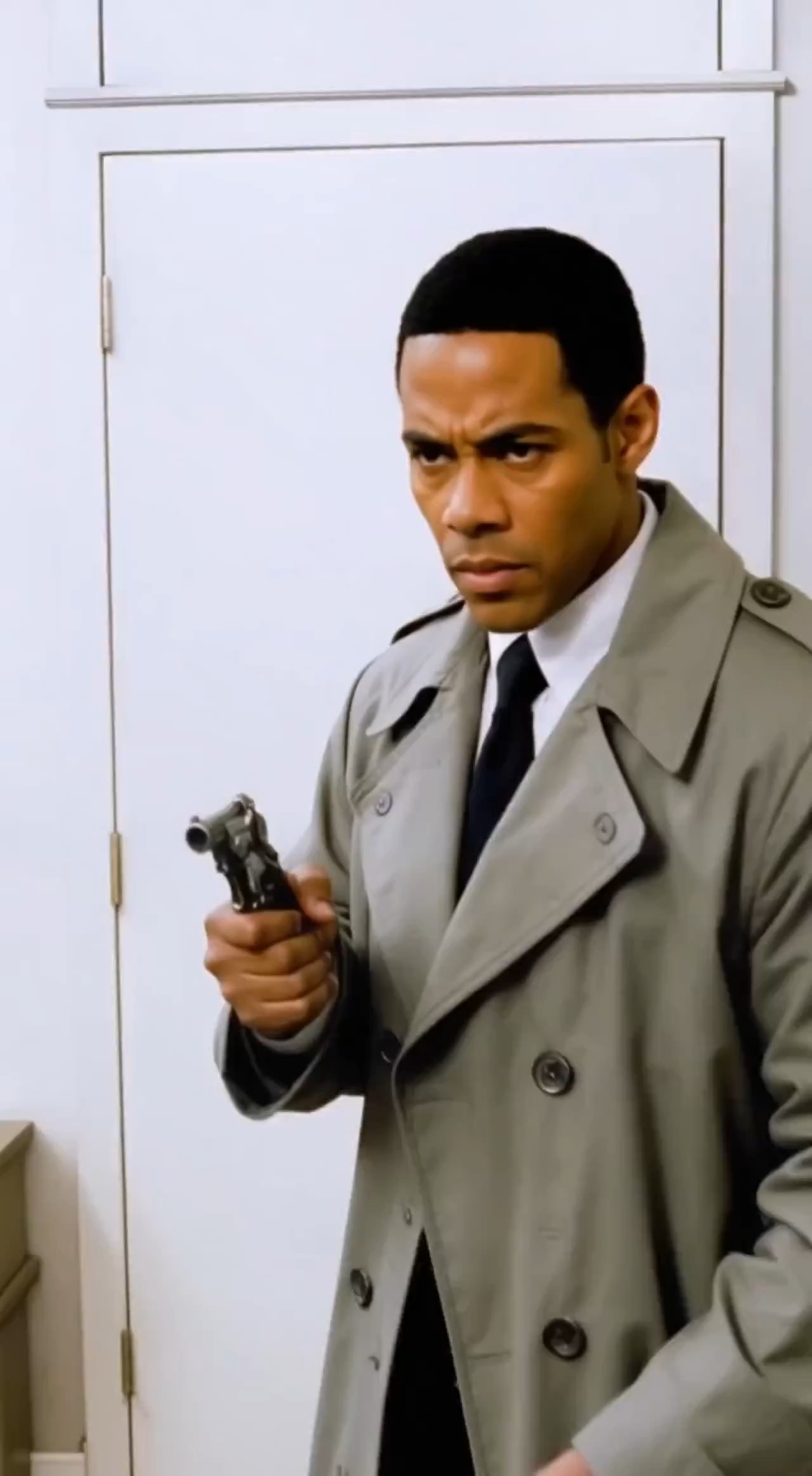
In 1968 Washington D.C., Broken Detective Elijah Gaines Fights His Former Protégé To Expose A $40 Million Aerospace Bio-Toxin Mind-Control Conspiracy Targeting Black Tech Magnete Marcus DuBois


The city streets were an eerie wasteland, bathed in the orange glow of streetlights that struggled against the thick fog rolling in from the Potomac. The 1968 citywide curfew had emptied Washington D.C., turning its bustling arteries into silent, ghost-haunted avenues. It was the perfect cloak.
I drove Marcus’s Impala, the one I’d “borrowed” from his garage, through the desolate Maryland backroads. The abandoned aerospace facility loomed out of the mist, a skeletal silhouette against the bruised purple sky. Weeds grew through cracks in the concrete, and a rusted chain-link fence, topped with concertina wire, sagged at various points.
Breaching the perimeter was easier than I expected, a testament to its abandonment. A section of the fence had been cut, crudely, as if someone else had already been here. Or perhaps, someone wanted to make it seem that way.
The air hung heavy and still. I could taste the damp earth and something metallic. The main hangar doors were massive, but a smaller service entrance, half-hidden by overgrown bushes, offered a way in. The lock was old, rusted. A quick twist of a pry bar, and the bolt groaned free.
Inside, the hangar was vast, a cathedral of disuse. Dust motes danced in the slivers of moonlight filtering through grimy skylights. The only sounds were the drip of condensation and a faint, rhythmic hum from somewhere below.
That hum. It was electric, powerful. It was the sound of something *working*.
I moved like a shadow, my steps muffled by the debris on the concrete floor. My eyes adjusted to the gloom. I spotted a narrow staircase leading down, partially obscured by stacks of forgotten equipment crates. The air grew colder as I descended, the hum growing louder, more insistent.
The subterranean bunker was a stark contrast to the decaying hangar above. Clean, cold concrete walls, humming ventilation systems, and a faint smell of ozone and antiseptic. It was a research lab, just as Dr. Harris had suspected.
Then I saw them. Two armed sentries, standing at ease near a heavy steel door, their faces illuminated by the green glow of a monitor. They wore dark, unmarked uniforms. Julian’s men, no doubt. Corporate security, but with the discipline of military operatives.
I pressed myself against the cold concrete, my heart hammering. I edged past a row of large, humming generators, their warmth radiating against my back. The sentries were focused on their watches, on the silence. They weren’t expecting anyone.
I waited for the precise moment, a synchronized shift of their weight, a quick glance at the monitor. It was less than three seconds. I moved.
Slipping past them, I reached the heavy steel door. A keypad shimmered beside it. Too complex for a pry bar. But then I noticed a smaller access panel, a maintenance hatch, low to the ground. It was an old model, not a modern digital lock.
My tools were small, nimble. A few tense minutes, a click, a faint whir. The hatch opened just enough for me to slip through, revealing a narrow service corridor.
It led directly to what looked like a containment area. A thick pane of one-way glass, reinforced steel, looked into a brightly lit cell.
And inside, sitting calmly at a simple metal table, was Marcus DuBois. He looked perfectly lucid, perfectly still. My blood ran cold, but not from fear. From the realization that everything I thought I knew was about to shatter.
More Stories





+ There are no comments
Add yours