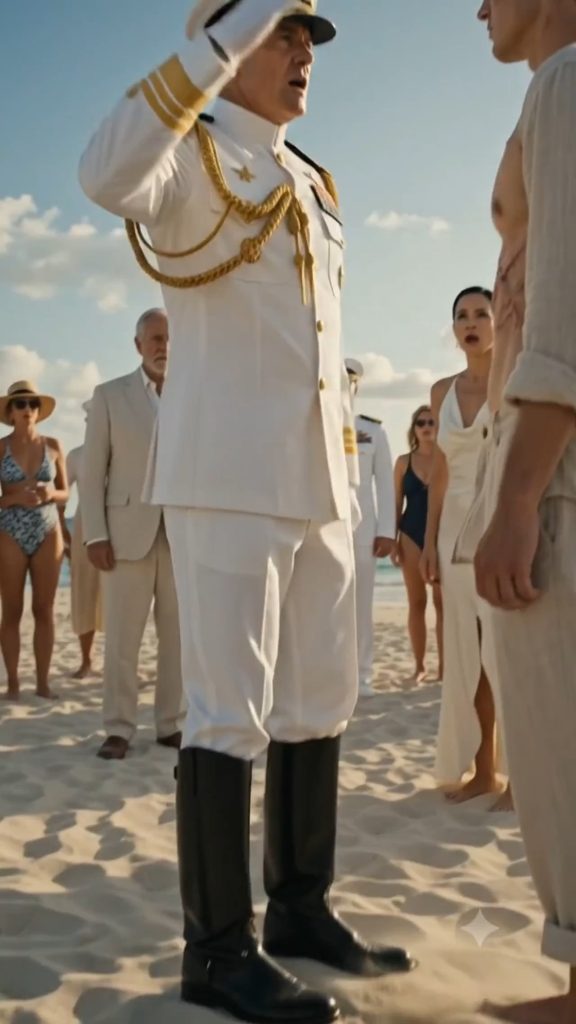
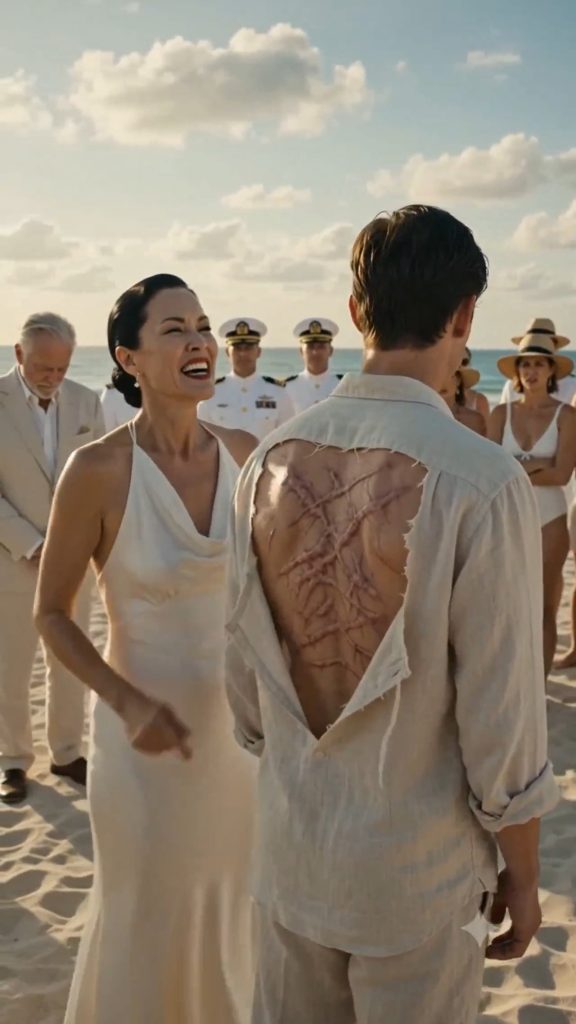
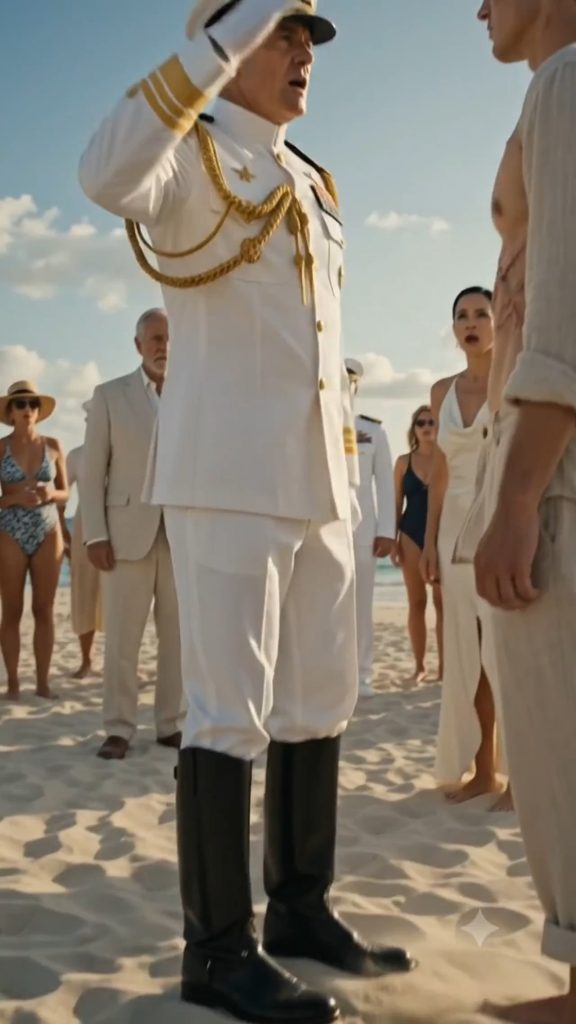
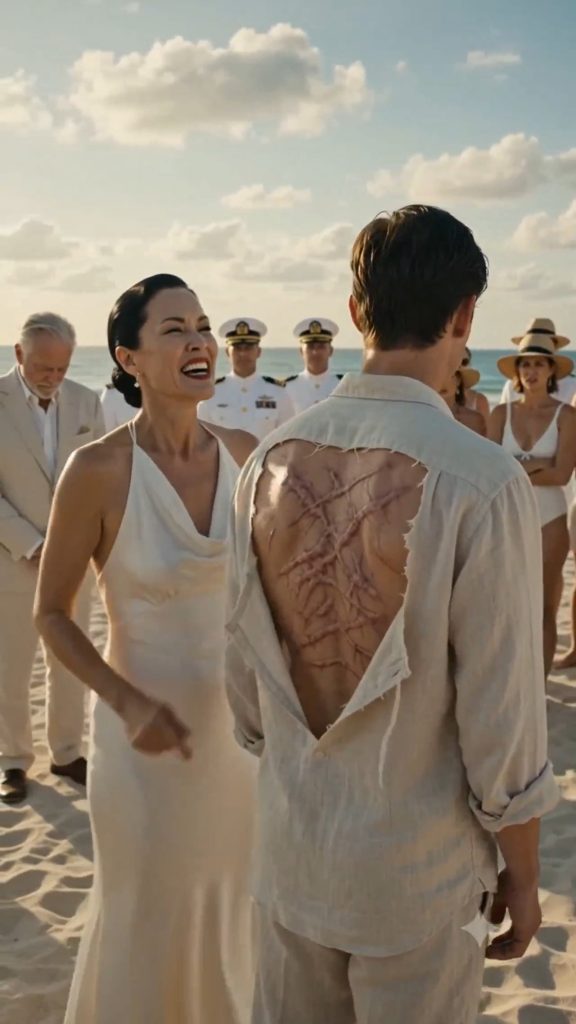
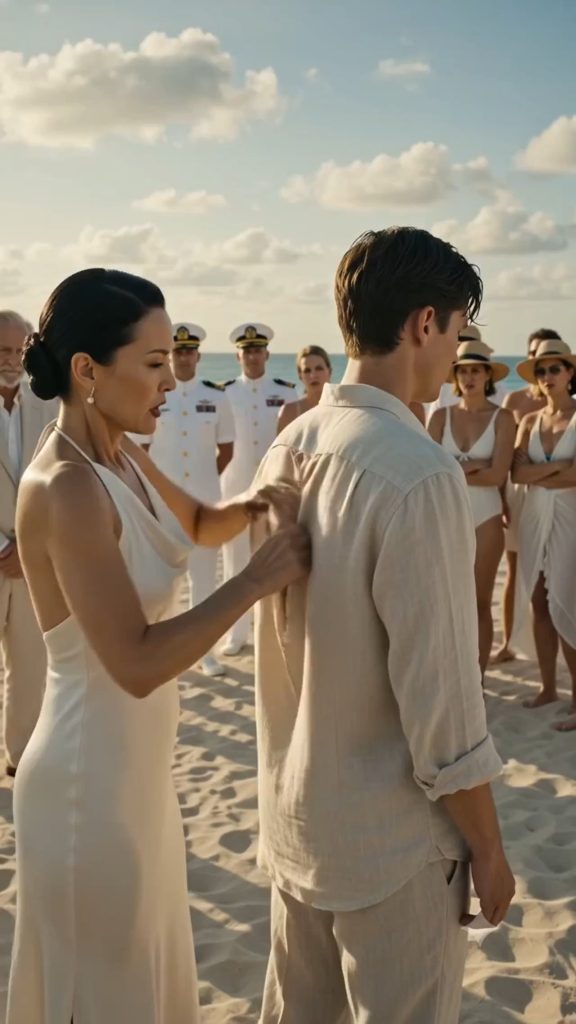
My elder sister ripped my work shirt open on the crowded deck of the Oakhaven Yacht Club right in front of six visiting Navy officers.






Eli Parsons handed me the worn leather logbook, its pages filled with his meticulous notes and cryptic acoustic signatures. Back at my freezing apartment, huddled under a single bare bulb powered by a salvaged battery, I pored over the data.
His notes were an amateur’s attempt at acoustic analysis, but the raw data he’d transcribed—frequencies, amplitudes, decay rates—were pure gold. My specialized knowledge in naval acoustic hull-resonance analysis, honed over years in the Navy’s deep-sea structural salvage teams, kicked in.
The *Trident* disaster wasn’t just a random event; it was a textbook case of material failure. Eli’s data, even in its raw form, clearly showed the characteristic resonance patterns of cheap alloy, a low-grade steel that failed under stress, not a faulty valve or crew error. The reactor pipe had literally sung its own death knell before bursting.
But that wasn’t the only thing the data sparked in my mind. The frequencies, the way certain vibrations propagated through metal and water… it reminded me of other structural issues. Issues I’d observed recently, right here in Oakhaven.
I spent the next two days, armed with Eli’s data and my own portable acoustic analysis gear—a handheld sonar transponder and a small, highly sensitive data recorder I’d kept from my Navy days. I needed to confirm a growing suspicion.
Bundled against the biting cold, I moved along Oakhaven’s inner harbor, a place usually bustling with fishing trawlers but now eerily quiet. I focused my transponder on Victoria’s newly constructed $1.2 million luxury yacht pier. It was a monstrous concrete structure, all sharp angles and gleaming surfaces, utterly out of place amidst the historic, weathered docks.
I carefully positioned the transponder, aiming its narrow beam at the concrete pilings driven into the seabed. The device emitted a series of precisely calibrated sound waves. My recorder captured the echoes, analyzing the time delay, the attenuation, and the subtle shifts in frequency that indicated changes in the material they passed through.
Four cold hours I worked, my fingers stiff, my breath fogging the small screen of the recorder. Each ping, each thrum, each subtle resonance told a story. The story was grim.
My calculations, cross-referenced with Eli’s notes and my own experience, were irrefutable. The pilings of Victoria’s grand luxury pier, the centerpiece of her development, were driven into loose silt beds. Not solid bedrock, not properly compacted fill, but shifting, unstable silt.
And worse, they lacked the proper steel sleeve encasements that were mandatory for structures built in Oakhaven’s notoriously soft harbor floor. It was a massive oversight, or more likely, a deliberate corner cut to save costs.
The acoustic signatures screamed structural weakness. The pier wasn’t settled; it was actively shifting, subtly, imperceptibly to the naked eye, but catastrophically to its long-term integrity.
This entire pier, Victoria’s crowning achievement, was on the verge of catastrophic structural collapse. Not in years, but potentially in months, especially with the heavy winter storms that routinely battered the coast.
If it fell, it wouldn’t just be Victoria’s investment that sank. It would block the entire commercial harbor channel, crippling Oakhaven’s fishing fleet and its economy. Victoria hadn’t just built a pier; she’d built a time bomb under the whole town.
More Stories







+ There are no comments
Add yours