
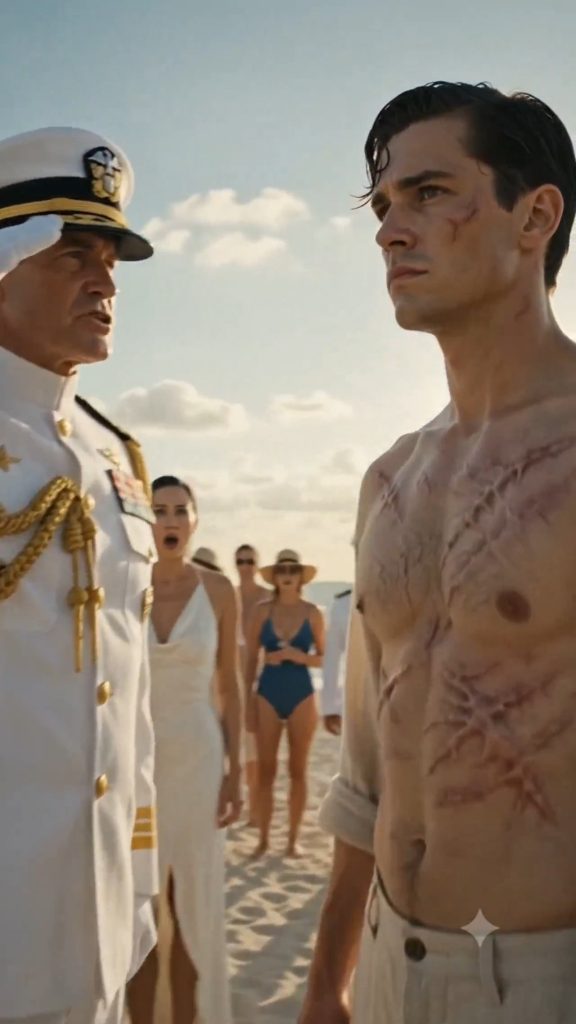
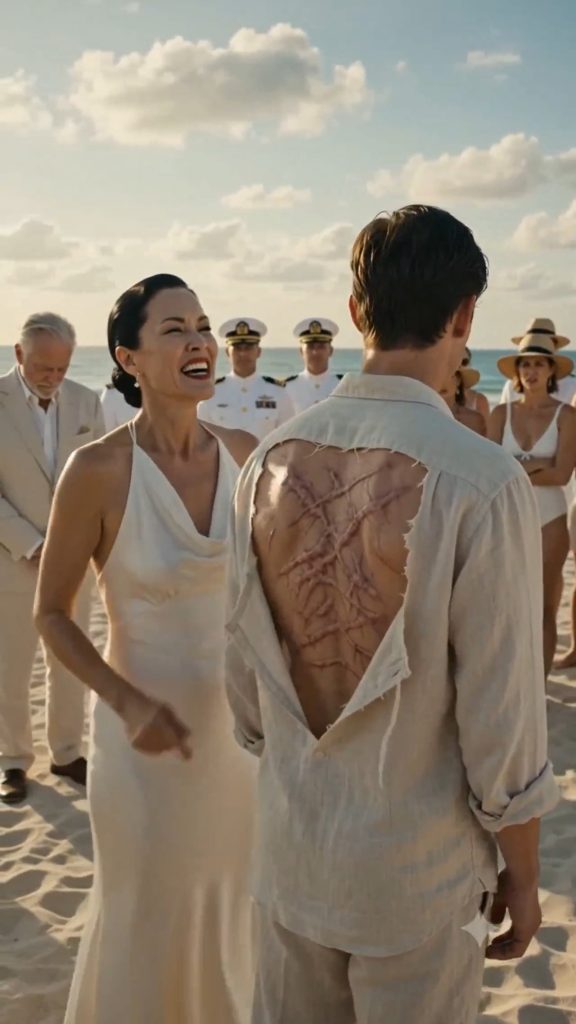
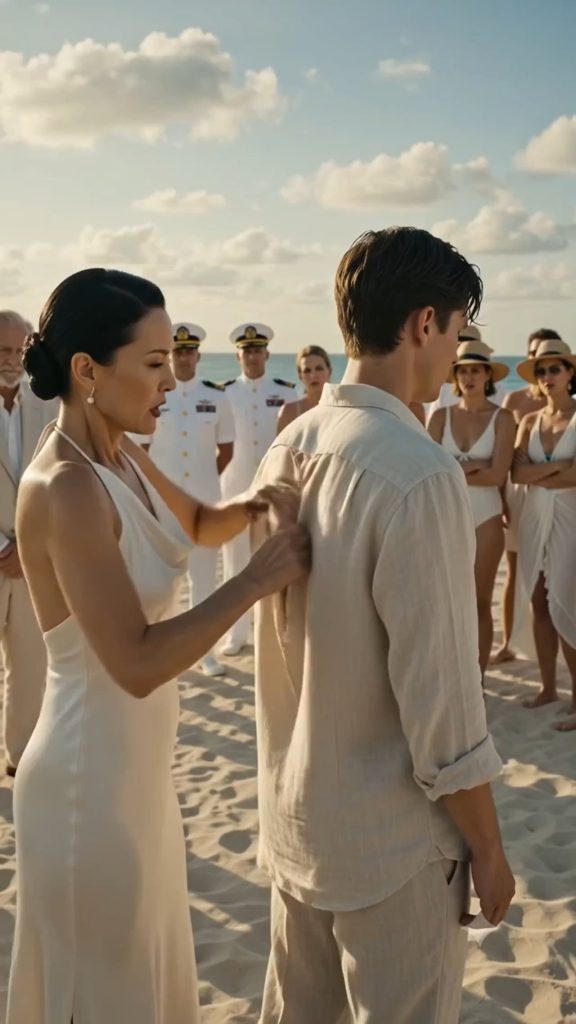
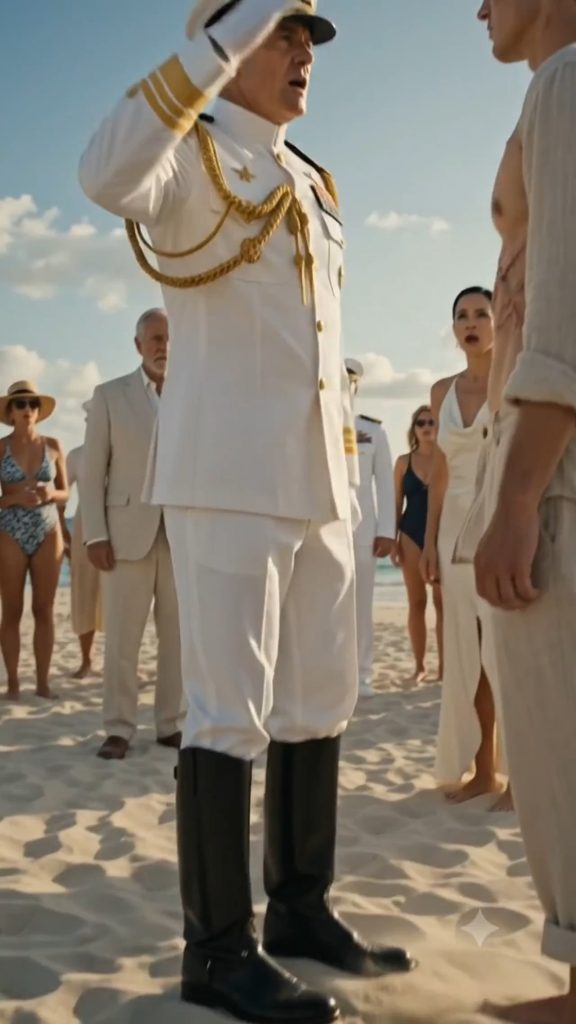
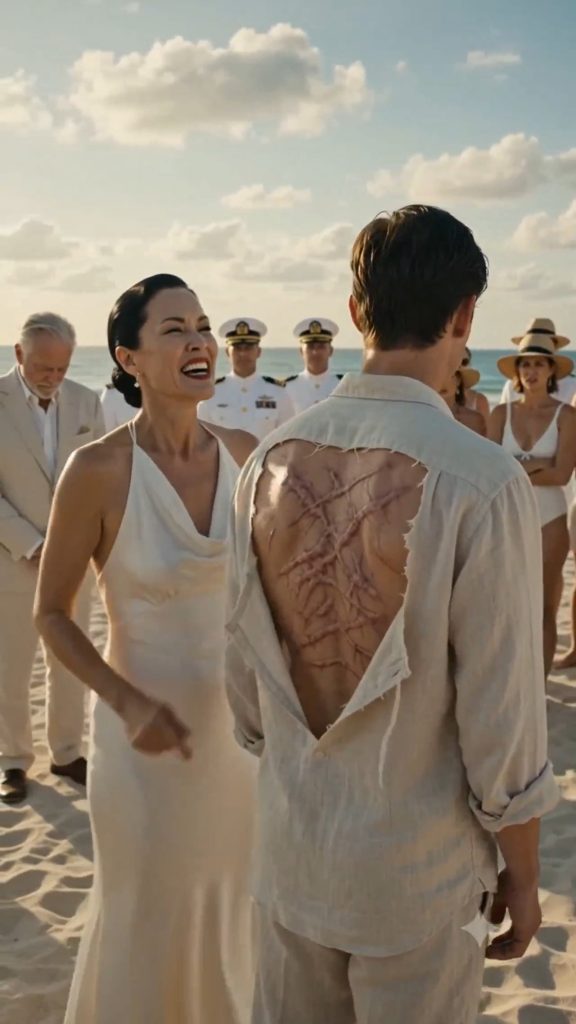
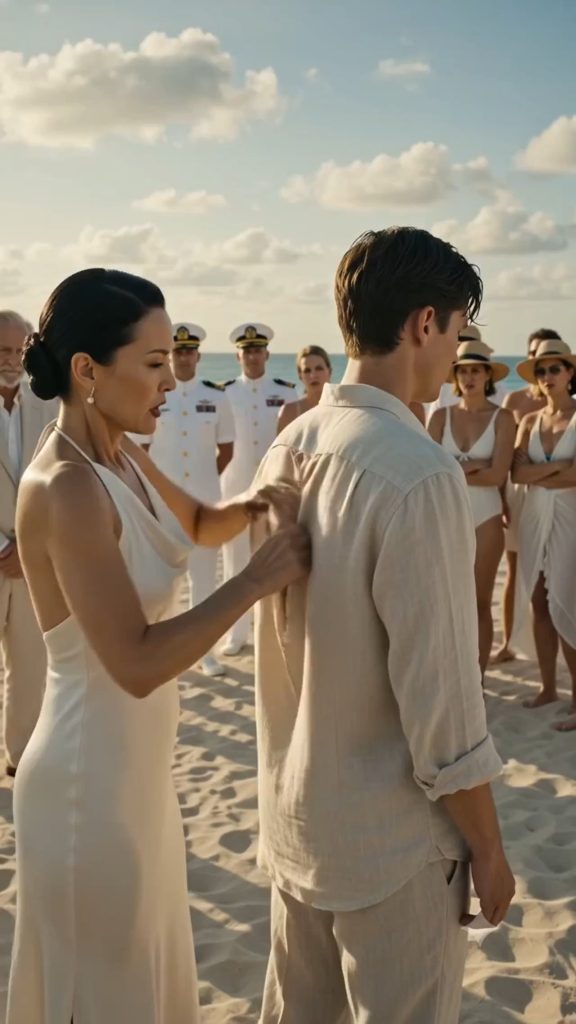
My elder sister ripped my work shirt open on the crowded deck of the Oakhaven Yacht Club right in front of six visiting Navy officers.







The next morning, bone-chilling cold still clung to Oakhaven. I needed fittings to jury-rig a small kerosene heater in my apartment and perhaps a battery-powered light. My truck, old but reliable, rumbled to life, its exhaust pluming white in the freezing air.
I drove the three miles out of town to Oakhaven Marine Supply, a sprawling, dusty warehouse that smelled of oil, sawdust, and salt. It was a haven for local boaters and repairmen, a place where you could always find that one obscure part.
I was rummaging through a bin of brass hose connectors, my hands still stiff from the cold, when a gruff voice spoke beside me.
“That’s a good quality bag, son. Seen a few of those in my time.”
I looked up. A man in his early seventies stood there, a worn Navy machinist’s cap perched on his head. His eyes, crinkled at the corners, scanned the scorched, faded fabric of my Navy duffel bag, which I still carried out of habit. The bag bore the stenciled hull unit number of the USS *Trident*.
“It’s seen better days,” I replied, a tight knot forming in my stomach. The *Trident* was a raw nerve.
“USS *Trident*,” he mused, reading the faded stenciling. “Nuclear sub, Fast Attack. Newport out of Groton. I was chief machinist at Newport for thirty years. Retired five years back. Knew every boat in and out of that yard.”
My head snapped up. “You were at Newport in 2019?”
He nodded, a slight frown creasing his brow. “Course I was. That was the year of the *Trident* incident. Big mess. They locked down the drydock like it was Area 51.”
This was Eli Parsons, the outline confirmed. My heart started to pound. This was the coincidental encounter.
“I was on that boat,” I said, keeping my voice low. I didn’t mention the fire, the burns, or the way the Navy had swept it all under the rug.
Eli’s eyes widened, then narrowed in recognition. He took a step closer, scrutinizing my face. “You were? The whispers around the yard… they said a Chief Petty Officer, some hotshot, saved half the crew. But then the official story changed. Said it was crew error, an engine fire. A cover-up, if you ask me.”
He leaned in, his voice dropping to a conspiratorial whisper. “They blamed a ‘faulty valve operation’ by some greenhorn. But that wasn’t it. Not at all.”
“What was it, then?” I asked, my voice hoarse.
Eli looked around the hardware store, as if expecting spies to be hiding behind the caulking guns. “Reactor pipe burst, son. Blew right through its housing. And it wasn’t because of a greenhorn. It was bad alloy. Cheap steel. Knew it the moment I saw the fractures in the drydock.”
He shook his head, a look of disgust on his face. “They sealed all the records. Said ‘national security.’ But I was on duty that night. I heard the acoustic logs. The raw tapes don’t lie. They showed resonance patterns that scream ‘material failure,’ not ‘human error.’”
“The acoustic logs?” I pressed. My specialized skill was acoustic hull-resonance analysis. This was gold.
Eli’s eyes gleamed. He reached into his coat pocket and pulled out a small, well-worn leather-bound notebook. “They tried to redact everything. Scrub the real data. But I was meticulous. I’d been logging acoustic signatures for thirty years. I knew what I was looking at. Made a copy of the raw engine logbook, every ping and thrum, before they could ‘lose’ it.”
He flipped open the notebook to a specific page. “Got it right here. Five years I’ve been sitting on this, waiting for someone to care. Waiting for justice for those boys.”
My pulse quickened. Eli Parsons, a retired Navy machinist, held the unredacted engine logbook from the night of the *Trident* disaster. It was the proof I needed, not just for my own honor, but for the truth about the sub. And a truth that I suddenly realized might be connected to Victoria’s new development.
More Stories






+ There are no comments
Add yours