
Matilda Ainsworth Forged My Husband's Divorce, Diverted Half a Million from Our Estate, and Tried to Ruin My Name


The tension in the Ainsworth mansion became a living entity, palpable in the hushed conversations of the staff and the somber atmosphere that permeated every room. The frozen accounts meant a daily struggle to manage, to explain, to reassure. The petty cruelties multiplied: tradesmen turning away, the pantry slowly emptying, the strain evident in the faces of the long-serving household.
Agnes Dubois, our housekeeper, usually a woman of quiet dignity and unwavering composure, seemed particularly distressed. Her eyes often darted towards me, filled with a look of troubled sympathy. She worked diligently, but her movements were slower, heavier, burdened by the unspoken crisis.
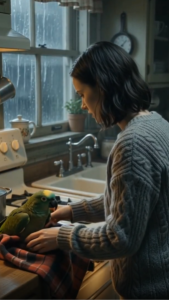
One afternoon, as I was attempting to organize the sparse provisions in the kitchen, Agnes approached me. She wrung her hands, a gesture I had never seen from her before, her gaze fixed on the worn flagstones of the floor.
“Madam Eleanor,” she began, her voice barely a whisper, “I must speak with you.”
I stopped arranging the few loaves of bread. Her distress was profound, visible in the way her shoulders hunched.
“What is it, Agnes?” I asked gently, sensing a deep secret struggling to surface.
She looked up, her eyes brimming with tears.
“I have been terribly worried for you, madam,” she confessed, her voice thick with emotion. “And for Mr. Arthur. This… this is not right.”
She wrung her hands again, then took a deep breath.
“I have overheard things,” she whispered, glancing nervously towards the kitchen door. “Snippets, madam. When Mrs. Ainsworth… old Mrs. Ainsworth… was last here. She was in the drawing-room, speaking with someone, a gentleman in a dark suit, a lawyer, I think.”
My heart pounded. Agnes had always been fiercely loyal, but also deeply afraid of Matilda. Her willingness to speak now, despite that fear, underscored the gravity of what she had heard.
“What did you hear, Agnes?” I urged, keeping my voice low and steady.
“She spoke of… a clause,” Agnes recounted, her memory clearly replaying the scene. “An obscure clause, in the ancestral trust. She said it was ‘old-fashioned,’ but ‘remarkably useful.’ She kept repeating that, madam. ‘Remarkably useful.'”
An obscure clause in the ancestral trust. The words immediately connected with Beatrice’s earlier hints about Matilda’s manipulative tendencies and Arthur’s father’s preemptive warnings. It wasn’t just the forged divorce petition; Matilda was targeting an entirely different, deeper layer of the family’s legal foundations.
“Did she say anything else about this clause?” I pressed, my mind racing.
“Only that it could be ‘interpreted’ in a way that would ‘simplify matters,’ and that it would ‘remove any unwanted… complications’,” Agnes replied, mimicking Matilda’s precise, chilling tone. “She laughed, madam. A cold laugh.”
The image of Matilda laughing, planning her cruel manipulation of an ancient family document, sent a shiver down my spine. This wasn’t a crime of passion; it was a coldly calculated move, rooted in a precise understanding of the family’s history and legal vulnerabilities. It was a petty cruelty disguised as legal maneuvering.
“And you believe she intends to use this clause against us?” I asked, though I already knew the answer.
Agnes nodded, tears finally spilling down her cheeks.
“She spoke of wanting to be the ‘sole steward’ of the estate, madam. She said you and Mr. Arthur were… ‘unfit.'”
Unfit. The same accusation she had been spreading through society, the same justification for freezing the accounts. It all tied together, a meticulously constructed narrative designed to strip us of our position and transfer all power to her. Agnes’s loyalty to me, her raw, visible fear, was a powerful, human counterpoint to Matilda’s cold machinations.
“I am so sorry, madam,” Agnes choked out. “I should have said something sooner, but she is so… terrifying.”
I reached out, taking her trembling hands in mine.
“You have done a great kindness, Agnes,” I assured her. “A great kindness. Your information is invaluable.”
Her confession, born out of fear but driven by loyalty, was a profound moment. It reinforced the idea that while Matilda might control the elite, she could not control the affections and allegiances of everyone. Agnes’s confession was a direct act of defiance, a quiet rebellion against Matilda’s tyranny.
“Did you hear the lawyer’s name?” I asked, hoping for another lead.
Agnes shook her head.
“No, madam. Only that he was ‘new,’ and very nervous. He kept wiping his brow.”
A nervous solicitor. This suggested that even those working for Matilda found her demands unsettling, perhaps even illicit. It confirmed that she was pushing boundaries, perhaps even skirting the edges of legality, and that her plans were not entirely above board. It was another crack in her formidable facade.
“Thank you, Agnes,” I said again, squeezing her hands. “Please, keep your ears open. Anything else you hear, however small, could be important.”
She nodded, wiping her eyes with the corner of her apron.
“I will, madam. I will. I cannot bear to see you suffer at her hands.”
Agnes’s revelation about the “obscure clause” was a crucial piece of the puzzle. It gave us a new target, a new avenue for investigation. Matilda wasn’t just after the existing funds; she was attempting to redefine the very terms of the Ainsworth legacy, to rewrite history in her favor. This was a bold, audacious move, requiring not just forgery, but legal subterfuge. It suggested a much grander, more deeply rooted plan.
Her tearful admission, her fear of Matilda, and her unwavering loyalty to me, offered a moment of poignant human connection amidst the cold calculations of power. It solidified the personal stakes, reminding me that this battle was not just for abstract finances, but for the very soul of the Ainsworth family, and for the people who served it with quiet devotion. We needed to find that clause, and fast.
More Stories








+ There are no comments
Add yours