
Pregnant Neonatologist Uncovers Husband's Cold Plan to Trade Her for a Hospital Merger


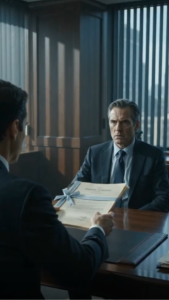
The air in the boardroom was thick with the scent of unspoken consequence. Ethan stood rigid, stripped of his composure, his gaze fixed on the yellowed contract Dr. Vance had laid before the board. The revelation of his decades-old financial pledge, tied directly to the acquisition’s profits and the foundation’s charitable arm, was the final, undeniable blow. It transformed his ethical breaches into a concrete, legally actionable offense.
Dr. Vance surveyed the stunned board members, her expression a mix of relief and grim satisfaction. “The legal implications of this breach are severe. Mr. Finch, perhaps you can elaborate on the potential liabilities for the hospital if this were to go public?”
Arthur Finch, his face now devoid of its usual impassivity, spoke with quiet gravity. “If Dr. Hayes’s contract is indeed breached, and coupled with the evidence of manipulated data, the acquisition would be immediately halted. The financial penalties from the investors, the reputational damage, potential lawsuits from defrauded patients and their families… it would be catastrophic for St. Jude’s. Far beyond any immediate financial gain from this merger.”
A collective murmur swept through the room. The board, pragmatic and focused on the institution’s survival, understood the severity. Criminal charges against Ethan might be a long, messy battle, but the threat to the acquisition and the hospital’s reputation was immediate and undeniable.
Dr. Vance turned her gaze to Ethan. “Dr. Hayes, in light of this overwhelming evidence and your breach of contract, the board sees only one viable path forward to protect St. Jude’s.”
Ethan’s shoulders slumped. His eyes, once so sharp and calculating, were now wide with a desperate fear. He looked at me, a flicker of raw hatred in his gaze, but it was quickly extinguished by the cold reality of his situation. His empire was crumbling.
The board didn’t press criminal charges. Instead, in a decision driven by self-preservation, they offered him a “voluntary resignation” package. It was a golden parachute, carefully crafted to avoid public scandal, but with a hefty non-disclosure agreement that would silence him forever. He would walk away with significant personal wealth, but stripped of his prestigious position, his reputation within the elite medical community irreparably tarnished. His dreams of leading the new acquisition, of cementing his legacy, were reduced to ash.
I watched him sign the papers, his hand trembling slightly. He left the room without a word, his once-confident stride now heavy and broken. He had avoided jail, but he had lost everything that truly mattered to him: power, prestige, and control. It was a partial justice, a bittersweet victory.
The news of Ethan’s abrupt resignation spread like wildfire through St. Jude’s, whispered behind closed doors. The official statement cited “personal reasons,” but the undercurrent of scandal was palpable. Dr. Evelyn Reed, seeing the implosion of Ethan’s career and perhaps fearing her own implication by association, moved quickly to save herself.
Weeks later, a prominent medical journal published an article by Evelyn, titled “The Perils of Unchecked Ambition in Healthcare Leadership.” It was a brilliantly written, subtly cutting critique of “unethical practices driven by personal gain” that could “compromise patient trust and institutional integrity.” She didn’t name Ethan directly, but the timing, the pointed examples, and the knowing nods within the medical community made it clear. Evelyn had publicly, if subtly, denounced Ethan’s methods, effectively betraying him and securing her own professional distance from the fallout. She had chosen her survival, just as I had chosen mine.
For me, the aftermath was a complex mix of relief and melancholy. Ethan was exposed, his reign of manipulation over. But the cost was immense. My name, Dr. Anya Sharma, neonatologist, was now inextricably linked to the scandal. Despite my role as the whistleblower, the whispers followed me. “The doctor whose husband committed fraud,” “the one who had a mental breakdown,” “the woman who tore apart the Chief of Oncology’s career.”
I knew my professional standing at St. Jude’s was irreparably tarnished. No matter how righteous my cause, the institution, ever protective of its image, would always see me as a liability, a source of past turmoil. The board members, while grateful for the evidence that saved their acquisition, were also wary. I wouldn’t be fired; my medical license was intact. But my career path here, the one I had painstakingly rebuilt after my burnout, was definitively over.
A heavy price for justice, indeed. I had protected my child, exposed a monster, and regained my sanity. But in doing so, I had sacrificed my present, accepting that my future would have to be built elsewhere, far from the shadows of St. Jude’s and the ghost of Ethan Hayes. I felt a quiet ache, a profound sense of loss for the life I had once envisioned, but also a burgeoning strength, a hard-won knowledge that I had trusted my truth, even when everyone tried to convince me I was broken.
More Stories





+ There are no comments
Add yours