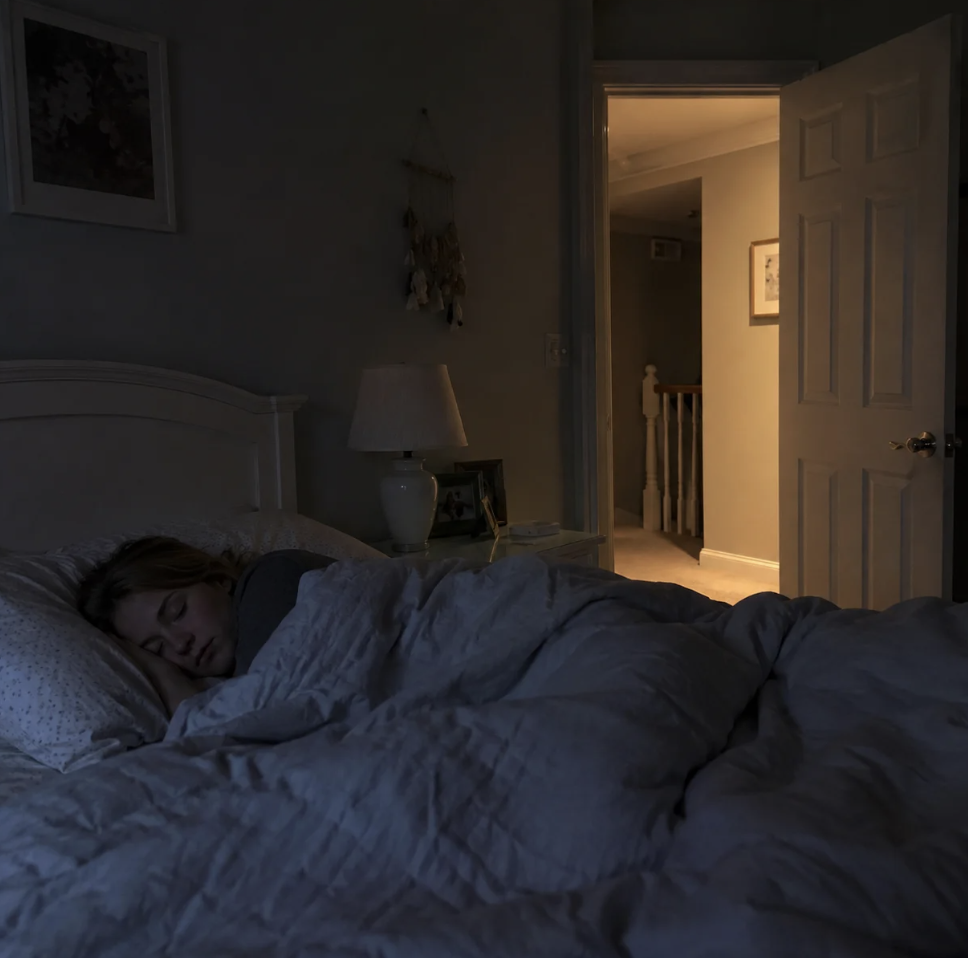
A firefighter shared one piece of advice after a house emergency.
It wasn’t about expensive alarms.
It wasn’t about security cameras.
It was about a simple bedroom door.
And what happened to one family made them rethink a bedtime habit they had followed for years.
When Linda Harper moved into her new home at age fifty-eight, she loved one thing most of all.
Peace and quiet.
After raising three children and spending decades working long hours, she finally had a home that felt calm. Every night before bed, she followed the same routine.
Lock the front door.
Turn off the lights.
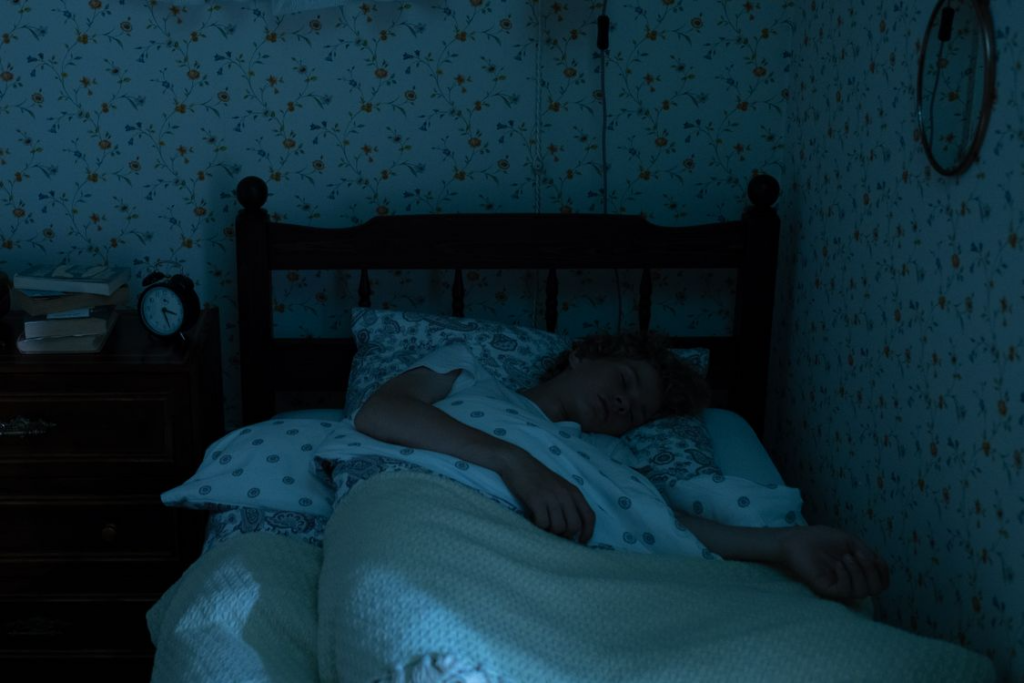
Close the bedroom door tightly.
Then sleep.
To Linda, a closed door meant privacy, comfort, and security.
For years, she never questioned it.
Neither did her husband, Robert.
One winter evening, however, something happened that changed how the family thought about nighttime safety.
Their twelve-year-old grandson, Ethan, was staying overnight while his parents were away.
Around midnight, Ethan began feeling sick.
At first, he thought it was just a stomachache.
He didn’t want to wake his grandparents.
He stayed in bed hoping it would pass.
Instead, the pain worsened.
He got up and tried calling out.
His voice was weak.
The television downstairs was off.
The house was quiet.
The bedroom door at the end of the hallway remained tightly closed.
Ethan called again.
No answer.
Meanwhile, Linda and Robert were sleeping deeply.
The closed door blocked most of the sound coming from the hallway.
For nearly thirty minutes, nobody realized Ethan needed help.
Eventually, the boy managed to reach the grandparents’ room.
When Linda opened the door and saw him pale and shaking, she immediately called emergency services.
Fortunately, Ethan recovered fully.
Doctors later diagnosed a severe infection that required urgent treatment.
The doctor made a comment Linda never forgot.
“Good thing he reached you when he did.”
On the drive home, Linda kept thinking about those words.
What if he hadn’t been strong enough to walk down the hall?
What if he had been younger?
What if the situation had been even more serious?
For the first time, she wondered whether her bedroom door might actually have delayed her response.
A few weeks later, she discussed the incident with a retired firefighter from her church.
His answer surprised her.
“There isn’t one rule that fits every home.”
He explained that some safety experts actually recommend closed bedroom doors in certain situations, especially because doors can slow the spread of smoke and fire.
But he also pointed out something many families overlook.
Every home is different.
Every family is different.
And every situation requires balance.
Linda started paying more attention.
Her elderly neighbor left her bedroom door slightly open because she wanted to hear if her husband needed assistance during the night.
Another family kept doors partially open so they could hear their young children.
A woman who lived alone preferred her door closed because it helped her sleep better and made her feel secure.
Nobody was necessarily wrong.
They were simply adapting to their circumstances.
That realization stayed with Linda.
Months later, another event reinforced the lesson.
One night, the family’s aging dog began having breathing difficulties.
The animal wandered into the hallway and collapsed.
Because Linda had started leaving her door slightly ajar when family visited, she heard unusual sounds almost immediately.
The dog received emergency veterinary treatment and survived.
Again, she found herself thinking about how small choices can have unexpected consequences.
Over time, Linda stopped viewing the question as open versus closed.
Instead, she began asking a different question.
“What does this house need?”
When grandchildren stayed over, she left the door partly open.
When her husband was recovering from surgery, she left it partly open.
When she was alone and wanted uninterrupted sleep, she sometimes closed it.
The answer changed depending on the circumstances.
Years later, during a family gathering, Ethan brought up the night he became sick.
Everyone laughed about how frightened they had been.
Then he said something that caught Linda off guard.
“I remember trying to call you.”
The room became quiet.
“I thought nobody could hear me.”
Linda reached across the table and squeezed his hand.
Neither of them forgot that night.
Today, sleep experts and safety professionals often point out that there is no universal rule that works for every household.
Factors such as home layout, family members, pets, medical needs, mobility issues, and emergency planning all matter.
Some people sleep better with a closed door.
Others need to hear activity elsewhere in the home.
The important thing is understanding why you make the choice.
Because the real lesson isn’t that everyone should sleep with the door open.
And it isn’t that everyone should sleep with it closed.
The lesson is that habits become most useful when they’re intentional.
Sometimes a small nighttime decision can affect comfort.
Sometimes it can affect awareness.
And occasionally, it can help you notice something important when it matters most.
The goal isn’t choosing one rule for everyone.
It’s making sure your home works for the people who live in it.
Do you sleep with your bedroom door completely closed, slightly open, or fully open at night? And why?


