The first time I heard my brother say he was innocent, I was eleven years old.
The last time I heard him say it, I was thirty-three.
The words never changed.
Not once.
Not after the guilty verdict.
Not after the appeals failed.
Not after our mother died.
Not after twenty-two years behind bars.
Every visit ended the same way.
He would grip the metal telephone inside the prison visitation room and say:
“I didn’t kill her, Sarah.”
For most people, innocence sounds convincing during the first year.
Maybe the second.
By year ten, even supporters begin to struggle.
By year twenty-two, hope becomes something fragile.
Something embarrassing.
Something people stop talking about.
But my brother never changed his story.
Not a single detail.
And because he never changed it, part of me never stopped believing him.
My name is Sarah Bennett.
My brother’s name was Michael.
Before the murder case, he was simply the most popular young man in our town.
He coached Little League during summers.
Worked at a hardware store.
Helped elderly neighbors repair fences.
The type of person everyone claimed to like.
Until the night nineteen-year-old Emily Dawson died.
Then everything changed.
Even now, twenty-two years later, people in our town still remember exactly where they were when the news broke.
Emily was found behind an abandoned grain warehouse near the edge of town.
The crime shocked everyone.
Nothing like that had ever happened there before.
The town wasn’t prepared.
The police weren’t prepared.
Nobody was prepared.
Fear spread quickly.
And fear always demands answers.
Fast answers.
Within seventy-two hours, police arrested my brother.
At the time, the evidence appeared overwhelming.
His fingerprints were found on a rear warehouse door.
A witness claimed to see him near the scene.
A bloodstained jacket connected to him was discovered inside his truck.
The newspapers treated the case as solved before the trial even began.
The headlines practically convicted him.
MONSTER NEXT DOOR.
LOCAL MAN CHARGED IN BRUTAL KILLING.
DAWSON FAMILY DEMANDS JUSTICE.
By the time jury selection started, public opinion had already decided.
Michael was guilty.
Case closed.
At least that’s what everyone believed.
Everyone except Michael.
And our mother.
I still remember the first day of the trial.
Mom sat in the front row every single morning.
Never missed a session.
Never stopped taking notes.
Never stopped believing.
Even when witnesses testified against him.
Even when prosecutors displayed photographs.
Even when reporters described him as a predator.
Mom never wavered.
After court each evening, she repeated the same sentence.
“My son didn’t do this.”
People stopped talking to her.
Friends disappeared.
Neighbors crossed streets to avoid conversations.
The town that once loved our family slowly pushed us out.
Being related to an accused murderer carries its own punishment.
People treat guilt like something contagious.
The trial lasted three weeks.
The verdict took less than four hours.
Guilty.
I still remember the sound my mother made when the jury foreman spoke.
Not a scream.
Not a cry.
Something worse.
A sound of complete disbelief.
As if reality itself had broken.
Michael never reacted.
He simply lowered his head.
Then looked toward us.
And mouthed four words.
“I didn’t kill her.”
Twenty-two years.
That’s how long he remained inside.
Twenty-two birthdays.
Twenty-two Christmases.
Twenty-two years watching life happen through reinforced glass.
My father never recovered.
He spent every spare dollar fighting appeals.
Borrowing money.
Selling possessions.
Working overtime.
Anything to help.
None of it mattered.
Every appeal failed.
Every motion was denied.
Every request rejected.
The system considered the case closed.
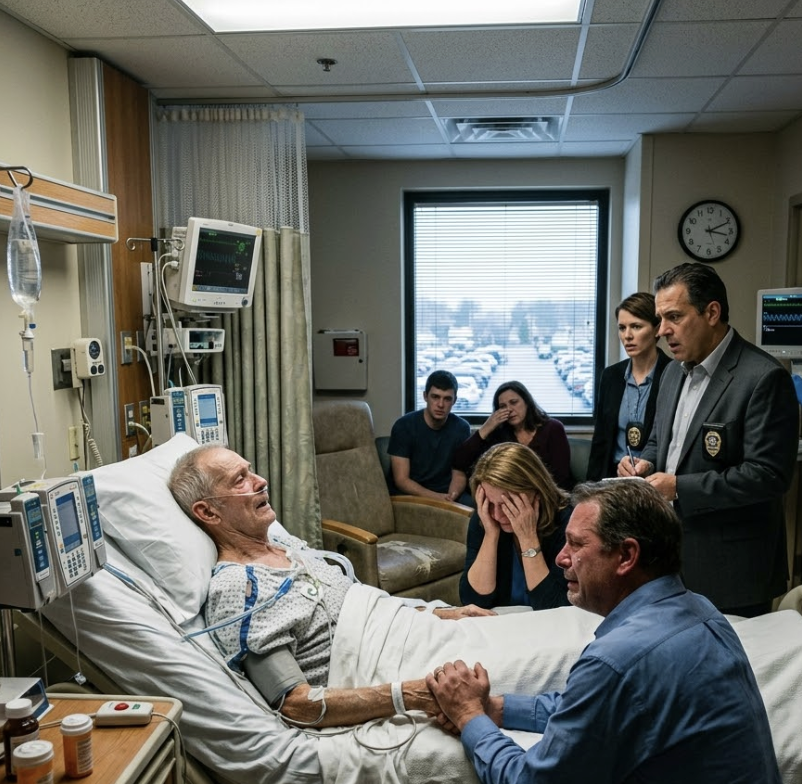
My mother died fifteen years after the conviction.
Cancer.
Aggressive.
Painful.
Near the end, she could barely speak.
Yet one of her final conversations remains burned into my memory.
I sat beside her hospital bed while rain tapped against the window.
She looked at me and whispered:
“When Michael gets out…”
I interrupted gently.
“Mom…”
Because everyone knew.
There would be no release.
No miracle.
No new trial.
No freedom.
She squeezed my hand.
Harder than I thought possible.
“When Michael gets out, tell him I never doubted him.”
Those were among her final coherent words.
She died three days later.
I delivered the message during my next prison visit.
For the first time in my life, I saw my brother cry.
Not loudly.
Not dramatically.
Just silently.
Tears rolling down his face while he stared at the floor.
Then he said something that haunted me for years.
“At least one person believed me.”
I wanted to tell him two people believed him.
Maybe three.
But the truth felt complicated.
Because even I struggled sometimes.
Not because I thought he was guilty.
Because I was tired.
Tired of hoping.
Tired of losing.
Tired of fighting something that never seemed to change.
Years passed.
My father died.
The appeals ended.
The town forgot.
Or pretended to.
Then something happened that nobody could have predicted.
A priest received a letter.
At first, nobody paid attention.
People send strange letters to churches all the time.
Most never matter.
This one did.
The letter arrived at Saint Matthew’s Parish.
Addressed specifically to Father Thomas Reilly.
Inside was a handwritten confession.
The writer claimed responsibility for Emily Dawson’s murder.
Normally, such letters are ignored.
Prison cases attract false confessions constantly.
But this one was different.
The writer described details never released publicly.
Specific injuries.
Specific locations.
Specific conversations.
Specific evidence.
Things only investigators or the killer could know.
Father Reilly contacted authorities immediately.
The letter had been written by a dying man named Richard Hale.
Seventy-four years old.
Terminal cancer.
Only weeks left to live.
At first, investigators assumed confusion.
Medication.
Delusion.
Attention-seeking.
Then they interviewed him.
Everything changed.
Richard Hale didn’t hesitate.
Didn’t ramble.
Didn’t contradict himself.
He calmly described the murder from beginning to end.
The detectives reportedly left the room pale.
Because his story fit.
Perfectly.
More importantly, it explained something that never made sense.
How Michael’s fingerprints ended up at the scene.
How the jacket appeared inside his truck.
How witnesses became convinced.
Everything.
For the first time in twenty-two years, cracks appeared in the case.
And those cracks were about to expose something far worse than a wrongful conviction.
When investigators finished the first interview with Richard Hale, nobody spoke for several moments.
The recording device continued running.
The fluorescent lights buzzed softly overhead.
Outside the hospital room, nurses pushed carts down the hallway.
Life continued normally.
Inside that room, however, a twenty-two-year-old murder conviction had just begun collapsing.
Richard Hale looked exactly like what he was.
A dying man.
Thin.
Frail.
Oxygen tubing beneath his nose.
Skin stretched tightly across his face.
Nothing about him suggested danger.
Nothing about him suggested violence.
Yet according to his confession, he had carried one of the town’s darkest secrets for more than two decades.
And according to that same confession, my brother had paid for it every single day.
The first thing detectives wanted to know was simple.
Why confess now?
Richard’s answer shocked everyone.
Because for twenty-two years he believed he would take the truth to the grave.
Then his grandson was arrested.
Not for murder.
For robbery.
During a prison visit, Richard watched the boy insist he was innocent.
The scene disturbed him.
Not because he believed his grandson.
Because it reminded him of someone else.
Michael.
My brother.
A man Richard knew had spent twenty-two years repeating the truth.
The truth Richard himself had buried.
For weeks afterward, guilt consumed him.
Then the cancer worsened.
Doctors gave him only months to live.
Eventually he contacted Father Reilly.
And the confession began.
At first authorities remained cautious.
Confessions alone don’t overturn convictions.
People lie.
People exaggerate.
People seek attention.
Evidence matters.
Facts matter.
Verification matters.
Then investigators began checking details.
One by one.
Everything matched.
Every location.
Every timeline.
Every hidden detail.
Richard knew things he should not have known.
Unless he was there.
Or unless someone who was there had told him everything.
Then came the breakthrough.
A detail involving Emily’s necklace.
The necklace disappeared the night of the murder.
Police never recovered it.
The public never learned about it.
Only investigators knew.
Richard described it perfectly.
Then he explained exactly where he buried it.
Authorities searched.
The necklace was there.
Twenty-two years later.
Exactly where he said it would be.
At that moment, everything changed.
The confession was no longer theory.
It was evidence.
Powerful evidence.
Yet the most disturbing part still remained.
How had Michael been convicted?
How had an innocent man lost twenty-two years?
Richard answered that question too.
And his answer revealed a nightmare.
Because Richard Hale wasn’t just the killer.
He was one of the prosecution’s star witnesses.
The room reportedly fell silent when he admitted it.
For years he had publicly presented himself as a concerned citizen.
A helpful witness.
A man trying to assist investigators.
In reality, he had been directing attention away from himself.
Toward Michael.
His testimony helped convince jurors that Michael was near the warehouse that night.
His statements influenced investigators.
His cooperation strengthened the prosecution’s timeline.
And nobody questioned him.
Why would they?
Witnesses are supposed to help solve crimes.
Not commit them.
The deeper investigators looked, the uglier the story became.
Richard had known Emily.
Not closely.
But enough.
Several weeks before her death, she discovered irregularities involving money at a local charity organization.
Richard handled financial records there.
At first the amounts seemed small.
Then they grew.
Emily began asking questions.
The wrong questions.
Questions that threatened to expose years of theft.
Richard panicked.
He convinced himself he could manage the situation.
Convince her to stay quiet.
Intimidate her.
Reason with her.
According to his confession, the confrontation escalated.
Arguments became threats.
Threats became violence.
And within minutes, Emily was dead.
The murder itself wasn’t planned.
The cover-up was.
That distinction mattered.
Because it explained everything that followed.
Richard spent days constructing an alternative narrative.
And then fate handed him the perfect target.
My brother.
Michael had been near the warehouse earlier that day.
Legitimately.
His fingerprints belonged there because he had delivered supplies.
The warehouse owner later confirmed it.
Unfortunately, nobody cared by then.
The fingerprints fit the theory.
Once evidence fits a theory, people stop looking for alternatives.
Richard understood that.
He used it.
Investigators never realized they were chasing the wrong man.
Not because they were corrupt.
Because they became convinced too quickly.
Psychologists have a term for it.
Confirmation bias.
Once people believe they know the answer, every new fact seems to support it.
Even when it doesn’t.
Richard fed investigators exactly what they wanted.
He gave them confidence.
Direction.
Certainty.
And certainty can be dangerous.
Especially in murder investigations.
The bloodstained jacket proved even worse.
For years, prosecutors treated it as powerful evidence.
Jurors certainly did.
According to Richard, he planted it himself.
Not directly.
Indirectly.
He knew Michael’s truck.
Knew where it was parked.
Knew how often it remained unlocked.
The opportunity presented itself.
And he took it.
One calculated decision.
One planted piece of evidence.
One innocent man destroyed.
The more I learned, the angrier I became.
Not only at Richard.
At everyone.
At the system.
At the investigators.
At the prosecutors.
At fate itself.
Because twenty-two years is not a mistake.
Twenty-two years is a lifetime.
When Michael entered prison, he was twenty-four.
When the confession surfaced, he was forty-six.
Entire lives happen during that span.
Marriages.
Children.
Careers.
Dreams.
Possibilities.
All stolen.
Not because of one error.
Because of dozens.
Every appeal rejection.
Every ignored inconsistency.
Every assumption.
Every shortcut.
Every person who chose certainty over doubt.
Then came the day investigators informed Michael.
I was present.
The prison arranged a private meeting.
Several officials attended.
So did attorneys.
I remember every second.
Because for years I imagined this moment.
Imagined what freedom might look like.
Imagined relief.
Celebration.
Joy.
Reality was different.
When they explained the confession, Michael simply listened.
No reaction.
No tears.
Nothing.
The officials seemed confused.
One eventually asked whether he understood.
Michael nodded.
Then said something that nobody in the room expected.
“I’ve been telling you that for twenty-two years.”
Silence followed.
Painful silence.
Because there was no response.
No apology could erase that truth.
No explanation could soften it.
He had been telling the truth.
The entire time.
Weeks later, the conviction was formally overturned.
The courtroom was packed.
Reporters.
Cameras.
Lawyers.
Curious spectators.
People who had once believed he was guilty.
People who suddenly claimed they always had doubts.
Funny how often that happens.
When the judge officially vacated the conviction, everyone expected emotion.
Michael remained calm.
Almost detached.
As though the moment belonged to someone else.
Perhaps it did.
Because the man who entered prison at twenty-four no longer existed.
Prison had changed him.
How could it not?
The judge apologized.
The district attorney apologized.
Several investigators apologized.
The words sounded sincere.
They also sounded useless.
Afterward, reporters surrounded us.
Questions came from every direction.
How did he feel?
What would he do next?
Did he forgive the system?
Did he forgive Richard Hale?
Michael answered only one question.
A journalist asked what hurt most.
Not prison.
Not the conviction.
Not losing twenty-two years.
What hurt most?
Michael looked directly at the cameras.
Then gave an answer that left many people crying.
“My mother died believing I was innocent.”
He paused.
“At least she was right.”
That night, for the first time in more than two decades, my brother slept outside prison walls.
Freedom should have felt triumphant.
Instead, it felt complicated.
The world had changed.
Technology had changed.
People had changed.
Everything familiar was gone.
Imagine waking from a twenty-two-year coma.
That’s what reentry looked like.
Simple things became difficult.
Smartphones.
Online banking.
Social media.
Modern workplaces.
The future arrived while he sat in a cell.
Now he had to catch up.
Yet another injustice nobody talks about.
Wrongful imprisonment doesn’t end when the prison doors open.
It follows people.
For years.
Sometimes forever.
Several civil lawsuits followed.
Settlements were reached.
Money was paid.
Headlines were written.
Politicians expressed outrage.
Committees discussed reform.
All of it felt strangely hollow.
Because no settlement could purchase a replacement life.
No amount of money could recreate lost years.
You cannot compensate someone for missing their mother’s final birthday.
Or their father’s funeral.
Or twenty-two Christmas mornings.
Some losses remain permanent.
Several months later, I visited Richard Hale’s grave.
Not because I wanted closure.
I wasn’t even sure closure existed.
I simply needed to see the place where the story ended.
The cemetery was nearly empty.
Rain had fallen earlier.
The grass remained wet.
His headstone looked ordinary.
Unremarkable.
Exactly like hundreds of others.
I stood there for a long time.
Trying to understand.
Trying to hate him.
Trying to forgive him.
Failing at both.
Eventually I realized something.
Richard Hale wasn’t a monster in the way movies portray monsters.
He wasn’t a criminal mastermind.
He wasn’t evil every moment of every day.
He had friends.
Family.
Children.
Grandchildren.
People who loved him.
And that was precisely what terrified me.
Because ordinary people are capable of extraordinary damage.
One bad decision.
Then another.
Then another.
Until eventually an innocent man loses twenty-two years.
History is filled with tragedies created not by monsters, but by ordinary people protecting themselves.
Richard spent twenty-two years preserving his freedom.
Michael spent twenty-two years losing his.
One life expanded.
The other stopped.
And all because a guilty man pointed at an innocent one.
Today, whenever people tell the story, they focus on the confession.
The dramatic twist.
The deathbed revelation.
The overturned conviction.
Those parts make headlines.
But they miss what matters most.
The real story is not about the confession.
It is about persistence.
Because despite everything, Michael never changed his story.
Not once.
Twenty-two years.
Thousands of days.
Millions of opportunities to surrender.
He never did.
The truth remained the truth whether people believed it or not.
That lesson stays with me.
So does another.
Justice delayed is not the same as justice denied.
But it comes painfully close.
My brother eventually rebuilt parts of his life.
Not all of it.
That would be impossible.
But enough.
Enough to laugh again.
Enough to hope again.
Enough to live.
And whenever people ask whether he is angry, he gives the same answer.
“Anger took enough years already.”
Maybe that’s why he survived.
Not because the truth set him free.
Because he refused to let bitterness become another prison.
The real killer died with his confession on paper.
My brother lived long enough to walk free.
Sometimes that is the closest thing to justice the world allows.


