For six years, I cared for eighty-two-year-old Mrs. Sun-Hee Choi in her Richmond District apartment in San Francisco, refusing every envelope of cash she handed me.


Part 1
“Care is not a transaction, Elder,” I told her every month as I pushed back the $1,000 cash stipend.
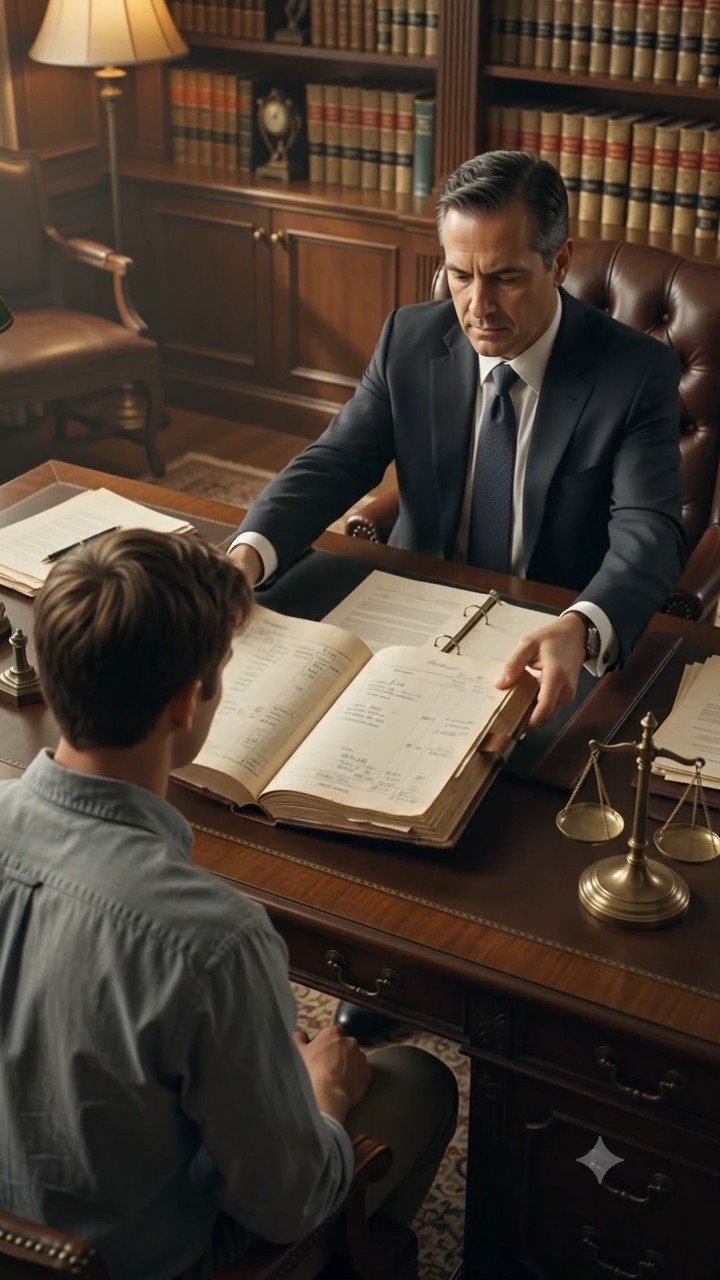
When she passed away last month, her estate attorney sat me down and opened a leather-bound probate ledger.
He told me that because I had rejected her money every year, Mrs. Choi had secretly doubled the offered sum each December, accumulating $1,280,000 in a private trust in my name.
Then, before I could process the inheritance, my former restoration mentor walked into the office with a process server to take it all away.
The leather-bound ledger lay open on Arthur Pendelton’s desk, its pages filled with neat, formal script. My gaze flickered over the digits: $1,280,000. It was a sum I couldn’t comprehend.
Mr. Pendelton, a man whose gray suit seemed perpetually pressed, watched me over the top of his half-moon spectacles. His expression was a carefully neutral blend of professional duty and slight curiosity.
He cleared his throat.
“As I explained, Mr. Park, Mrs. Choi had a… unique method of demonstrating her appreciation.”
I swallowed, my throat suddenly dry. The air in the probate office, usually still and formal, now felt thick, charged with the weight of that number.
This was money I had never wanted, never expected. It felt wrong, almost like a betrayal of Mrs. Choi’s memory, to even think about it.
My mind replayed scenes from her apartment: the gentle scent of ginseng tea, the quiet rustle of her hanbok as she moved, the way she always smiled when I brought her fresh flowers from the market. I had cared for her because it was the right thing to do.
A soft click echoed in the hallway outside the office.
Then, the door opened.
A man stepped in, his presence instantly filling the room. It was Master Julian Oakes, my former mentor from the art restoration academy.
He was a man I respected deeply, though we hadn’t spoken much since I left his studio three years ago. His silver hair, usually meticulously combed, looked slightly disheveled. His sharp, discerning eyes, however, were fixed on me with an intensity that made my stomach churn.
Behind him, a younger man with a flat, indifferent face followed. He carried a stack of legal papers.
Master Oakes didn’t offer a greeting. His gaze, usually warm with professional camaraderie, was cold, almost accusing.
“Pendelton,” he said, his voice clipped and precise.
Arthur Pendelton looked up, surprise momentarily replacing his neutral lawyerly demeanor.
“Julian? What’s the meaning of this?”
Master Oakes ignored him, stepping forward until he stood just a few feet from me. The air grew heavy, almost oppressive.
The man behind him, the process server, stepped forward. He held out the stack of papers to me.
My eyes scanned the top document. Bold, official lettering proclaimed: EMERGENCY COURT INJUNCTION. Below it, in smaller print, I saw my name. And then, a phrase that chilled me to the bone: “Undue Influence and Fraudulent Inducement.”
My heart pounded against my ribs. Fraud? What was he talking about?
Then, another line caught my eye, a section titled “Ancillary Actions.” It mentioned a report to the United States Citizenship and Immigration Services. USCIS. My visa status.
Master Oakes finally spoke, his voice low, but carrying an unmistakable authority that brokered no argument.
“Daniel,” he said, the sound of my name from his lips now a judgment, not an address.
“You have no claim to Mrs. Choi’s estate.”
His eyes held mine, unblinking. The process server pressed the stack of papers into my suddenly trembling hands.
“This,” Master Oakes continued, his voice barely a whisper, yet resonating with absolute finality, “will ensure you don’t take a single dollar.”
Part 2
Master Oakes’s words hung in the air.
He turned, his back to me, and walked out without another glance. The process server followed, the door clicking shut behind them with a definitive sound.
Arthur Pendelton pushed his spectacles higher on his nose, looking genuinely distressed.
“I’m truly sorry, Daniel,” he said, his voice quiet. “I’ve never seen Julian act like this. It’s… unprofessional.”
The papers felt like ice in my trembling hands. Fraud. Undue Influence. USCIS. The words blurred, threatening to pull me under. My carefully built life in America, my very visa status, suddenly seemed to hang by a thread.
How could Master Oakes do this? The man who taught me how to stabilize centuries-old paint, who shared his secrets for preserving delicate antique silk. He was a mentor, not an enemy.
I stumbled out of the office, the sterile silence of the probate firm replaced by the distant rumble of the city from the street below. My head spun, trying to reconcile the man I knew with the one who had just condemned me.
I reached the building’s entrance, the crisp San Francisco air doing little to clear the fog from my mind. A woman stood near the glass doors, holding a small notepad and observing the flow of people.
She had sharp, intelligent eyes that seemed to take everything in. She wore a practical trench coat that looked ready for any weather. As I stepped outside, her gaze found mine, direct and assessing.
“Daniel Park?” she asked, stepping forward. Her voice was firm, professional, cutting through my daze.
I nodded mutely.
“I’m Rachel Adler, with the *San Francisco Chronicle*.” She gestured back towards the probate office with a tilt of her head. “That was quite a scene in there.”
My brow furrowed in confusion. How did she know?
“I’ve been following Master Oakes for a while,” she continued, her voice lowering slightly, but still clear. “Specifically, his foundation and its finances.”
She paused, making direct eye contact, her expression serious.
“His ‘restoration foundation’ is $850,000 in immediate debt, Mr. Park. Facing foreclosure, actually.”
A cold knot tightened in my stomach. My own legal battle felt overwhelming enough, let alone his financial troubles. What did that have to do with me?
“He’s not fighting you out of some moral conviction about Mrs. Choi’s will or your immigration status,” Rachel said, her voice turning sharp, revealing a cynical edge.
“He wants to force the court to liquidate Mrs. Choi’s historic $2.4 million Richmond archive building.”
My breath hitched in my throat. The archive building. Mrs. Choi’s precious legacy.
“He wants to sell it to cover his own financial ruin.”
More Stories










+ There are no comments
Add yours