My Late Mother’s Business Partner Moved His Crew Into Our Michigan Safehouse and Tried to Demolish Her Shed — Until a Brass Key Revealed His $185,000 Secret


Part 1
My late mother’s salvage business partner, Marcus Drennan, showed up at our Lake Michigan shoreline property asking to host his pregnant daughter for two weeks.
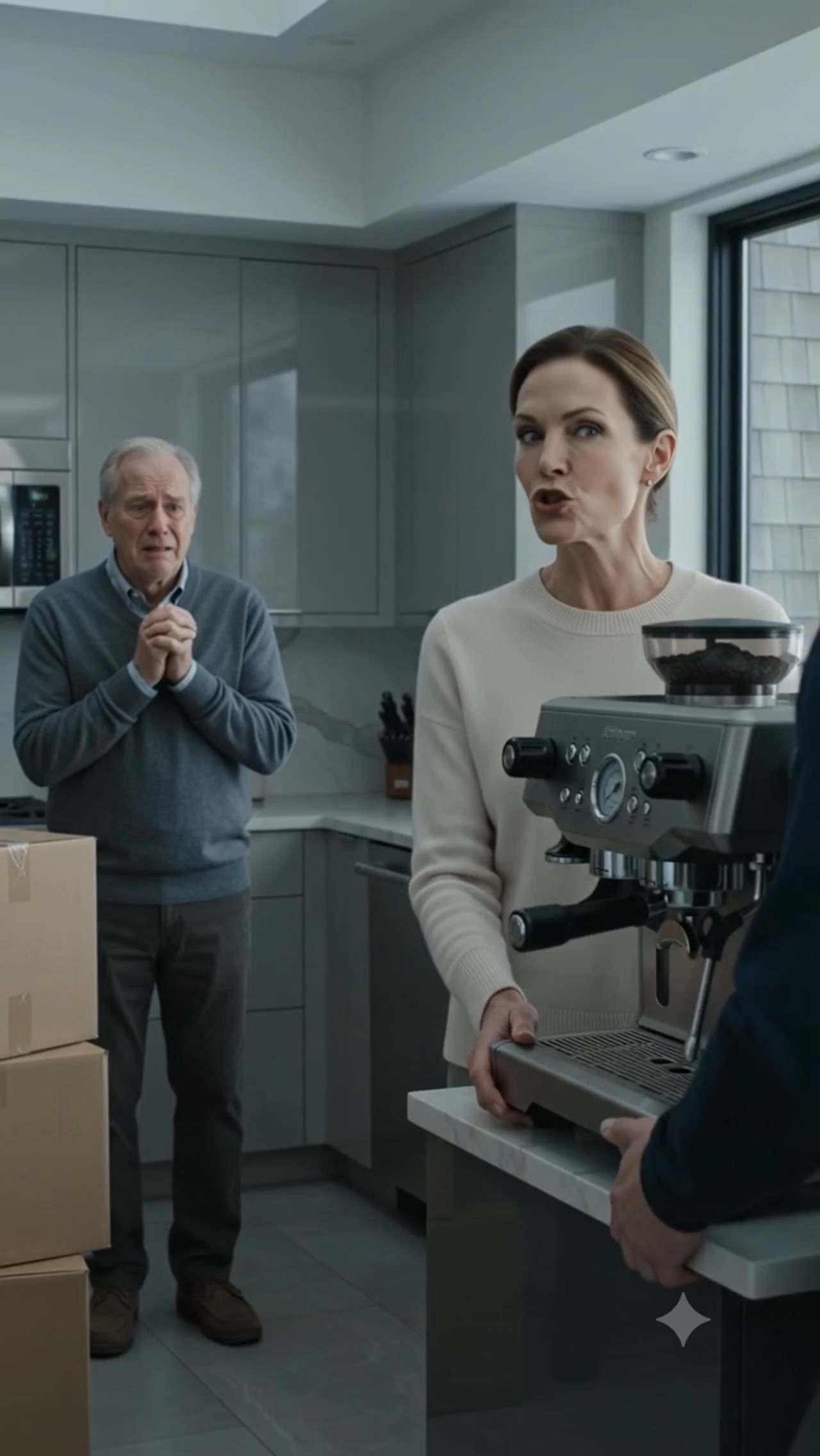
Within forty-eight hours, Marcus moved six heavy-equipment crew members into the main house, changed the keypad locks on my bedroom, and replaced my mother’s hand-built espresso machine with an industrial mess-hall brewer.
When he brought a flatbed trailer to demolish my mother’s memorial boat shed, he turned every worker on the dock against me, claiming I was mentally unfit to hold the title.
Now I am holding the heavy brass key my mother hid in her tackle box, knowing it unlocks the only truth that can save this harbor.
The icy wind whipped off Lake Michigan, stinging my eyes as I stood on the main dock. My mother, Sarah Albright, had taught me to read this water, to feel the shift in the air before a squall hit. Today, a different kind of storm was brewing.
A plume of dust billowed from the gravel road leading up to the compound. It was Marcus Drennan’s beat-up Ford F-350, followed by a procession of four identical utility vans.
Marcus. My mother’s senior salvage partner. He was supposed to be a friend.
The trucks pulled to a halt, kicking up more dust that coated the cedar shingles of our lakeside home. Six burly men, dressed in grease-stained coveralls and work boots, began to spill out of the vans.
Marcus climbed down from his F-350, a strained smile on his weathered face. His pregnant daughter, Chloe, moved slowly from the passenger seat, her hand resting on her swollen belly.
“Leo,” Marcus called out, his voice booming over the wind. “Didn’t expect you out here.”
“I heard the convoy,” I replied, my voice tighter than I intended.
Chloe offered a weak wave. She looked pale, exhausted. I hadn’t seen her since my mother’s funeral, two months ago.
“We just need a little space,” Marcus said, gesturing vaguely at the main house. “Chloe’s husband ran into some trouble downstate. Loans. She needs a safe place, just for two weeks. My crew’s just here to help me get her settled.”
Two weeks. Six men. It didn’t add up.
I watched as the men began hauling heavy toolboxes, work tarps, and duffel bags from the vans, not towards the smaller guest cottages, but directly towards the main house – *my* house.
One of them, a thick-necked man named Briggs, eyed me as he hefted a massive tackle box. He looked like he’d been living in a salvage yard himself.
The front door, which my mother had always kept open for the dock workers, was now a revolving door for Marcus’s crew. They moved with a disturbing familiarity, as if they owned the place.
By late afternoon, the house was buzzing with strange voices and heavy footsteps. My sanctuary, the quiet home my mother and I had built, was gone.
I walked into the kitchen, a knot tightening in my stomach. The familiar scent of my mother’s strong espresso was missing. In its place, the acrid smell of burnt coffee filled the air.
My mother’s beautiful, hand-built stainless steel espresso machine, a gift from a grateful captain, was gone from the counter.
In its place sat a monstrous, industrial-grade coffee brewer, the kind you’d see in a truck stop diner or a military mess hall. It dwarfed the entire counter space.
One of Marcus’s men, a young guy I didn’t recognize, leaned against the fridge, nursing a mug from the new machine. He looked at me, then quickly looked away.
A sick feeling churned in my gut. This wasn’t just Chloe needing a place to stay. This was a hostile takeover.
Later, I was walking past the main workshop, a place usually bustling with familiar faces. Sam Kowalski, our lead mechanic, was hosing down a fishing trawler. He caught my eye, then quickly averted his gaze, focusing intensely on the boat’s hull.
Then I heard Marcus’s voice, low and conspiratorial, from behind a stack of rusted anchors. He was talking to two of the older dockworkers, both of whom had known my mother for decades.
“…tough on him, losing Sarah like that,” Marcus was saying. His voice was soft, laced with a false sympathy. “Kid’s not coping well. Heard him talking to himself last night. He’s a good kid, but… this grief is really getting to him.”
He paused, then added, “Needs professional help, I think. Get him stable.”
The dockworkers exchanged a look. A look of pity, laced with concern. They didn’t look at me, but I felt their judgment, their misunderstanding. Marcus was painting me as unstable, grieving too hard to be rational.
He was turning my mother’s allies against me.
I clenched my fists, the brass key in my pocket digging into my palm. This wasn’t grief. This was something far more sinister.
I stormed back to the house, marching straight into the kitchen where Marcus was now dictating orders to his crew over the din of the industrial brewer.
“Marcus!” I said, my voice cutting through the noise.
He turned, his smile still pasted on his face, but his eyes were cold. “Leo. Everything alright, kiddo?”
“Everything is not alright,” I shot back, gesturing at the monstrosity on the counter. “What happened to Mom’s machine? And what are all these people doing in our house?”
Marcus let out a slow sigh, running a hand over his bald head. He picked up a duffel bag from the floor, a cheap, military-issue green bag. It looked vaguely familiar.
He pushed it across the counter towards me.
“Look, Leo,” he said, his voice dropping to a condescending murmur, “we talked about this. You’ve been through a lot. Your stability is our main concern.”
He pushed the bag further towards me. My stomach dropped as I realized it was my duffel bag. My clothes, my books, my few precious belongings.
“Your things,” he continued, a paternal pat on my shoulder that felt like a shove, “have been moved to the boathouse. For your own stability.”
Part 2
“For your own stability.” I gripped the duffel bag.
The boathouse was cold. Later, I confirmed it: every deadbolt on the main house had been re-keyed.
The next morning, a sleek black sedan arrived. Harlan Finch, a commercial appraiser.
Marcus led him straight to my mother’s memorial shed. Finch barely glanced at the foundation.
After five minutes, he handed Marcus a slip: “Structurally unsafe. Rot-infested timber. Hazard.”
Marcus immediately called for a flatbed. “Demolition crew. First thing tomorrow.”
I retreated to the shed, my hand clenching the brass key.
More Stories






+ There are no comments
Add yours