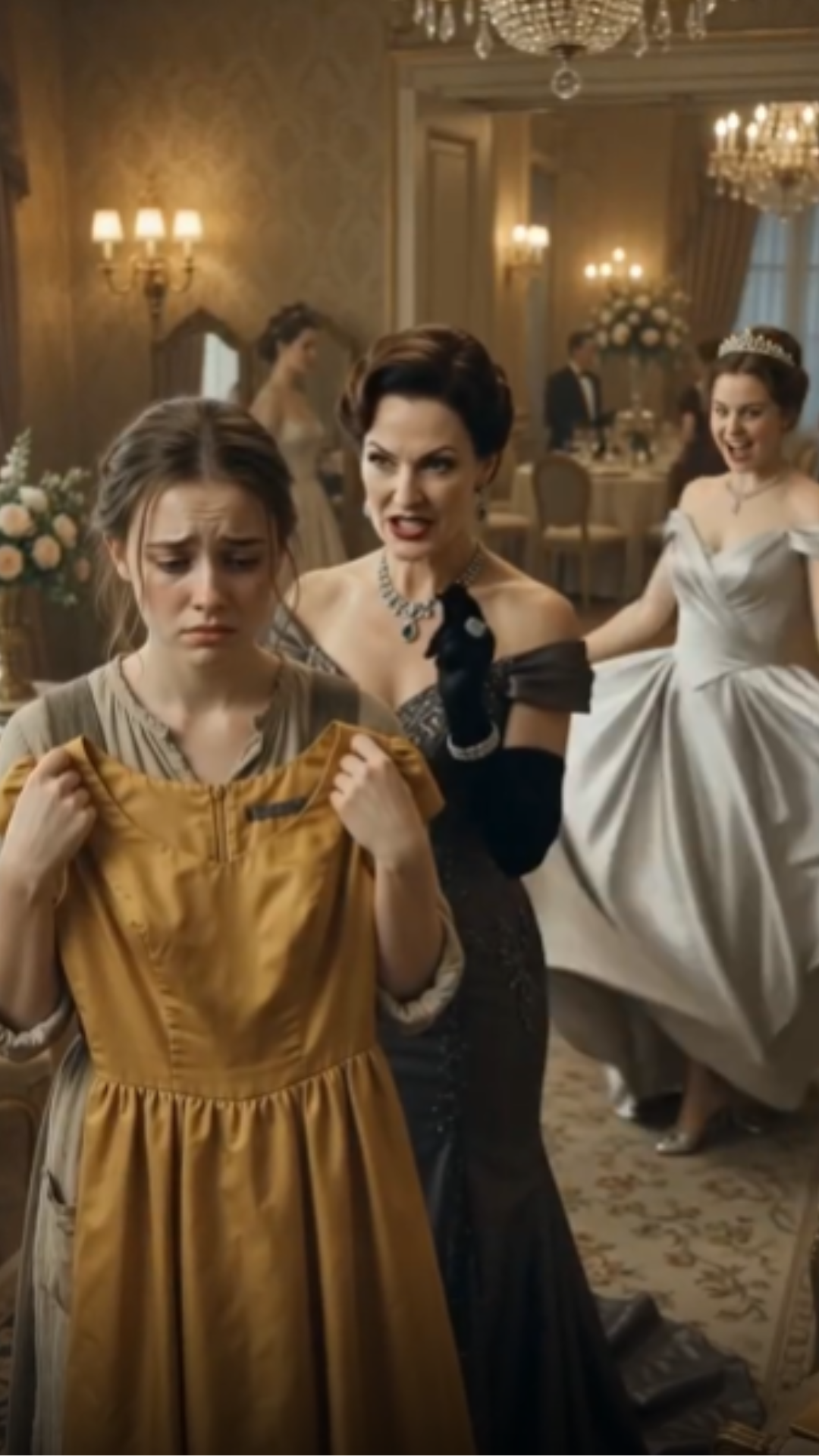
My aunt handed me a rough, mustard-yellow dress made of coarse stiff polyester and told me I was wearing it to the Senior Heritage Gala.
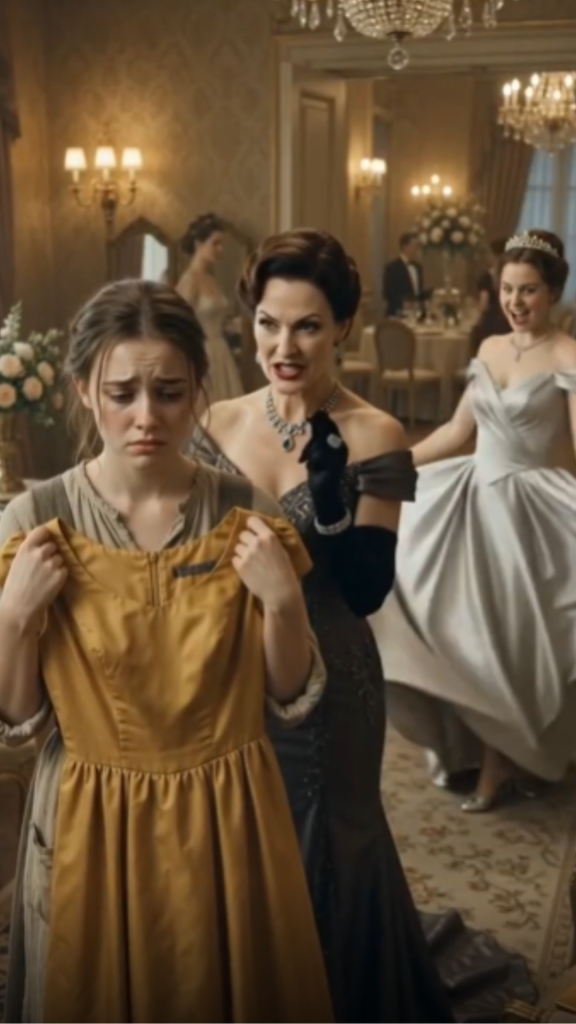


Part 1
She said it was a modest traditional dress that suited a girl whose family owed her thousands of dollars.
Meanwhile, she spent $1,400 on a tailor-made silk gown for her own daughter to wear to the same event.
I wore the ugly garment without complaining, unaware that my late mother’s handiwork was locked underneath the fabric.
The scratchy fabric bit into my palms as I held the dress. It was a dull, almost offensive shade of yellow, like old, dried-out mustard.
It hung heavy and shapeless, certainly not anything a 17-year-old high school senior in Houston, Texas, would willingly choose for a gala.
Aunt Coi watched me, her gaze sharp, a thin smile playing on her lips. She sat perched on the edge of her plush velvet sofa, a pristine cup of jasmine tea cooling on the lacquered coffee table before her.
“This is a very special garment, Chloe,” Aunt Coi said, her voice smooth but with an underlying edge.
“It is humble, as our family tradition dictates for a girl who understands her place.”
She took a sip of tea, her eyes never leaving mine.
“It suits someone who remembers the sacrifices made for her family, the debts owed.”
My father, Minh Tran, sat beside her, silent. His shoulders were slumped, his eyes fixed on some point beyond the window, where the afternoon sun beat down on Aunt Coi’s meticulously kept garden.
He offered no protest, only a slow, almost imperceptible nod. That small gesture was enough. It was his silent plea for me to accept, to avoid another family confrontation.
I knew he couldn’t afford to upset Aunt Coi. Her name was on the lease for his dry-cleaning shop, the one he poured his life into since we arrived in America.
Suddenly, the living room door burst open. My cousin, Tiffany Le, twirled in, her face flushed with excitement.
“Look, Mama!” Tiffany exclaimed, her arms spread wide.
She wore a gown that shimmered like liquid moonlight. It was a delicate, tailored silk *áo dài*, a soft periwinkle blue that caught the light with every movement.
Its fabric draped gracefully, flowing around her petite frame, custom-made to perfection. The price, I knew from whispers in the family, was over $1,400.
Aunt Coi’s hard expression softened instantly, replaced by an indulgent smile.
“Oh, my beautiful Tiffany,” she cooed, rising to embrace her daughter. “You look like a true princess. Every penny worth it for my precious girl.”
Tiffany giggled, then her eyes landed on me, holding the mustard-yellow monstrosity. Her smile faltered. A flicker of something — pity? guilt? — crossed her face before she quickly looked away.
“Chloe, are you going to wear *that*?” Tiffany asked, her voice hushed, almost apologetic.
Aunt Coi’s smile vanished, replaced by a steely glint as she turned back to me.
“Of course, she will,” Aunt Coi asserted, her voice firm. “It is a modest, traditional dress. It shows respect for our heritage, not like these modern, flashy things that Westernize our young women.”
She gestured dismissively at Tiffany’s shimmering silk, though her eyes still held a hint of pride.
“Besides,” Aunt Coi added, leaning forward, her voice dropping to a low, conspiratorial tone, “your father owes me much. This dress is a small reminder of that family obligation.”
The unspoken threat hung in the air. It was a familiar refrain, one that had echoed through our lives since my mother passed away six years ago. Aunt Coi always brought up “family debts” whenever she wanted her way.
I looked down at the coarse fabric in my hands. The polyester felt rough against my skin, unyielding. It was an ugly, uncomfortable garment, clearly ill-fitting and poorly constructed compared to Tiffany’s masterpiece.
I swallowed hard, my throat tight. I wouldn’t give Aunt Coi the satisfaction of a scene, not with my father sitting there, worn and silent.
“Yes, Auntie,” I replied, my voice flat, “I will wear it.”
Aunt Coi’s face smoothed into a triumphant smirk. She settled back onto the sofa, picking up her tea as if nothing untoward had happened.
“Good. That is a good girl. You know how to respect your elders.”
I excused myself from the room, carrying the dress like a heavy burden. In the privacy of the guest bedroom, I let the garment slide from my grasp onto the bed. It landed with a surprisingly heavy thud.
The fabric was thick, almost stiff, not just from cheap polyester but as if it contained some underlying structure. As I ran my hands over its surface, trying to imagine myself walking onto a stage in such a grotesque outfit, I noticed something peculiar.
The weight of the dress was entirely disproportionate to its size and material. It felt denser, heavier than any simple polyester gown should. It was as though there was another layer, something solid and unfamiliar, hidden beneath the crude mustard-yellow casing.
Part 2
I found my father, Minh Tran, in the quiet solitude of his dry-cleaning shop. The familiar scent of steam and chemicals hung heavy in the air. He was hunched over a pressing machine, meticulously smoothing a silk shirt.
He looked up as I entered, his eyes tired, betraying the weariness I knew so well.
“Ba,” I started, using the Vietnamese term for father, “Aunt Coi mentioned the family debt again. What exactly do we owe her?”
My father sighed, a sound that seemed to carry the weight of years. He turned off the pressing machine, the hiss of steam abruptly stopping.
He wiped his hands on a clean white rag, his gaze fixed on the gleaming chrome of the machine.
“Con,” he began, his voice barely a whisper, “it is… complicated.”
“No, Ba,” I pressed, stepping closer. “It isn’t. She uses it against us, always. What is this debt?”
He finally met my eyes, and I saw them welling up with tears. His lower lip trembled.
“Weeks ago,” he confessed, his voice cracking, “I gave your Aunt Coi one thousand five hundred dollars.”
I blinked. “$1,500? For what, Ba?”
“For you, con,” he choked out, a tear tracing a path down his cheek. “For your gala. For a beautiful gown. I wanted you to have something special.”
My stomach dropped. “$1,500? But… she said she kept it for an ‘unpaid balance.’”
My father nodded, his head bowed. “She said it was for a debt from thirty years ago, from when we first came to America. A debt… that I do not remember.”
The revelation hit me like a physical blow. Aunt Coi hadn’t just given me an ugly dress; she had stolen the money meant for my real one. She had lied to my father, manipulating his guilt and his desire to provide for me.
The mustard dress wasn’t just a symbol of tradition or debt; it was a cage. My aunt had actively sabotaged me, leaving me isolated and publicly shamed.
I looked at my father, his face etched with shame and sorrow. He had tried to give me a beautiful moment, and she had twisted it into this.
The gala was only days away now. I was trapped.
More Stories







+ There are no comments
Add yours