
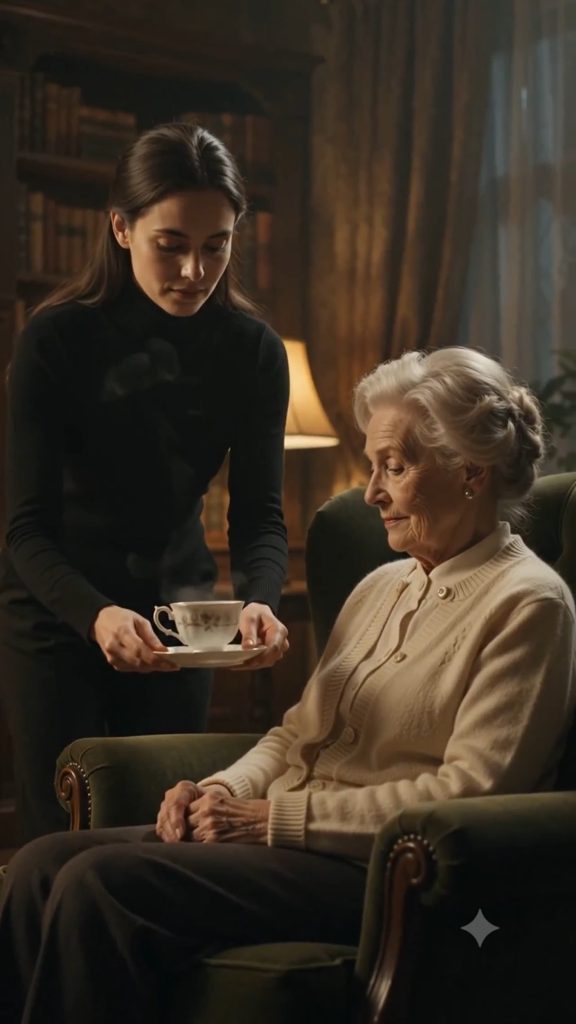
For eight months, I spent two hours every evening unpaid at 414 Elm Street, caring for an eighty-two-year-old woman named Eleanor Gentry whom the entire neighborhood called erratic and unhinged.





Two weeks later, the municipal board officially recorded Eleanor Gentry’s land transfers in my name. The intricate web of deeds, the properties Eleanor had shrewdly acquired and protected, were now mine. The neighborhood, once slated for a predatory $14 million commercial demolition, was permanently preserved, its quiet streets and aging homes safe from redevelopment.
Marcus Hollis, once the district’s most powerful councilman, now lived quietly under pending state grand jury subpoenas. He rarely left his house next door, a recluse of his own making, his ambition curdled into public shame. The Hollis name, once synonymous with power, was now whispered with disdain.
On a cold Tuesday evening, precisely two weeks after the City Hall confrontation, I sat alone on the porch steps of my empty house at 414 Elm Street. The wind rustled through the bare trees, their branches skeletal against the twilight sky. The streetlights cast long, lonely shadows.
I wrapped Leo’s canvas jacket tightly around my shoulders, pulling the worn fabric close. It still held a faint, ghost-like scent of him—wood polish from his draft design desk, a hint of the winter air he loved, and something uniquely his.
The house behind me was silent. The silence was absolute, unbroken by the familiar hum of Leo’s oxygen concentrator, the sound of his quiet footsteps, or his gentle cough. There was no triumph here, no warmth from the political victory, no solace from the exposed corruption. Only the quiet weight of an irreplaceable loss.
The city council changed the deed registers on Elm Street, but no line on a deed can fill the silence in this empty hallway.
More Stories

















+ There are no comments
Add yours