
For eight months, I spent two hours every evening unpaid at 414 Elm Street, caring for an eighty-two-year-old woman named Eleanor Gentry whom the entire neighborhood called erratic and unhinged.





Part 1
My next-door neighbor, City Councilman Marcus Hollis, mocked me over the fence every time I walked into her yard, telling the local ward leaders that I was wasting my time on a delusional recluse who had nothing to leave anyone.
When Eleanor passed away quietly in her sleep last Tuesday, her estate attorney summoned me to a private conference room downtown.
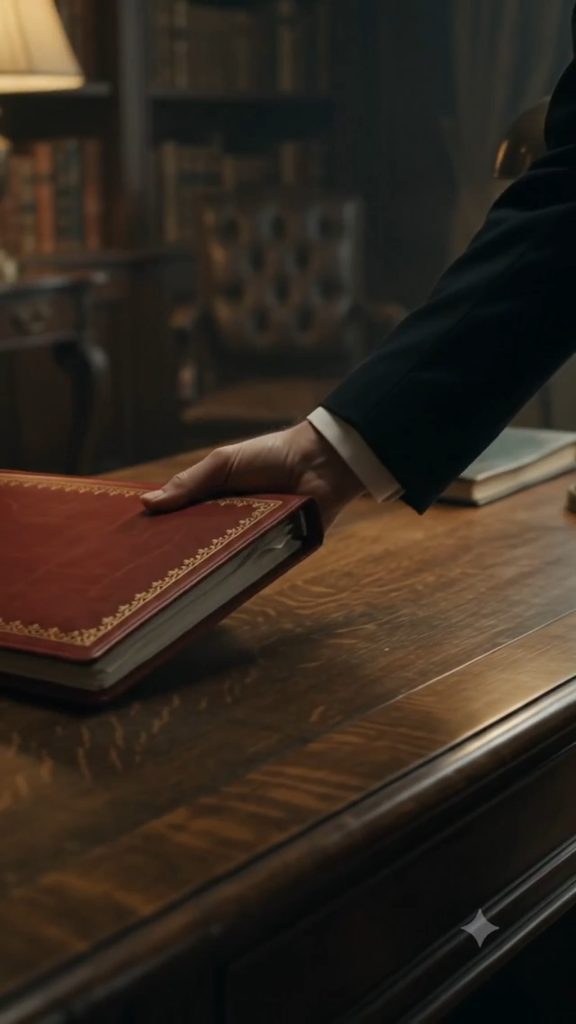
“Eleanor’s hostility was entirely calculated,” the attorney told me, pushing a sealed red binder across the desk. “She pretended to be unmanageable so every corrupt politician in this city would stay away from her real assets—except for you, the only person who helped her without knowing she owned thirty percent of the district’s commercial deeds.”
The polished marble floor of Pendelton & Associates gleamed under the recessed lights, reflecting the muted hum of expensive silence. Nora Keller, dressed in her best, slightly-worn blazer, felt a familiar tightness in her chest. She had never been in an office quite this grand before.
The receptionist, a woman with perfectly styled hair and an impassive expression, gestured toward a dark mahogany door.
“Mr. Pendelton will see you now, Ms. Keller.”
Nora nodded, her heart thumping a quiet rhythm against her ribs. She had braced herself for the somber formalities of closing out Eleanor’s modest affairs. She expected a small condolence, perhaps a final thank you for her tireless care. Maybe a small token, an old porcelain figurine Eleanor had cherished.
She pushed open the heavy door.
Arthur Pendelton, a man whose silver hair and sharp suit seemed custom-made for the corporate legal world, rose from behind a vast executive desk. His eyes, though serious, held a surprising glint of something unreadable.
“Ms. Keller, please, have a seat.”
His voice was calm, almost unnervingly so. Nora took the leather chair opposite him, the scent of expensive polish filling her nostrils. A thick, crimson-bound binder lay on the corner of the desk, its surface unblemished.
“Thank you for coming,” Pendelton began, clasping his hands together. “As you know, I am the executor of Eleanor Gentry’s estate.”
Nora nodded again, her gaze drifting to a framed photograph on a credenza—a younger Eleanor, her face sharp and intelligent, not the vacant stare she sometimes feigned.
“Eleanor spoke of you often,” Pendelton continued, a faint smile playing on his lips. “She admired your dedication. Your kindness, especially.”
“She was… a character,” Nora offered, trying to keep her voice steady. She thought of Eleanor’s sharp tongue, her seemingly nonsensical rants, the rocks she’d throw at anyone who dared to set foot on her lawn.
“Indeed,” Pendelton said, his smile broadening slightly. “A character she meticulously crafted, I assure you.”
Nora frowned, confused.
“Eleanor Gentry,” he explained, leaning forward, “was not the ‘eccentric recluse’ the neighborhood believed her to be. Nor was she, as some city officials claimed, ‘delusional’ or ‘unhinged’.”
The words landed with the weight of something solid. Nora felt a prickle of unease.
“She was, in fact, an exceptionally shrewd woman,” Pendelton clarified. “A former political strategist who spent decades accumulating significant assets, particularly prime commercial land parcels across this district.”
Nora blinked. This couldn’t be right. Eleanor had lived in a small, cluttered house, her yard overgrown, her clothing modest.
“The properties she owned,” Pendelton paused, letting the implication sink in, “are worth many millions of dollars. They represent a substantial portion of the downtown commercial redevelopment zone.”
He gestured vaguely out the panoramic window, which offered a sweeping view of the city’s burgeoning skyline.
“More specifically,” he stated, his voice gaining a precise edge, “they represent thirty percent of the core land parcels Councilman Marcus Hollis needs to complete his signature $14 million district rezoning project.”
Nora felt a sudden, dizzying jolt. Marcus Hollis. Her next-door neighbor, who had ridiculed her for months for “wasting her time” on Eleanor.
“Eleanor cultivated her image as unmanageable for a very specific reason,” Pendelton explained, his eyes locking onto Nora’s. “To keep individuals like Councilman Hollis, and others with similar agendas, from ever getting close to her true holdings.”
He then pushed the red binder across the desk. It slid silently on the polished wood until it rested directly in front of Nora.
“Inside this binder,” Pendelton said, his voice flat and formal, “you will find the master deed transfer. Signed and notarized just three days before Eleanor’s passing.”
Nora’s hand trembled as she reached for the binder. Her fingers brushed against the smooth, cold cover. She didn’t need to open it. She could already feel the impossible weight of it.
“Her entire estate,” he finished, “including all land deeds and liquid assets, has been transferred to you, Ms. Nora Keller.”
The air left Nora’s lungs in a silent whoosh. Millions? Properties that blocked Marcus Hollis? It was an absolute, blinding shock. Her mind raced, grappling with the sheer audacity, the secret life of the woman she had only known as the “erratic” neighbor at 414 Elm Street.
She somehow managed to stand, the room tilting slightly. Pendelton offered a brief, polite nod.
“I trust you’ll find Eleanor’s final wishes… illuminating.”
Nora mumbled a stunned thank you and stumbled out of the office, the heavy binder clutched tight to her chest. Her thoughts spun, a chaotic storm of disbelief and confusion. The elegant hallways of Pendelton & Associates seemed to stretch endlessly before her. She reached the lobby, pushing through the heavy glass doors, her eyes still clouded by the unbelievable revelation.
Then, she stopped dead.
Standing directly in front of the reception desk, flanked by three men in suits holding clipboards and laser measuring devices, was Councilman Marcus Hollis. He turned, his usually jovial face hardening into a predatory stare as his eyes landed on her, and then on the crimson binder she held.
Part 2
Marcus’s eyes narrowed. He looked from the crimson binder in my hands to my face, then back to the binder.
“Ms. Keller,” he said, his voice losing its usual warmth, “a word, if you please.”
The men with clipboards shifted, their laser devices glinting. They were appraisers, then. Already here.
He led me a few steps away, towards a quiet corner near a potted palm. His smile was gone, replaced by something tighter.
“Look, Nora,” he started, lowering his voice, “Eleanor was a sweet old woman, but frankly, unstable. We all know that.”
“Her will explicitly states she was of sound mind,” I heard myself say, the words from Pendelton’s office still echoing.
Marcus scoffed, a short, sharp sound.
“Right. And I’m offering you a clean way out. A quick settlement of fifteen thousand dollars. Sign over the deeds. End of story.”
My grip tightened on the binder. Fifteen thousand dollars. For millions.
“No,” I said, the single word feeling surprisingly firm.
His face changed. The smooth, practiced charm evaporated. His jaw tightened, and his eyes glinted with something cold and hard.
“No?” he repeated, a dangerous edge in his voice. “You think you can just waltz in and stop my project?”
“These are Eleanor’s wishes,” I replied, trying to keep my voice even.
“Eleanor’s wishes,” he sneered. “Or the wishes of a young woman with a rather… difficult past in the state foster care system?”
My breath hitched. How did he know that? It was a secret I guarded fiercely.
“You think no one knows who you really are, Nora?” he pressed, stepping closer. “That little story will be front page news by morning. Every detail. Every placement. Do you understand?”
He leaned in, his voice a low, venomous whisper.
“This isn’t just about land, Ms. Keller. This is about power. And you’re about to learn how little you have.”
I stared at him, my mind reeling, my chest tightening with a familiar, primal fear. The threat hung in the air, heavy and suffocating.
I turned without another word, clutching the binder like a shield, and practically ran out of the office building. The cool autumn air hit me, a brief relief against the heat of my anger and fear.
The drive home was a blur of traffic lights and anxious thoughts. My hands were shaking on the steering wheel. He couldn’t. Could he?
My mind replayed his words, the casual cruelty of them. My past was a phantom limb, an ache only I knew. Now he held it, ready to expose.
As I pulled onto Elm Street, my stomach dropped. My modest two-story house, normally a comforting sight, now felt like a target.
Parked haphazardly in front of my porch was a white city vehicle with “Code Enforcement” emblazoned on the side.
Two uniformed officers stood on my front porch, clipboards in hand, peering at the peeling paint and slightly overgrown bushes. One of them pointed at the loose shutter near the upstairs window.
My heart hammered against my ribs. This wasn’t a coincidence.
I killed the engine and got out of the car, my eyes fixed on the officers. One of them turned, saw me, and walked to the edge of the porch.
“Nora Keller?” he asked, his voice formal.
I nodded, bracing myself.
“We’re here from the City Housing Department,” he continued, holding up a document. “Based on a complaint filed by the Elm Street Neighborhood Alliance, your property at 414 Elm Street has been declared unfit for habitation.”
More Stories
















+ There are no comments
Add yours