
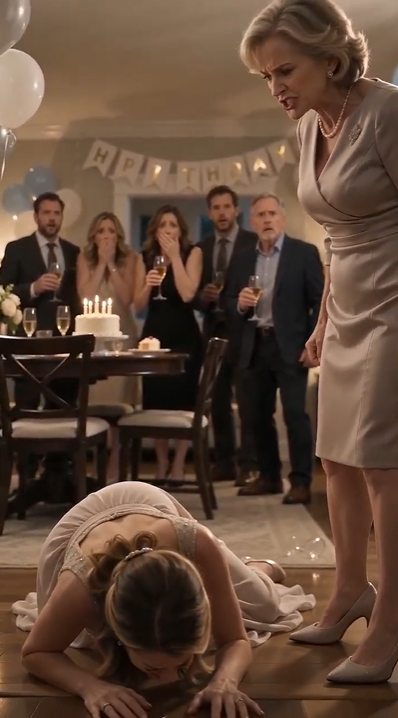
My Mother-in-Law Kicked Me So Hard I Lost the Baby, But the Ultrasound Revealed a Family Secret Worse Than the Miscarriage




One year later, the chill winds of a Chicago autumn whipped around me as I stepped out of the bustling women’s health clinic in downtown. The building was old, functional, and utterly unglamorous, a world away from the gilded cages of the Caldwell estate. Inside, I spent my days volunteering, guiding new patients through the intake process, offering a calm presence in often anxious moments. My divorce from Ethan had been finalized months ago, a quiet, unremarkable legal formality. He was now working a modest, unfulfilling job at a mid-level accounting firm, stripped of his family’s wealth, his grand expectations deflated.
The financial settlement I received from the Caldwell Trust, a portion of which was indeed substantial, had been a lifeline. I used a significant part of it to fund a local support group for women who had experienced medical trauma, particularly those whose voices had been dismissed or manipulated by powerful systems. It was a small act, but it grounded me, giving purpose to my pain. It was a subtle act of defiance, channeling my experience into something positive and communal, a stark contrast to Linda’s isolating cruelty.
I walked down the busy city street, heading towards a small, bustling deli for my lunch break. The cacophony of city life—car horns, distant sirens, the chatter of pedestrians—was a constant, grounding rhythm. As I waited at a crosswalk, I glanced across the street.
A sleek black car, older model but still expensive, pulled up to a less opulent, though still respectable, office building. The door opened, and Linda Caldwell emerged. She looked older, her frame thinner, her posture slightly stooped. Her expensive clothes seemed to hang on her, and her once imperious gaze was now hollow, her face etched with a permanent bitterness. She had lost her power, her social standing among her elite circles, and much of her financial control. She was a ghost of her former self, living a reduced, bitter existence.
Our eyes met across the busy street, a fleeting, unintentional connection. Her gaze was devoid of recognition, or perhaps, she simply chose not to acknowledge me. There was no flash of anger, no flicker of defiance, just a profound emptiness. She got into the car, and it pulled away, disappearing into the city traffic. It was a stark visual of the new reality: her defeat was demonstrated through her loss of power and the family’s shift away from her influence. Her behavior had become withdrawn, bitter, and isolated.
I felt no triumph, no surge of vindictive satisfaction. Only a quiet, melancholic ache. Her punishment was not public shame, but the private desolation of losing everything she had valued, a slow erosion of her identity. But she was still out there, her monstrous character merely retreating into the shadows, never truly vanquished.
I crossed the street and entered the deli, the warm smell of coffee and pastries a comforting embrace. Elena Rossi was already at our usual table, a stack of clinic administrative forms beside her. She looked up and smiled, a genuine, warm smile that had become a steady comfort in my new life.
“Rough morning?” she asked, gesturing to the paperwork.
“Just the usual administrative challenges,” I replied, taking the seat opposite her. “We’re trying to streamline the intake process for the new mental health services.”
We talked about the clinic, the daily struggles, the small victories. We didn’t talk about Linda, or Ethan, or the genetic secret that had shattered our lives and irrevocably altered the Caldwell legacy. That chapter was closed, its wounds still healing, but its truths firmly established. Elena, who had risked her career out of conscience, was now a trusted colleague, a quiet ally in a different kind of fight.
The truth had shattered one life but quietly rebuilt another. I found strength not in power or wealth, but in purpose, in helping others navigate their own medical traumas. The bustling clinic, the quiet deli, the ordinary city street—these were the unglamorous backdrops to a life rebuilt, a life defined not by what was lost, but by what was found.
Some wounds never truly heal, but the truth, once spoken, can pave a new path, even if the destination isn’t the one you imagined, and the monsters merely retreat into the shadows, never truly vanquished.
More Stories










+ There are no comments
Add yours