
Grandparents Evicted Our Family Days After Dad's Death — They Didn't Know About His Hidden Letter Exposing Their Scheme


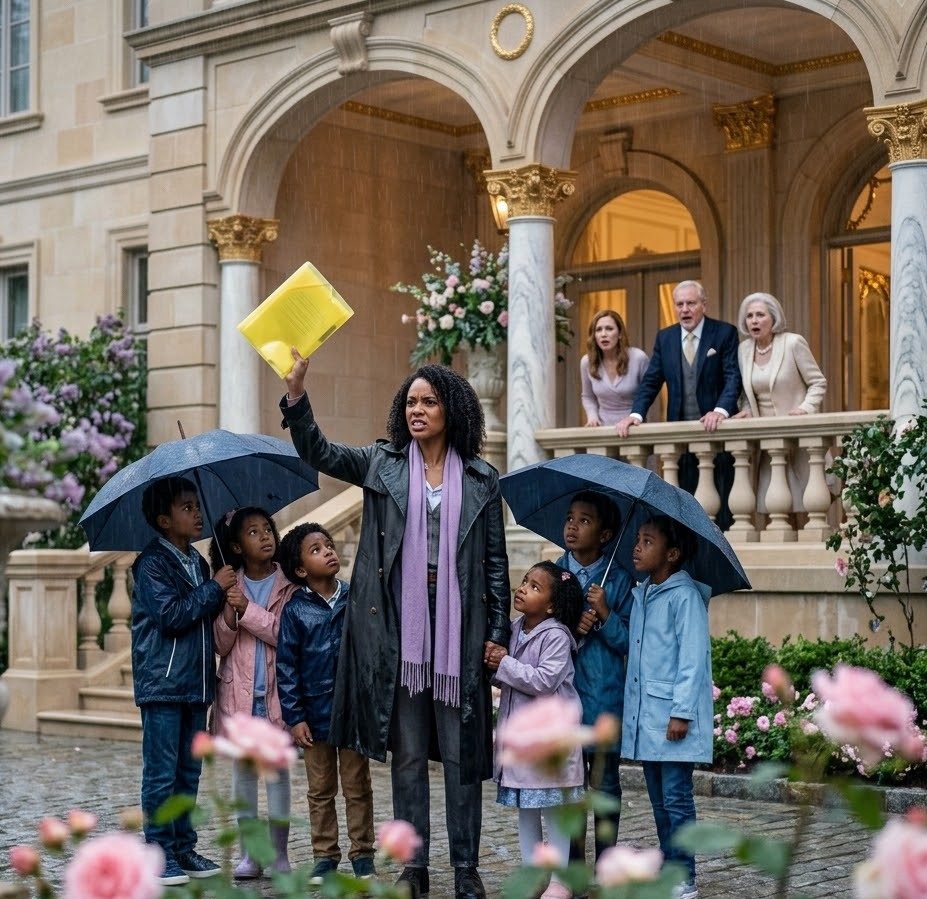

The air in Aunt Beatrice’s small apartment felt heavy, thick with the scent of unfamiliar potpourri and the faint, lingering smell of their own rain-soaked belongings. It had been an agonizing transition, leaving the familiar warmth of their home for this cramped, temporary refuge. I sat hunched over Aunt Beatrice’s old laptop, its glowing screen a stark contrast to the quiet gloom of the living room, trying to make sense of the chaos that had consumed our lives.
My fingers still ached from where Grandfather Albert had shoved me, the memory a raw burn. The “Oakwood Legacy Trust” – Dad’s words – echoed in my head, a cryptic beacon in the storm. I typed the phrase into the search bar, my heart thumping a frantic rhythm against my ribs.
I scrolled through pages of local history, community foundations, and irrelevant real estate listings, a knot of frustration tightening in my stomach. The municipal archive section, often overlooked by most, finally caught my eye. It was buried deep within the city’s historical documents, a digital labyrinth that felt designed to discourage casual explorers.
My eyes scanned the dense legal jargon, paragraph after paragraph blurring into an impenetrable wall of text. Then, a phrase leaped out at me: “Oakwood Legacy Trust – established to safeguard historically significant family properties within the Oakwood neighborhood.” Our house, with its sprawling porch and ancient oak tree, was practically a landmark in our part of Oakwood.
I felt a jolt, a surge of adrenaline. This wasn’t some generic fund; it was specific, local, and protective. The document detailed a set of obscure conditions, a lifeline for families like ours. It described a “time-limited trust,” designed to prevent predatory sales if the original owner had declared an explicit intent for their descendants.
The words swam before me, a dizzying mix of hope and disbelief. Dad hadn’t just mentioned a trust; he had known about this particular one. He had known its intricacies, its specific protections.
I closed my eyes for a moment, the image of my father’s face flashing through my mind – the quiet determination, the knowing look in his eyes when he pressed that yellow envelope into my hand. He hadn’t been guessing; he had been planning.
My mother, Denise, walked in, carrying a mug of herbal tea, her face still etched with the exhaustion of grief. She moved with a slow, deliberate grace, as if every step required immense effort.
“Anything, Eli?” she asked, her voice soft, careful not to disturb Savannah, who was napping on a makeshift bed on the floor.
I turned the laptop screen toward her, pointing to the highlighted text. “Mom, look at this. The Oakwood Legacy Trust. Dad didn’t just randomly mention it. He knew about it. It’s for places like our house.”
She leaned closer, her brow furrowed in concentration. The light from the screen reflected in her tired eyes.
“It says it protects historically significant family properties,” I explained, trying to keep my voice steady. “And if the owner declared intent for their kids, it can stop predatory sales.”
Denise gasped, a small, choked sound. She pulled up a chair and sat next to me, her hand trembling slightly as she traced the words on the screen.
“Your father… always so particular,” she murmured, a sad smile touching her lips. “He loved that house. He spent years fixing it up, making it ours.”
Her hand brushed against a small, mud-stained photo that had fallen out of one of our damp boxes. It was a picture of Dad and me, laughing on the porch swing he’d built himself. The corner was bent, a smudge of dirt obscuring part of his face. Grandfather Albert had dismissed the porch swing as “junk” when they threw it out. The contrast between that callous act and my father’s meticulous planning struck me hard.
“He was trying to protect us, Mom,” I said, a wave of understanding washing over me. “He must have known they’d try something.”
The weight of his forethought, his silent battle, settled over me. It wasn’t just about a house anymore; it was about honoring his fight.
Aunt Beatrice emerged from the kitchen, wiping her hands on a dish towel. She glanced at the laptop screen, then at Denise’s face.
“What is it, dear?” she asked, her voice laced with concern.
I quickly explained what I had found, the legal jargon flowing more easily now that I understood its purpose. Beatrice listened intently, her expression shifting from skepticism to a slow, dawning comprehension.
“My brother,” she said, shaking her head. “He was always ten steps ahead. Always prepared for everything.”
She paused, then added, “Our parents… they always had their eyes on that property. Said it was ‘prime real estate’ and your dad was ‘wasting its potential’ by keeping it a family home.”
The casual cruelty of their greed, disguised as concern for his “potential,” now felt even more personal. They hadn’t just wanted a house; they wanted to erase a legacy.
“This document,” I said, pointing to a specific section on the screen, “it talks about the owner declaring intent for their descendants. I wonder if Dad actually did that.”
Denise looked at me, a flicker of hope in her eyes, mixed with apprehension. “He never said anything to me directly about a trust. Only that the house was for us, always.”
I remembered the yellow envelope. Dad had specifically told me it was “for you,” not “for us.” It wasn’t just a general sentiment; it was a specific instruction.
The realization hit me like a physical blow. Dad hadn’t just stumbled upon this trust. He hadn’t just left a cryptic message. He had specifically mentioned it to me.
“He knew,” I whispered, more to myself than to them. “He absolutely knew. This trust, the declaration of intent… he set this up. The yellow letter isn’t just a warning; it’s a key.”
A new resolve hardened in my gut. This wasn’t just a legal battle; it was a race against time, a fight to prove my father’s love and foresight. The path ahead was daunting, but for the first time since Dad died, I felt a flicker of power.
I closed the laptop, the screen going dark. The reflection of my own determined face looked back at me. This wasn’t over. Not by a long shot.
More Stories





+ There are no comments
Add yours