
She Found Her Daughter Caged and Painted Red by Her Mother-in-Law — The Price Was Her Hollywood Career
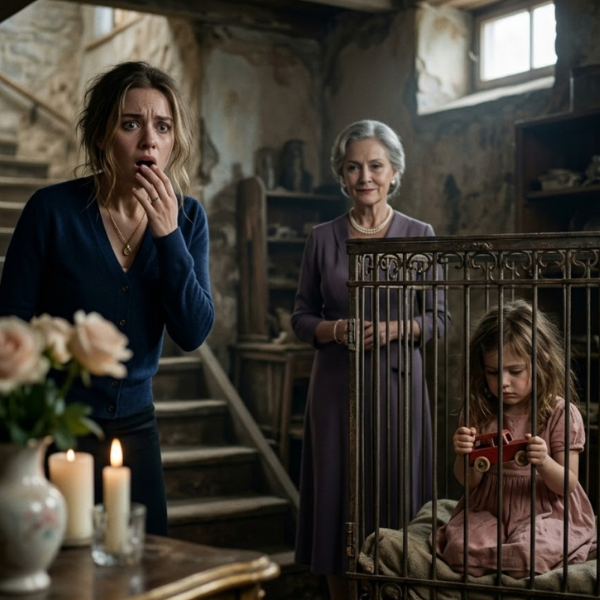

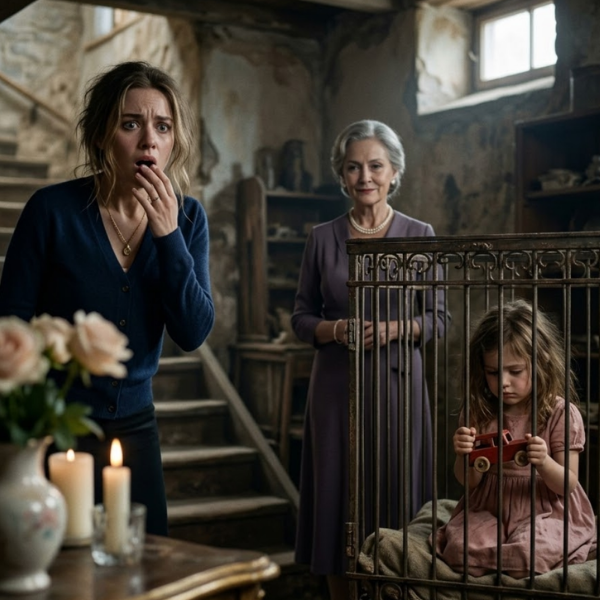
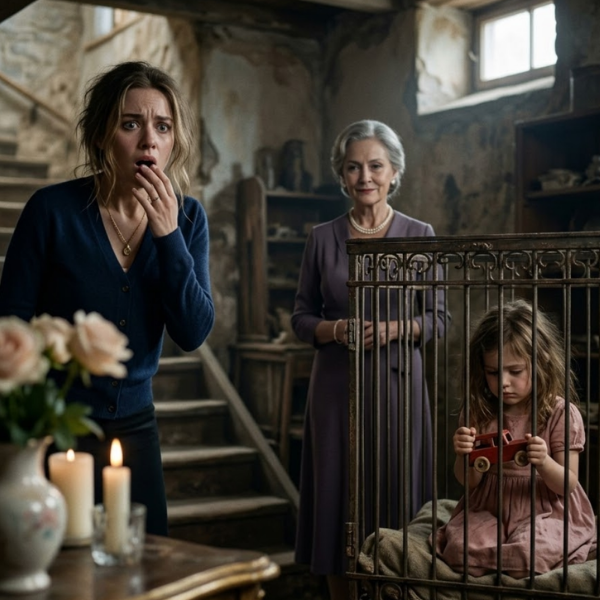
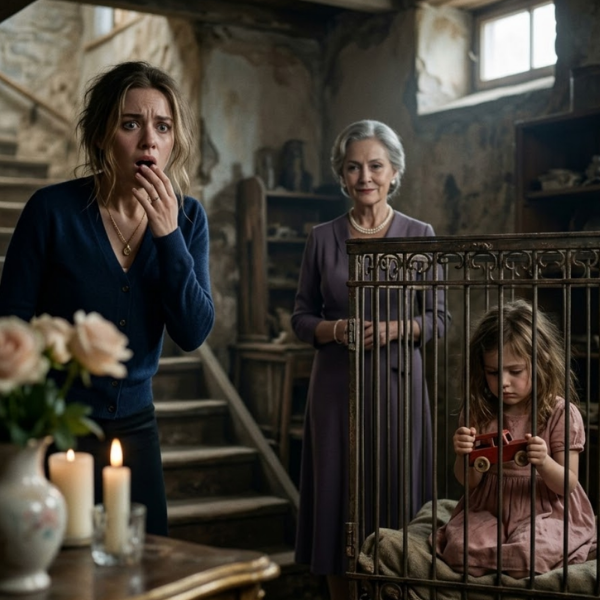


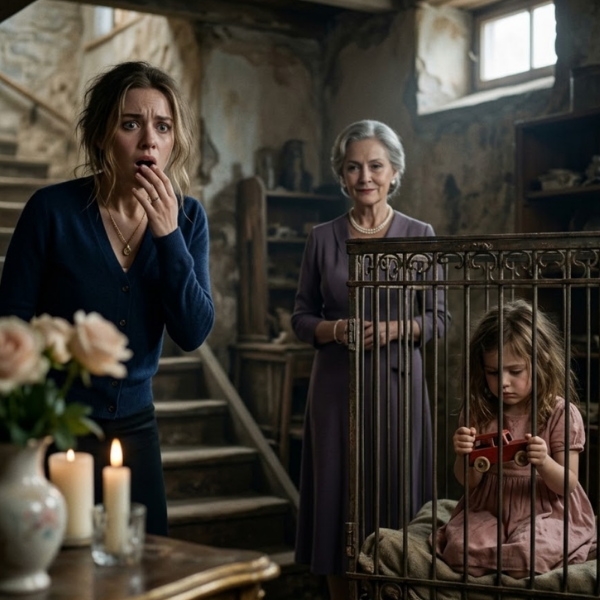




The screen flickered to life, projecting the grainy image onto the portable display. Chloe, younger, perhaps four years old, was huddled inside the makeshift iron cage. Her small body was covered in dried red paint, already blistering, and black tape bound her wrists, though loosely, almost ritualistically. Gloria’s calm, disembodied voice gave instructions off-camera, her tone chillingly serene.
“Chloe, darling,” Gloria’s voice purred, devoid of warmth. “Remember what happens when we don’t present perfectly? We get to be repainted. A lesson in proper self-image.”
I watched, my hands clasped over my mouth to stifle a cry, as the child psychologist, Dr. Sharma, who had been brought in to oversee the evidence, gasped quietly beside me. The scene was a visceral punch to the gut, undeniable proof of the horrors I had only imagined. My daughter, small and vulnerable, suffering in silence.
Officers continued to search the archive, pulling out more tapes, more hard drives. Each one was labeled with Gloria’s precise hand. As they played successive tapes, the horrifying truth began to unfold in layers, a sickening tapestry of abuse.
**Layer 1:** The tapes existed. Dozens of them. They weren’t just random recordings; they were meticulously documented “Project Nightingale” sessions. Footage of other child stars Gloria managed over decades, all subjected to her increasingly cruel “disciplinary” rituals. The same cage appeared in many of the older tapes, though sometimes modified, more elaborate. The red paint, the sensory deprivation, forced isolation, bizarre “image correction” rituals—it was all there, recorded with cold, calculating precision.
“Subject Delta – Stage Presence Correction,” read one label. On the screen, a terrified boy, no older than seven, was forced to stand absolutely still for hours, a bright spotlight on him, while Gloria’s voice critiqued his “lack of focus.” If he so much as swayed, a loud, jarring buzzer would sound.
**Layer 2:** The volume and depth of the abuse were staggering. It wasn’t just physical discomfort; it was systematic psychological torment. Some children, particularly in the later tapes, appeared utterly broken, their faces numb, their eyes hollow. One tape showed a girl, perhaps ten, sitting in the cage, a bowl of water and a single, unappealing meal before her, Gloria’s voice instructing her to “practice self-control” by resisting hunger for an entire day. She was forced to watch Gloria eat a lavish meal just outside the cage. The petty cruelty was in the elaborate setup, designed to break their spirits completely. It was a multi-decade campaign of psychological torture, designed to create “perfect,” compliant performers, not isolated incidents of disciplinary action. These were not mistakes, but calculated, prolonged attacks on their innocence.
“She always filmed the moments of their surrender,” Mack, who was now being interviewed by Moretti, whispered, his face pale. “She said it was proof of her genius. The ‘transformation’.”
**Layer 3:** An officer, deeper in the archive, pulled out an older camcorder tape, its label faded but legible. “Liam – First Correction,” it read. He inserted it into the player. My blood ran cold.
The screen flickered, showing a very young Liam, barely Chloe’s age, perhaps five or six, standing in a much simpler, smaller cage. The setting was slightly different, perhaps an earlier version of the basement. A younger Gloria, her face still smooth, her voice just as calm, stood off-camera.
“Liam, darling,” her voice, disturbingly familiar, flowed from the speakers. “We need to learn to control our emotions, don’t we? Stars don’t cry.”
The scene showed Liam, tears streaming down his face, being subjected to a milder but unmistakable version of Gloria’s “lessons.” He was forced to repeat lines, to mimic smiles, while Gloria critiqued his “lack of conviction.” The cage, the disembodied voice, the systematic conditioning—it was all there. It was his own “Project Nightingale.”
The horrifying truth of Liam’s own trauma, and his deep-seated conditioning, dawned on me. His fear, his complicity, his inability to defy Gloria—it wasn’t just cowardice. He had been a victim himself, subjected to the same psychological abuse, creating a generational cycle of trauma. He was a product of the very system he had helped Gloria uphold. The climax delivered three shocking layers of truth, exposing Gloria’s reign of terror and the tragic depths of her control.
More Stories













+ There are no comments
Add yours