
She never paid a single dollar for this charity service, the lawyer said, sliding the worn paper across the mahogany desk.


The drive downtown felt like a blur, Evelyn’s municipal bank notice clutched tight in my hand. The sleek glass and steel of my father’s campaign headquarters rose sharply from the Philadelphia skyline, a stark contrast to Evelyn’s quiet rowhouse. Inside, the lobby buzzed with efficient, well-dressed people, a world away from the honest grit of my woodworking shop.
“I need to see my father,” I told the impeccably dressed receptionist, my voice tight.
She barely glanced up, her fingers flying across a typewriter. “Mr. Kincaid is in a strategy meeting, Mr. Julian.”
“Tell him it’s urgent,” I insisted, the paper in my hand a burning weight. “It’s about Kincaid Logistics.”
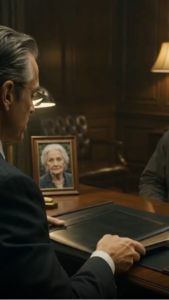
A few moments later, a junior aide led me to Arthur’s corner office. Sunlight streamed through tall windows, illuminating polished mahogany and expensive leather. Arthur sat behind his imposing desk, a practiced, almost too-smooth smile on his face. He gestured to a chair, but I remained standing, the bank notice a shield in my hand.
“Julian, to what do I owe the pleasure?” Arthur said, his smile not quite reaching his eyes. “Lost your way from the sawdust and splinters?”
I slapped the bank notice onto his desk. “This is Evelyn Albright’s pension statement. Kincaid Logistics cut her monthly payment by more than half.”
Arthur’s smile faltered, replaced by a slight frown. He picked up the paper, his eyes scanning it quickly. “Ah, yes. Mrs. Albright. A challenging case.”
He set it back down, pushing it away as if it were contaminated. “Look, Julian. These things are complicated. There are administrative overheads, fluctuating market conditions, necessary adjustments to ensure the fund’s long-term solvency.”
“Adjustments?” I retorted, my voice rising. “She sold her husband’s WWII medals to pay me because she was starving, Father. Kincaid Logistics administers the *city’s* military relief trust. You’re skimming from Gold Star widows.”
Arthur leaned back, his expression hardening. “Watch your tone, Julian. And watch your accusations. These are simply necessary operational fees. Part of doing business. It’s nothing that concerns you.”
“It concerns me when your company profits from the very people you’re supposed to be helping,” I shot back, picturing Evelyn’s frail hands wrapping the $25 in an envelope.
His eyes narrowed. “I suggest you drop this, Julian. Immediately. Your sentimental attachments to a minor administrative adjustment are misplaced. Focus on your carpentry, boy. And don’t interfere with matters you don’t understand.”
“I understand that you’re exploiting grieving families,” I said, a cold certainty settling over me.
Arthur stood up, his voice dropping to a low, dangerous tone. “If you persist, Julian, you’ll regret it. Your little workshop, your independence… it’s all very fragile, isn’t it?”
I left his office, the threat hanging in the air. The next morning, as the sun barely cleared the rooftops, two municipal tax officers pulled up to my woodworking cooperative in a black sedan. They walked straight past the stacks of freshly planed lumber, past the half-finished rocking horse on my bench.
“Julian Kincaid?” one of them asked, his voice flat.
“That’s me.” I wiped sawdust from my hands, my heart hammering.
“We have an emergency municipal lien notice for your business, Kincaid Woodworks.” He held out a folded document. “Account assets are frozen, effective immediately.”
My workshop, my only source of income since Leo died, my last connection to a dream… it was shut down.
More Stories








+ There are no comments
Add yours