
At an Isolated Texas Inn, a 67-Year-Old Retired Pinkerton Confronts His Gambler Brother Selling an Orphaned Girl with a Hidden Badge and a Spectral Secret for $2,000
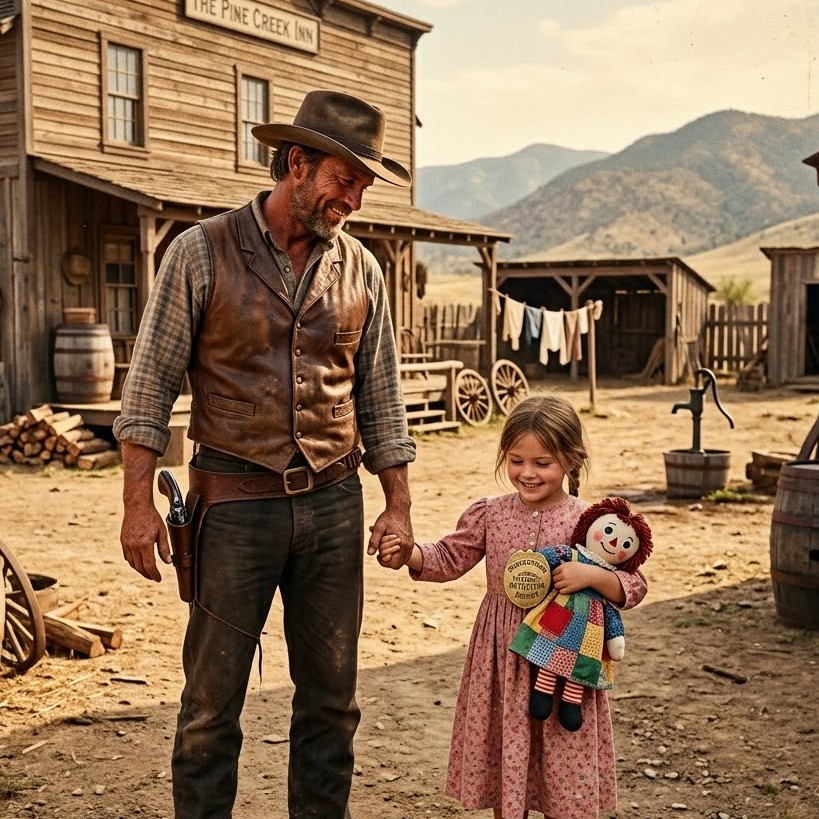

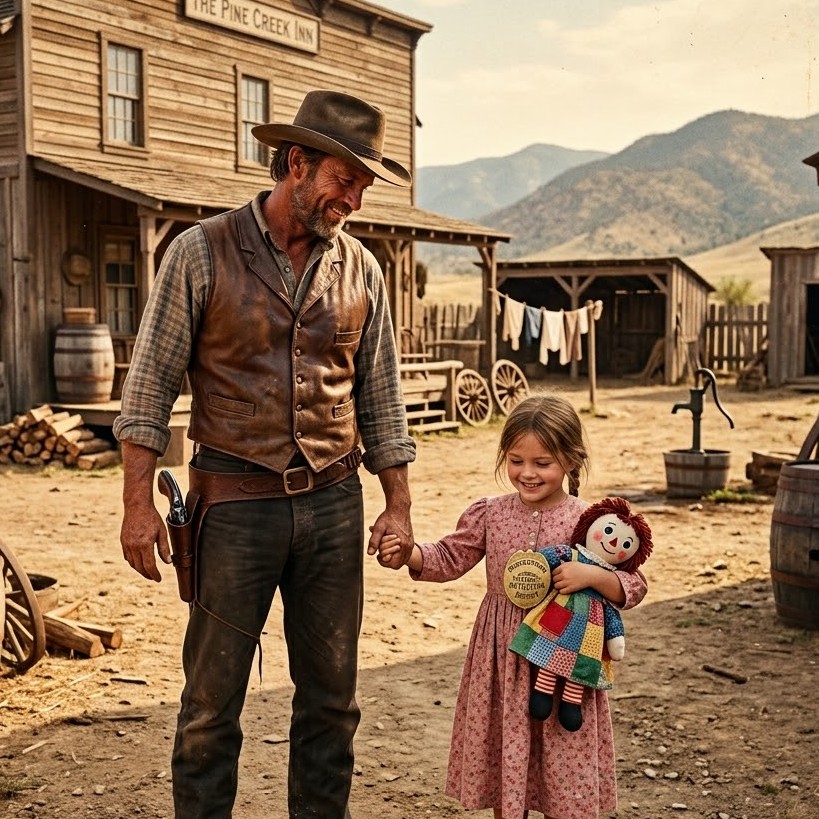


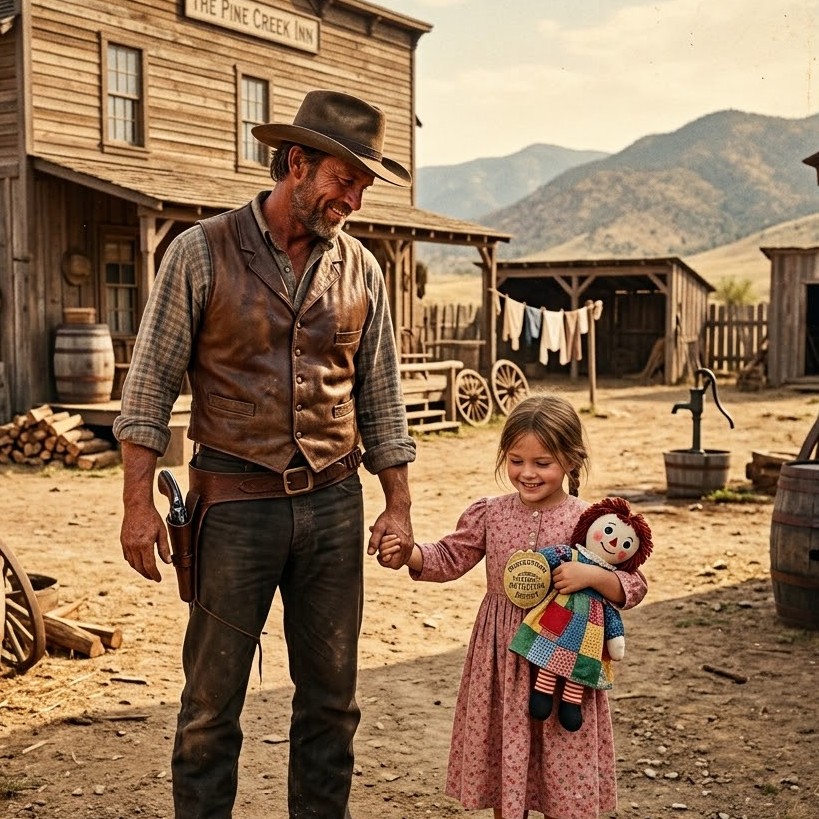


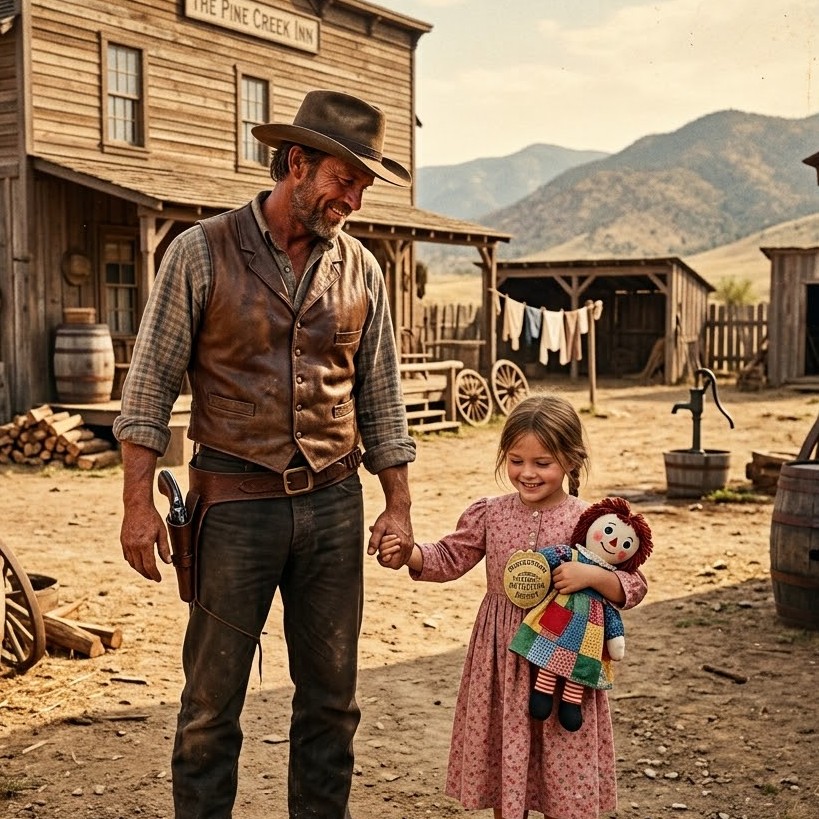
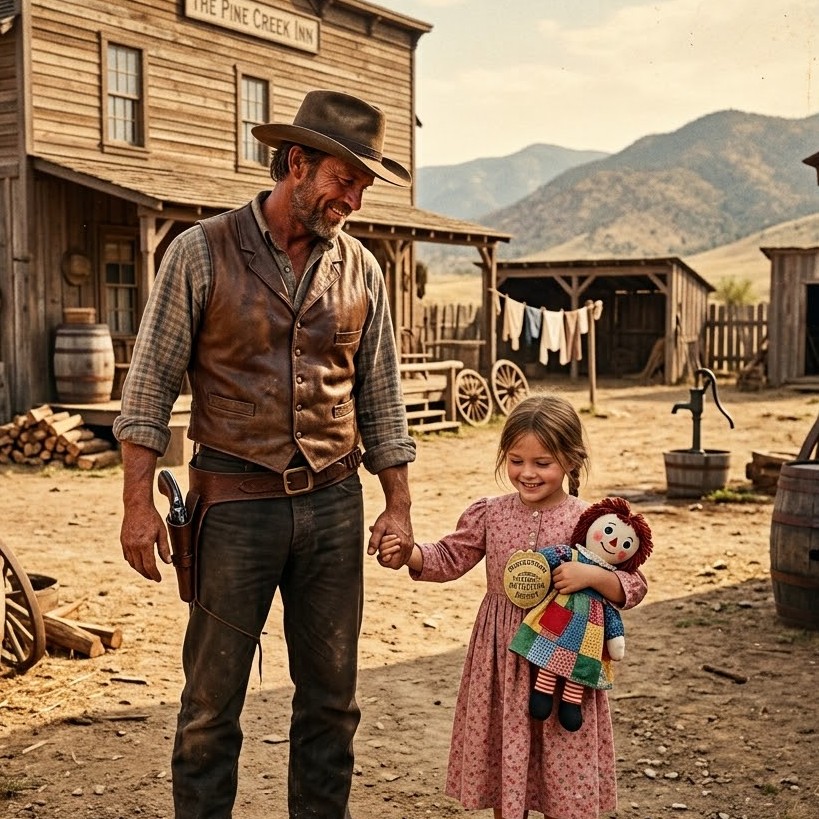
I turned from Jebediah, ignoring his sneer, and walked directly toward the inn’s front door. The outlaws shifted, their hands hovering near their pistols, but they didn’t stop me. Jebediah looked furious but remained rooted in the yard, his eyes narrowed.
Maeve followed, her footsteps light behind me, the dust barely stirring beneath her worn shoes. Her presence was a silent anchor in the chaos.
Inside the inn’s office, the air was cooler, thick with the scent of aged wood and forgotten things. Sunlight streamed through the grimy window, illuminating motes of dust dancing in the air. The oak desk stood heavy and silent in the center of the room, a relic from another time. It had been my father’s, then mine, filled with decades of ledgers, land grants, and correspondence.
I ran my hand over the polished surface, remembering my father’s calloused fingers tracing these same lines. He’d always kept things hidden. Important things.
Jebediah had boasted the inn was his, that he held the deed. But I knew, deep down, that wasn’t true. My father had a way of ensuring his will was always done, even after his passing.
I pulled open the top drawer, then the next, searching for the old, heavy land grant box. It wasn’t there. Only my own scribbled notes and a handful of forgotten pencils. Jebediah must have taken it.
Frustration flared. He was thorough, I’d give him that. He’d cleared out anything that could directly contradict his claims.
My fingers brushed against a small, almost invisible seam along the inner edge of the desk’s side panel. It was a secret compartment, cleverly disguised. My father had shown it to me once, decades ago, for hiding “things of true importance.” I hadn’t thought of it in years.
I pressed firmly, feeling the old wood give with a faint click. A narrow panel slid open, revealing a hidden recess. Inside, nestled beneath a layer of dust, was a single, yellowed envelope. It felt fragile, almost brittle, in my fingers.
I pulled it out carefully. The paper was thick, handmade, sealed with a faded wax stamp bearing the Abernathy family crest—a lone willow tree bent against a storm. My father’s handwriting, strong and looping, addressed it to “My Son, Silas.”
My heart hammered against my ribs. This wasn’t some minor forgotten note. This felt significant. This felt like a twist of fate.
I carefully broke the seal. Inside was a single sheet of paper, folded precisely. The ink had faded over the decades, but the words were still legible. It was a letter, dated over thirty years ago.
It wasn’t a will, not exactly. It was a declaration. A detailed, legal-sounding document. As my eyes scanned the lines, a cold dread, quickly replaced by a surge of vindication, washed over me.
“To all who shall read this,” the letter began. “Let it be known that my son, Jebediah Abernathy, due to his repeated acts of grand larceny, fraud, and utter disregard for family honor, is hereby formally disinherited from all claims to the Pale Willow Inn and any and all Abernathy family assets, property, or guardianship rights, effective this day forward. He shall inherit nothing.”
My breath hitched. My father had done this? All those years ago? It was signed, not only by my father but witnessed by a circuit judge, a different one, but still a judge, and a local notary public. It was a legal instrument, perfectly valid under territorial law.
Jebediah never owned the property. He never had legal guardianship over Maeve, who was clearly linked to “Abernathy family assets” in the letter’s sweepingly broad language. He had forged the deed, just as I suspected, to secure gambling credit. This letter upended everything. It was the truth, tucked away for thirty years, waiting for this moment.
Just then, I heard the distinctive creak of wagon wheels approaching the inn. Judge Higgins. He was early. The timing felt almost supernatural.
More Stories









+ There are no comments
Add yours