
Dr. Reed discovers a hidden device in his comatose, pregnant wife, uncovering a dark secret at the hospital.


The air in St. Jude’s grew colder around me after my meeting with Jenkins. My suspension, initially framed as a routine administrative review, was now extended indefinitely. Calls to HR went unanswered. My usual scrub-in schedule vanished from the digital board. I was an anomaly, a problem to be contained.
Jenkins was systematically isolating me. The first concrete sign came two days later, an official memo from the hospital ethics committee. It stated that a formal internal review was being launched into my “patient care and professional conduct.” The memo cited several anonymous complaints regarding my “erratic behavior” in the ICU, my “disruptive questioning” of staff, and my “unprofessional demeanor” during sensitive patient discussions.
It was a smear campaign, orchestrated with chilling precision.
My access to patient files, already limited, was now almost completely restricted. I couldn’t even pull up basic lab results without a supervisor override. My schedule, once packed with complex neurosurgeries, was now filled with trivial tasks: observing minor procedures, reviewing old charts, attending mandatory, mind-numbing “professional conduct” seminars. It was designed to marginalize me, to make me a non-entity, to chip away at my professional standing until I either broke or left.
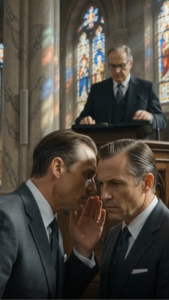
As if the professional attacks weren’t enough, the whispers began. Thorne, a master manipulator, didn’t need to confront me directly. He simply let the rumors spread, like a slow-acting poison. I’d catch snippets in the cafeteria, in the locker room.
“Poor Dr. Reed,” a voice would say, feigning sympathy, “so tragic about his wife. But he’s really not himself, is he? Saw him shouting at a tech yesterday.”
“Emotional instability,” another would murmur. “It’s understandable, but not safe for patients, is it?”
I felt like an exhibit in a zoo, everyone watching, judging. My reputation, painstakingly built over years, was being systematically dismantled. The looks of concern from some colleagues had morphed into cautious avoidance. No one wanted to be associated with the “problem doctor.”
Even Lena seemed more withdrawn, her responses to my occasional texts brief and non-committal. She was clearly feeling the pressure, the chilling effect of Thorne’s reach. I couldn’t blame her; her job, her livelihood, was on the line.
The isolation was crushing. I spent more time by Amelia’s bedside, the only place where the whispers couldn’t reach, where the only sound was the gentle hum of her life support. I talked to her, told her everything, the new layers of betrayal, the walls closing in. It felt therapeutic, a way to anchor myself, even if she couldn’t hear.
One afternoon, sitting in Amelia’s room, staring out the window at the relentless drizzle, my personal phone buzzed. It was an anonymous number, an unsaved contact. I hesitated, then answered. Silence. No sound on the other end.
A text message immediately followed: “Look for the forgotten.”
No name, no context, just those three cryptic words. My brow furrowed. The “forgotten”? What did that mean? Was it a warning? A clue?
I typed back, “Who is this?”
No response. The message remained stubbornly anonymous. It could be a trick from Thorne, a way to bait me. Or it could be someone trying to help, someone still brave enough to step outside Thorne’s shadow.
The phrase echoed in my mind. “Look for the forgotten.” Was it a place? A person? A piece of information? The hospital was a labyrinth of forgotten corners, old archives, disused equipment. It was a vast, sprawling institution, built piece by piece over decades.
Jenkins’s attacks had me professionally sidelined, Thorne’s rumors had me socially ostracized, but this message, this single, strange directive, ignited a flicker of hope. Someone was still watching. Someone was still pushing back. But who? And what exactly was I supposed to be looking for? The weight of my isolation was immense, but this small, anonymous message, a lifeline in the darkness, suggested I wasn’t entirely alone after all. It complicated everything, adding a new layer of mystery to the already overwhelming fight.
More Stories













+ There are no comments
Add yours