
Parents Demanded Cash in ER While My Daughter Fought for Life, Then Tried to Steal Her Trust Fund


A summons arrived in my hospital room email, formal and concise: “Meeting with Mr. Davies, Hospital Administrator.” It came with a specific time and location in the administrative wing. The formality made my stomach churn. Was this about my parents’ continued legal barrage? Had the hospital’s stance shifted?
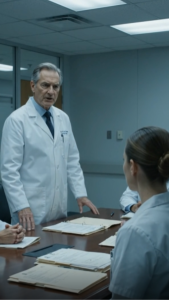
I walked into Mr. Davies’s office with a knot of apprehension in my chest. He was a man in his late fifties, impeccably dressed, with a calm, almost weary demeanor. He gestured to a chair opposite his large, polished desk.
“Ms. Maxwell, thank you for coming,” he began, his voice smooth and professional. “Please, have a seat.”
The office was tastefully decorated, filled with framed certificates and discreet plants, a stark contrast to the sterile medical environment upstairs. The silence stretched between us, thick with unspoken concerns.
“I’ve called you here today to discuss a rather… unusual aspect of the ongoing legal challenges from your parents, Mr. and Mrs. Maxwell,” Mr. Davies said, his gaze steady. He picked up a folder from his desk, its contents hidden from my view.
I braced myself. “Are they still demanding immediate visitation? I assure you, the ban was necessary. Nurse Sharma and Dr. Tanaka can corroborate the incident.”
He raised a hand, a small, reassuring gesture. “No, no, Ms. Maxwell. While their legal team is certainly still pushing for visitation, that is not my primary concern today. The hospital stands by its decision to protect patient safety. The incident with the oxygen mask was deeply disturbing.”
A wave of relief washed over me, but it was quickly replaced by a fresh surge of unease. If it wasn’t about visitation, what was it?
“What has concerned our legal team, and frankly, myself,” Mr. Davies continued, opening the folder, “is a very specific, and rather unusual, request buried within their latest legal motions.” He slid a document across the desk to me.
It was a copy of a legal filing from Mr. Harding’s office. My parents, Arthur and Vivian Maxwell, were listed as the petitioners. I scanned the dense legal jargon, my eyes darting to find the relevant section.
“Scroll down to point C, subsection two,” Mr. Davies instructed, pointing with a pen. “Specifically, where it requests access to your daughter, Lily Maxwell’s, comprehensive medical records.”
I found the section. It wasn’t just a general request for information; it was a demand for *full and complete access* to all of Lily’s past, present, and future medical history, including diagnostic reports, treatment plans, and even financial billing statements related to her care.
My blood ran cold. “My daughter’s medical records? Why would they need all of that? They’re not her guardians. I am.”
“Precisely,” Mr. Davies affirmed. “And this is where it becomes… perplexing. Their legal rationale, Ms. Maxwell, cites an ‘obscure family financial dependency clause’ that they claim necessitates their full oversight of Lily’s medical care and related expenditures.”
He leaned forward slightly, his voice dropping. “Our legal team has thoroughly researched this. There is no standard ‘family financial dependency clause’ that would grant grandparents such sweeping access to a minor’s medical records, especially without existing guardianship or medical power of attorney. It’s highly unusual. It raises serious red flags for us.”
My mind reeled. A “family financial dependency clause.” Coupled with my recent discovery of their devastating, hidden debts. This wasn’t about love or concern for Lily. This was about money, and access to it, using Lily’s critical condition as leverage.
“They believe that this clause… entitles them to manage her medical care financially?” I asked, my voice barely a whisper, a horrifying realization dawning on me.
Mr. Davies nodded slowly. “That appears to be their argument. They are attempting to frame it as a necessary measure to ensure Lily receives the best care, implying that you, as her sole parent, may be somehow… incapable of managing the financial aspects adequately.”
He paused, letting the implication sink in. “Of course, the hospital finds this suggestion entirely baseless. We have observed your unwavering dedication to Lily’s well-being, and your full cooperation with her medical team. Dr. Tanaka and Nurse Sharma have both expressed their full confidence in your judgment.”
His words, meant to reassure, only fueled my anger. They were trying to paint me as incompetent, as unstable, to justify their outrageous demands. It was a calculated attack on my fitness as a mother, all to gain access to Lily’s medical financials. And for what? To find a way to pay off their own decades-old debts?
“We will, of course, fight this request vigorously,” Mr. Davies stated, his tone firm. “Patient privacy is paramount. We cannot, and will not, grant such broad access without proper legal justification and your express consent, neither of which they currently possess. This request has shifted our stance from simply mediating a family dispute to actively protecting Lily’s rights and privacy.”
This was a significant shift. The hospital, initially neutral, was now an active ally. This institutional support was a lifeline.
“Thank you, Mr. Davies,” I said, genuinely grateful, but my mind was already racing. This obscure clause. The Maxwell Trust. Clara’s warning. It all clicked into place with horrifying clarity.
“Do you know anything about a ‘Maxwell Family Trust’?” I asked, a sudden thought striking me.
Mr. Davies frowned, flipping through the papers in the folder. “Not specifically mentioned in their filings, no. Why do you ask?”
“Just a hunch,” I mumbled, not wanting to reveal Clara’s cryptic hint until I had more concrete information. The words “family financial dependency clause” felt like a twisted reflection of the trust’s original intent.
He looked at me, his gaze sharp. “Ms. Maxwell, this is a serious matter. Given the severity of their actions in the PICU, and now this highly unusual legal maneuvering, we are taking this very seriously. Our legal team will be actively involved in denying their request for medical records, and we will do everything within our power to ensure Lily’s privacy and well-being are protected.”
He closed the folder with a decisive snap. “Consider the hospital your ally in this. We have an obligation to safeguard our patients, and Lily Maxwell is our patient.”
I stood up, feeling a strange mix of dread and empowerment. My parents weren’t just after money; they were after a specific pathway to money, a pathway they believed was hidden within Lily’s medical records. They wanted to use her illness, her vulnerability, to access funds they likely couldn’t touch otherwise. This was far more sinister than I had imagined.
I thanked Mr. Davies again, walking out of his office with a renewed sense of purpose. This wasn’t just about my personal fight against manipulative parents; it was now a battle against a deeply calculated, financially motivated scheme that threatened Lily’s entire future.
As I rode the elevator back up to Lily’s ward, I felt a fresh surge of fury. Their past financial devastation, meticulously covered up, now explained their desperate, dangerous gambit. The “family financial dependency clause” was their key, and my daughter’s illness was their entry point. It was a cold, cruel calculation.
Nurse Sharma was at the desk, charting. She gave me a small, encouraging smile.
“Everything alright with Mr. Davies?” she asked.
“He confirmed the hospital will fight their demands for Lily’s medical records,” I told her, my voice tight with controlled anger. “They cited some ridiculous ‘family financial dependency’ clause.”
Nurse Sharma’s smile faltered, replaced by a look of profound concern. “Medical records? That’s… quite a step. Most family disputes never go that far. It sounds like they have a very specific objective.”
“They do,” I agreed, my gaze drifting toward Lily’s room. “And I think I know what it is.”
The puzzle pieces were clicking into place, horrifyingly, inevitably. Clara’s cryptic note, the old photo, the hidden financial history, and now my parents’ specific demand for medical records under the guise of an “obscure clause.” It all pointed to one thing: a deep, hidden family resource they were trying to exploit, using Lily as their unwilling conduit.
I had to find Clara. Now I knew what questions to ask, what details to press for. The time for cryptic hints was over. It was time for direct answers, for Lily’s sake.
More Stories





+ There are no comments
Add yours