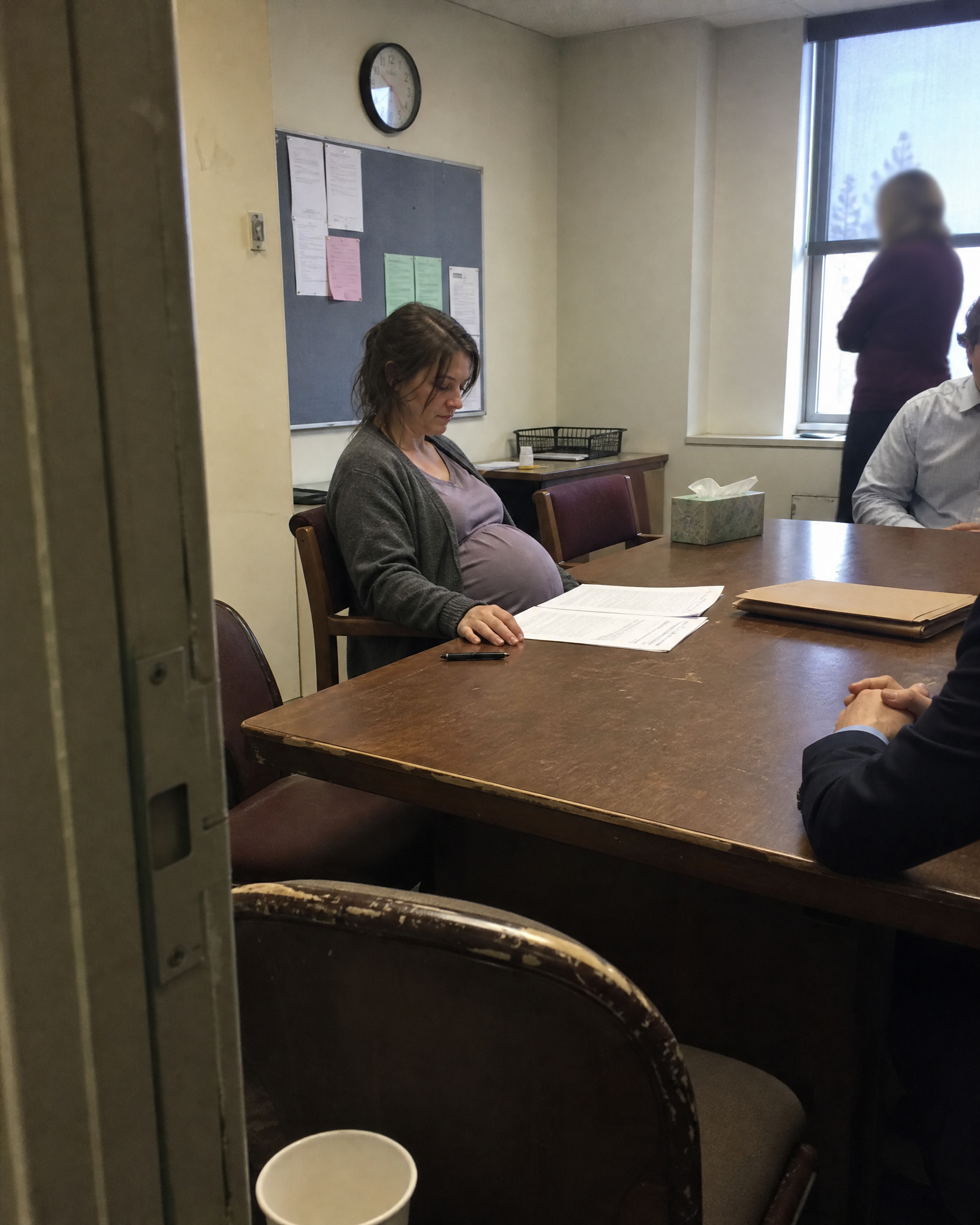
Dr. Albright Humiliated His Pregnant Wife in Divorce Court — She Walked Away with Nothing, But Took His Medical Empire with Her


Mr. Finch’s suggestion felt like a cruel joke. “A prenatal support group, Elara?” I had asked, my voice tight with exhaustion and indignation. “After everything Marcus is putting me through?”
The idea of sharing my vulnerabilities with strangers, while Marcus actively tried to paint me as unstable, was repulsive. My emotional tank was running on empty, drained by sleepless nights and the constant drip of online whispers.
“It’s not about public confession, Elara,” he had replied gently, his voice patient. “It’s about support. About being in a room where you’re not Marcus’s wife, or his ex-wife, or a target. Just a mother-to-be.”
He had made a compelling point, something about human connection being as vital as legal strategy. Reluctantly, I agreed. The drive to the community center felt heavy, each mile adding to my apprehension.
The room was surprisingly warm and inviting, filled with comfortable chairs and the quiet murmur of women sharing stories. There were mothers-to-be, new mothers, and a few seasoned parents offering advice. My initial apprehension slowly began to ease as I listened to their shared experiences, their hopes and anxieties.
I sat in a corner, content to observe, to be a silent presence. The shared humanity in the room was a balm, a stark contrast to the sterile, confrontational world I had been living in.
Then he walked in. A man with kind eyes and a gentle smile, introducing himself as Dr. Aris Keller. He wasn’t there as a patient, but as an invited guest, a bioethicist volunteering his time to discuss navigating healthcare decisions during pregnancy.
His presence was unexpected in a room primarily filled with women. He spoke with a quiet authority, his words thoughtful and deeply empathetic.
After the formal discussion, during the casual mingling, he approached me.
“Elara, isn’t it?” he asked, his voice soft. “I noticed you were quiet, but you seemed very engaged.”
I nodded, a polite smile on my face. “Yes. There’s a lot to take in.”
“Indeed,” he replied. “Pregnancy is a journey filled with profound decisions. Especially in medicine.”
We fell into an easy conversation, surprisingly. He listened intently, not just to my words, but to the unsaid. His genuine curiosity was disarming.
“What exactly does a bioethicist do?” I asked, genuinely intrigued.
He explained his work, mediating complex ethical dilemmas in healthcare, advocating for patient rights, and consulting on institutional policies. His passion for integrity in medicine was evident.
A seed of an idea began to sprout in my mind. Cautiously, I began to frame a question.
“I’ve been… thinking a lot about ethics in medicine lately,” I began, choosing my words carefully. “Hypothetically, of course.”
He leaned forward slightly, his gaze unwavering. “Of course. It’s a field rife with hypotheticals.”
“Imagine a scenario,” I continued, “where a fertility clinic, years ago, engaged in practices that were… ethically dubious. Not outright illegal, perhaps, but certainly blurring lines. Perhaps regarding patient consent or the handling of sensitive genetic material.”
I watched his face for a reaction. His expression remained neutral, but his eyes sharpened, a flicker of keen interest.
“And imagine,” I went on, “that these practices led to unforeseen, difficult outcomes for patients. What would be the recourse? How would one even begin to unravel something like that, years later, if the records were… less than transparent?”
His silence stretched for a moment, thoughtful, not dismissive. He was absorbing every nuance.
“That’s a complex hypothetical, Elara,” he finally said, his voice low. “Ethical breaches of that nature, especially in the sensitive field of fertility, leave long shadows.”
He then spoke of the challenges of investigating such cases, the difficulty of obtaining evidence, and the power imbalances often involved. His words, though still theoretical, felt eerily close to home.
“Such patterns,” he added, almost to himself, “tend to repeat themselves, or leave behind traces. There are always whispers, even if the formal complaints are suppressed.”
A shiver ran down my spine. He had recognized something in my vague description. My heart pounded with a mix of fear and a strange, nascent hope.
I merely nodded, letting his words hang in the air. The conversation drifted to other topics, but the connection had been made.
As he prepared to leave, he offered a parting thought. “If your hypothetical ever becomes… less hypothetical, Elara, know that there are people who still believe in holding institutions accountable.”
He handed me a simple business card. “My office details, should you ever need them. For any ethical quandaries.”
I gripped the card tightly, the small, stiff paper feeling like a lifeline. Meeting Aris Keller felt less like a coincidence and more like a sign.
More Stories










+ There are no comments
Add yours