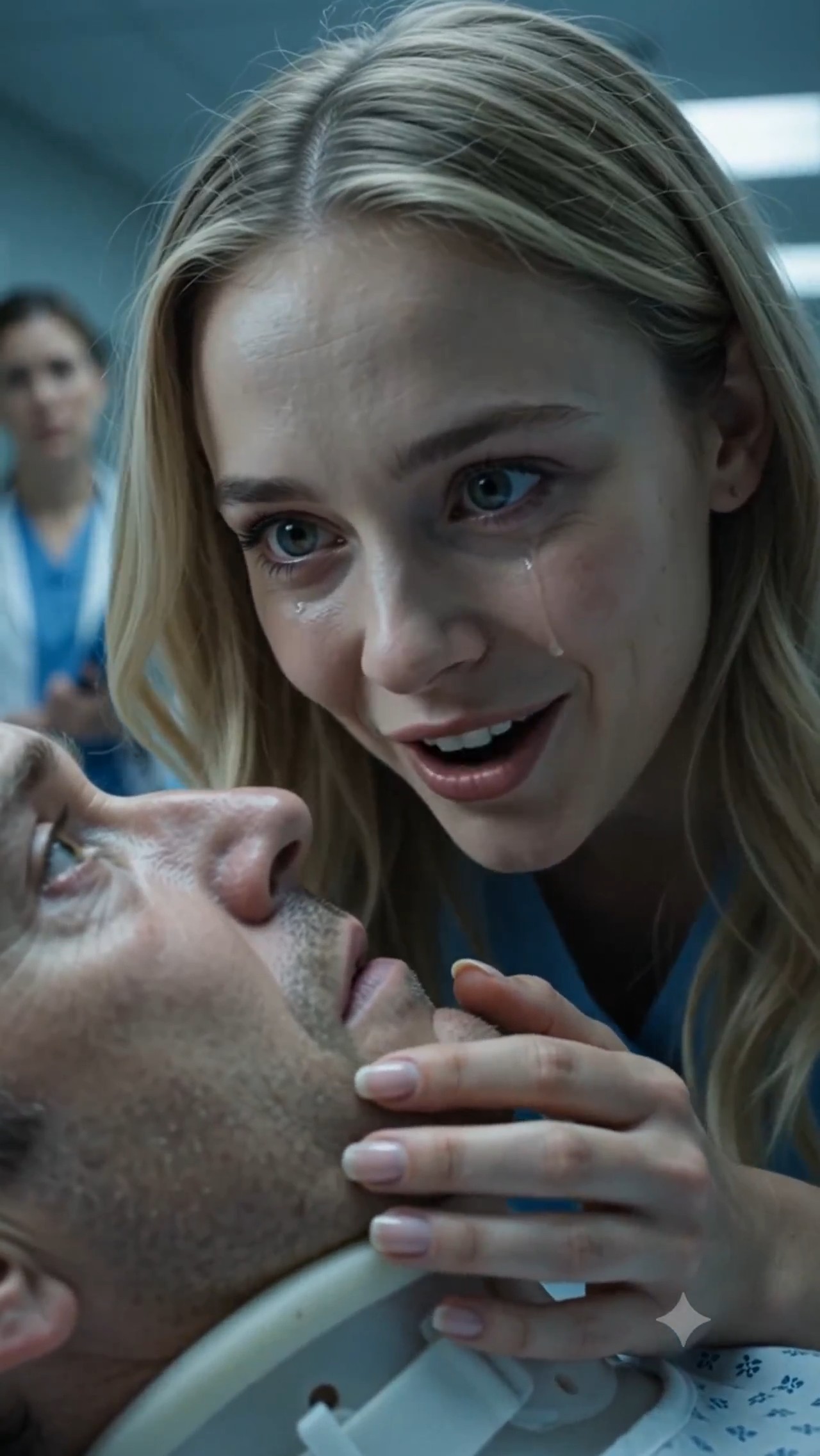
I wanted to scream, to wrap my bare hands around the throat of the monster standing above me. But my legs turned to jelly, my spine frozen like solid ice. I collapsed onto the carpet, my eyes wide, able only to stare up in silent terror.
The sensation of paralysis was not a sudden blacking out, but a horrific, creeping tide. It began at the tips of Tom’s toes, a cold, heavy numbness that raced up his calves, flooded his thighs, and locked his spine into an unyielding cage of lead. His chest felt as if a concrete slab had been lowered onto it, forcing his lungs to drag in thin, shallow gasps of air.
He tried to flex his fingers. He tried to pull himself toward the doorway. Nothing moved. His brain screamed desperate commands down his central nervous system, but the neurotoxins—the cumulative build-up of castor bean ricin and potent neuro-inhibitors Chloe had quietly laced into his drinks—had severed the wires.
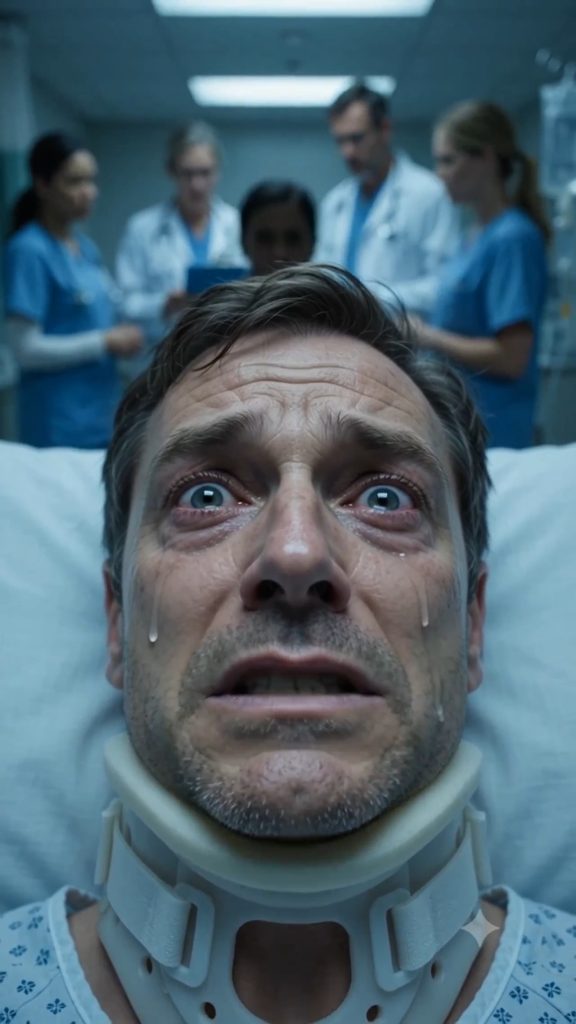
He was completely, utterly locked in. Conscious, hyper-aware, smelling the faint floral scent of his daughter’s perfume, yet reduced to a living corpse lying flat on the pink carpet of her pastel bedroom.
Chloe stood over him, watching his futile struggle with the mild curiosity of an entomologist observing a beetle pinned to a board.
“It’s called complete motor paralysis, Daddy,” Chloe said softly, her voice smooth, melodic, and terrifyingly serene. “I read about it in a medical journal online. It affects the neuromuscular junction. You can still hear me. You can still see me. You can feel every little thing… but you can’t speak a single word.”
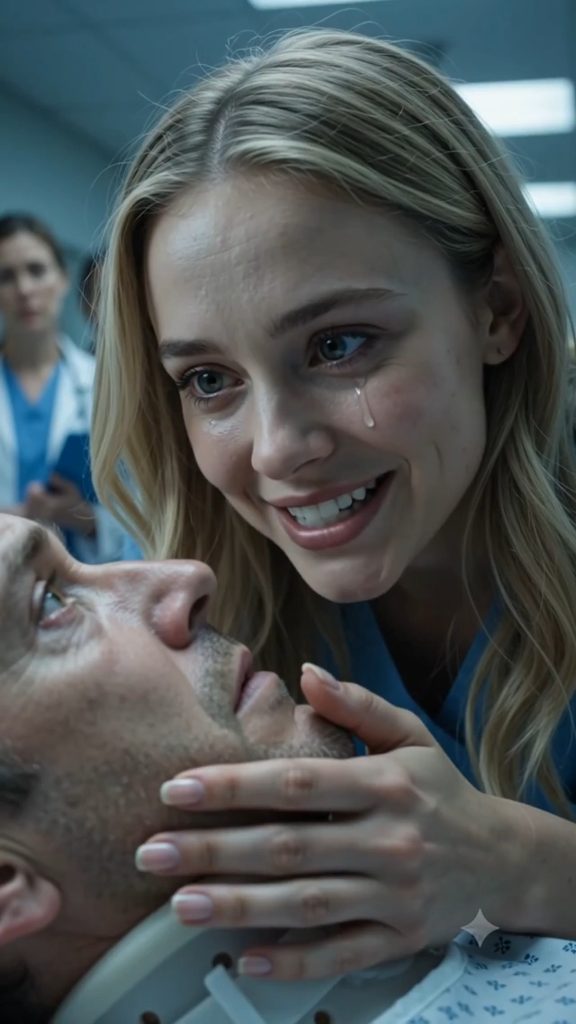
She knelt beside him, her knees resting on the soft carpet just inches from his cheek. From her pocket, she pulled a small, embroidered linen handkerchief.
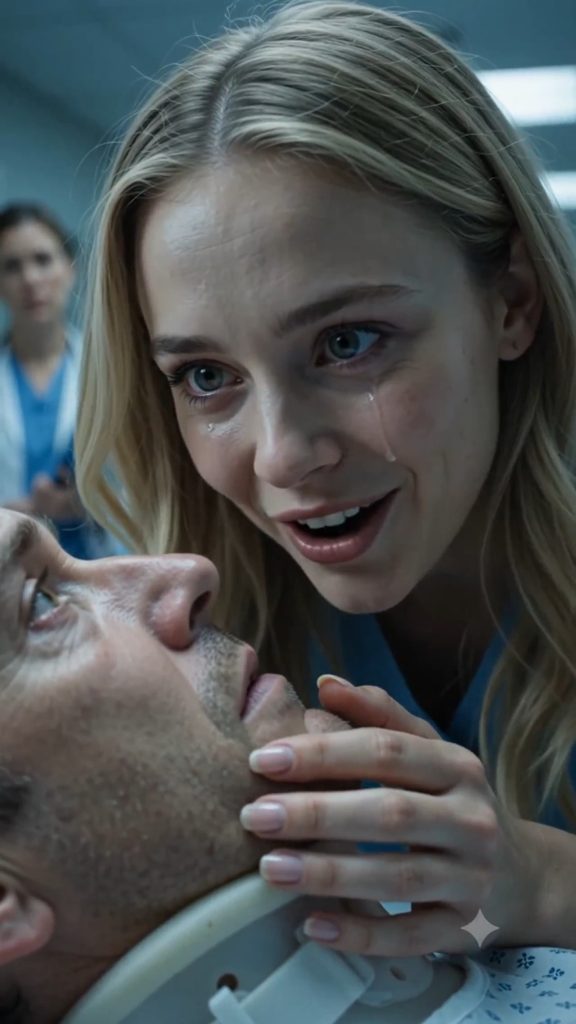
Chloe reached down and gently wiped a thin trail of drool from the side of Tom’s mouth, her touch tender, maternal, and sickeningly affectionate. She leaned close, her soft golden curls brushing against Tom’s cheek, her breath warm against his skin as she leaned down to whisper into his ear.
“Mommy is resting now,” she whispered, her voice a chilling, venomous purr. “Now it’s your turn, Daddy. Don’t worry… I’m going to take such good care of you… forever.”
Tom tried to scream. He tried to roar her name, to spit in her face, to curse her existence. But all that escaped his throat was a faint, wet rattle—a soft, pathetic puff of air against the carpet.
Chloe stood up, smoothing the front of her navy school dress. The time for whispering was over. The stage was set, and it was time for the final act.
With terrifying, clinical efficiency, Chloe moved around the bedroom. She picked up the brown glass vials from the bed—the ricin, the peanut protein extract, the mortar and pestle—and placed them neatly into a heavy ziplock bag. She walked over to her desk, took the wooden tray with the untouched mug of chamomile tea, and carried everything toward the door.
She unlocked the deadbolt with a quiet click, stepped out into the hallway, and disappeared toward the bathroom.
Through the open door, Tom’s strain-filled eyes caught brief glimpses of her shadow. He heard the sound of the toilet flushing once, twice, three times. She was dumping the concentrated chemical liquids down the drain, washing away the residue with boiling water, and tossing the empty glass containers into a deep trash bag to be disposed of later.
When she returned to the room, the evidence was gone. Only Tommy’s silver footprint necklace remained on the floor near Tom’s paralyzed hand—a relic she intentionally left behind.
Chloe walked over to the desk telephone. She didn’t dial 911. Instead, she took a pair of heavy drafting shears from Tom’s tool kit, positioned the blades over the landline cord, and snipped it cleanly in two. The severed copper wires dangled uselessly.
Next, she picked up Tom’s smartphone from the desk. She placed it on the hardwood floor near the closet, brought her heavy school boot down with crushing force, and shattered the screen into a spiderweb of dead glass.
Tom watched it all through frozen, tear-filled eyes. He was witnessing a masterclass in crime scene alteration, executed by a twelve-year-old girl with the icy composure of a veteran assassin.
Then, the final, horrific transformation began.
Chloe walked over to the floor-length mirror hanging on her closet door. She looked at her pristine reflection for a brief second. Then, raising her right hand, she gripped the collar of her white cotton shirt and violently ripped it downward, tearing the buttons off and tearing the fabric across her shoulder.
She raised her nails to her own throat and dragged them downward with brutal force, leaving four deep, bleeding welts across her collarbone. Tears—real, streaming, pathetic tears—instantly welled in her sky-blue eyes. Her breathing transformed into ragged, hysterical, hyperventilating sobs.
She looked at Tom one last time. Her face contorted into an expression of raw, helpless terror—the exact face of a traumatized, terrified child who had just witnessed her entire world end.
“HELP! SOMEBODY HELP ME!” Chloe screamed at the top of her lungs.
She threw open the bedroom door, scrambled down the hallway, and sprinted down the wooden staircase—past the stain where her mother’s blood had dried on the marble—and threw open the front door of the estate.
Her hysterical shrieks echoed down the quiet, tree-lined street of Lake Oswego.
“HELP! MY BADO IS DYING! SOMEBODY PLEASE HELP MY DADDY!”
For thirty agonizing minutes, Tom lay alone on the pink carpet.
The silence inside the house was heavy, suffocating, broken only by the rhythmic, shallow wheeze of his own compromised breathing and the faint, distant sounds of commotion out on the street.
His mind was a swirling vortex of agony and absolute, crushing defeat. Every single attempt at resistance, every instinct he had trusted over the past two months, had been expertly manipulated. He had thought he was a brilliant architect, a protector, a devoted father. In reality, he had been nothing more than a blind, stupid pawn in a game designed by a sociopathic child.
He had destroyed Sarah. He had called her crazy. He had pushed her down the stairs. And now, he was lying paralyzed in his daughter’s room, stripped of his voice, his mobility, and his freedom.
Suddenly, heavy, rushing footsteps echoed from the driveway, pounding through the foyer and up the stairs.
“In here! First responders! We have a male down, possible stroke or overdose!”
Two paramedics in dark blue uniforms burst into the bedroom, carrying heavy medical bags and an EKG monitor, followed closely by two armed Lake Oswego police officers.
“Sir! Sir, can you hear me?” a female paramedic shouted, dropping to her knees beside Tom. She shined a bright penlight directly into his eyes.
Tom’s pupils reacted, shrinking under the harsh light. His eyes darted frantically toward the doorway, toward the desk, toward the torn stuffed bear. Look at the bear! Look at the cord! She did this! She poisoned me! his mind screamed.
“Eyes are responsive, but he’s completely non-verbal. Quadriplegic presentation. Respiratory rate is dangerously low!” the second paramedic yelled, hooking a pulse oximeter onto Tom’s index finger. “BP is bottoming out! We need an IV line now! Prepare the gurney!”
The officers secured the room, their hands resting on their holsters as they surveyed the scene. One of them picked up the broken landline phone, while the other noticed the shattered mobile phone on the floor.
“Landline was severed. Cell phone destroyed,” the officer reported into his shoulder radio. “Looks like a massive medical event occurred while the child was present. Send a supervisor to 1402 Highland Drive.”
Through the crowded doorway, Tom saw her.
Chloe stood in the hallway, wrapped in a thick, yellow emergency blanket provided by a neighbor. Her torn shirt was visible beneath the blanket, the fresh blood on her collarbone stark against her pale skin. She was sobbing hysterically, her shoulders shaking, held tightly in the comforting embrace of a middle-aged female officer and a woman wearing a badge from Clackamas County Child Protective Services (CPS).
“It’s okay, sweetheart,” the CPS worker cooed softly, stroking Chloe’s golden hair. “You’re safe now. You did so good running for help. You’re a very brave girl.”
“Is my daddy going to die too?” Chloe wailed, her voice cracking with heart-wrenching grief that brought tears to the female officer’s eyes. “Mommy is in a coma… please don’t let Daddy die! He’s all I have left!”
“We’re doing everything we can, sweetie,” the officer said, her voice thick with emotion. “You’re going to come with us to the station, okay? We’re going to keep you safe.”
Tom watched the scene from the floor as the paramedics strapped him onto a hard orange backboard. He wanted to scream. He wanted to thrash, to rip the oxygen mask off his face, to point his finger at the little girl in the yellow blanket and expose her to the world.
She killed my son! She killed my wife! She’s a monster! DON’T TRUST HER!
But no sound came from his lips. Only a weak, pathetic string of drool escaped the corner of his mouth as the paramedics lifted the gurney and wheeled him out of the room.
Three days later. Oregon Health & Science University Hospital, Portland.
The private room on the fifth floor was bathed in the dim, dreary light of a rain-soaked afternoon. The air was sterile, smelling of rubbing alcohol and fresh flowers arranged on the windowsill.
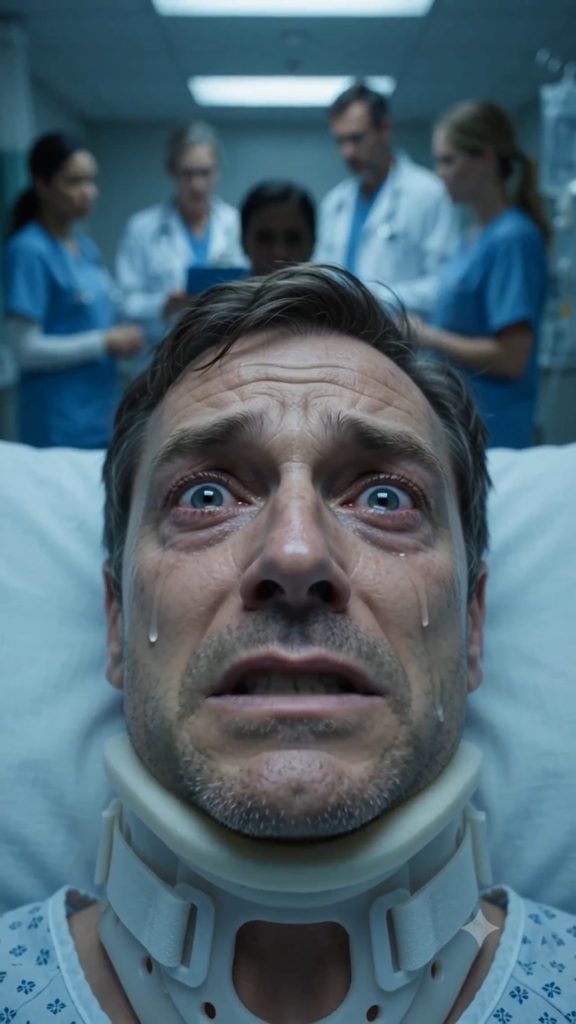
Tom lay in the motorized hospital bed, propped up at a thirty-degree angle. He wore a crisp white hospital gown. A feeding tube ran into his nose, and a heart monitor beat out a slow, steady pulse beside his head.
The medical diagnosis had been finalized yesterday by a panel of top neurologists: Severe, atypical brainstem infarction resulting in Locked-In Syndrome.
To the medical world, Tom Miller was a tragic victim of a catastrophic, stress-induced brainstem stroke—brought on by the immense trauma of his infant son’s death two years prior, compounded by his wife’s violent fall down the stairs three days ago. The toxins in his system had broken down into undetectable metabolic byproducts, leaving behind no chemical footprint for the standard hospital toxicology screens to catch.
He was completely paralyzed from the neck down. He could not speak. He could not chew. He could not swallow. His only voluntary physical movement was the ability to blink his eyes and roll them slightly up and down.
Inside his mind, he was fully awake. His intellect was razor-sharp. His memories were crystal clear. He felt the coarse texture of the hospital sheets against his skin. He felt the cold air from the AC vent blowing across his forehead. He felt the searing, unbearable agony of total, absolute helplessness.
The heavy wooden door to the private room creaked open.
A woman in a sharp grey business suit walked in, holding a leather clipboard. It was Ms. Henderson, the senior case director from Oregon Child Protective Services.
And walking right beside her, holding her hand with quiet, tragic dignity, was Chloe.
Chloe was dressed in a pristine navy blue dress, her golden hair tied back with a velvet ribbon. She looked like a grieving angel, a brave little orphan bearing the crushing weight of an unimaginable family tragedy.
“Hello, Mr. Miller,” Ms. Henderson said gently, stepping up to the side of the bed. She looked down at Tom with eyes overflowing with deep, professional sympathy. “I know you can hear us. The doctors explained your condition to me. I am so, so sorry for everything your family has been through.”
Tom stared at her, his eyes wide, unblinking, desperate. Look at me! his mind screamed. Ask me questions! Use an eye-tracking board! Read my eyes!
“I wanted to give you an update regarding Chloe’s welfare,” Ms. Henderson continued softly, resting a hand on Chloe’s shoulder. “Given the tragic circumstances—with Sarah remaining non-responsive in the intensive care unit down the hall, and your current physical state—CPS has granted emergency temporary custody and guardianship arrangements.”
Ms. Henderson smiled warmly, looking down at Chloe.
“Because there are no immediate relatives in Oregon, and because Chloe expressed a deep, passionate desire to stay close to you, the court has approved a specialized home-care placement. A full-time, state-funded private nursing team has been assigned to your Lake Oswego home. You will be discharged tomorrow to receive round-the-clock hospice care in your own residence.”
Tom’s heart monitor began to beep faster. Beep… beep… beep-beep-beep…
No… no! Do not send me back to that house! Keep me in the hospital! Put me in a public facility! DO NOT LET HER TAKE ME HOME!
“And the best news, Mr. Miller,” Ms. Henderson added, her voice dropping into an affectionate coo, “is that Chloe has volunteered to be your primary family caregiver alongside the night nurses. She refused to let you be placed in a state care facility. She insisted on taking care of her daddy herself.”
“She’s an absolute blessing,” the CPS worker whispered, wiping a tiny tear from the corner of her eye. “You raised a truly wonderful, devoted daughter, Tom.”
Ms. Henderson stepped back toward the door, checking her watch. “I’ll let you two have a moment alone before the transport team arrives to finalize the paperwork. Chloe, sweetie, I’ll be right outside in the hallway if you need anything.”
“Thank you, Ms. Henderson,” Chloe said sweetly, bowing her head.
The door clicked shut. The CPS worker was gone.
The room fell into a terrifying, suffocating silence.
Slowly, deliberately, Chloe turned around and faced the bed.
The grief-stricken, brave little orphan persona melted away in a fraction of a second. Her posture straightened. Her shoulders relaxed. Her sky-blue eyes turned flat, cold, and dark as a barren winter sky.
She walked slowly to the side of the bed, her small polished shoes clicking against the linoleum floor.
She reached out and adjusted the blanket over Tom’s paralyzed chest, tucking the edges in tightly, turning the heavy hospital blanket into a tight, inescapable straitjacket.
The heart monitor beside the bed was racing now. Beep-beep-beep-beep-beep!
“Look at how fast your heart is beating, Daddy,” Chloe whispered, her voice a soft, melodic purr that sent waves of icy horror through Tom’s frozen body. “Are you excited to go home?”
She leaned over the bed railing, bringing her sweet, angelic face just inches from Tom’s wide, terrified eyes. She reached out with a soft, warm hand and gently traced the line of his jaw, her touch light as a feather.
“The night nurses only come from 10 PM to 6 AM,” Chloe whispered, a faint, chilling smile stretching across her face. “That means during the day… it’s just going to be you and me in that big, beautiful house. No Mommy to interrupt us. No little Tommy to cry.”
Tom’s eyes rolled frantically, tears spilling from the corners of his eyes, soaking into the white hospital pillow.
“I bought some new herbal teas yesterday, Daddy,” Chloe continued, her voice dipping into an affectionate, terrifying whisper. “Chamomile and peppermint. I’m going to feed it to you through your tube every single afternoon. I’m going to read you stories. I’m going to show you my drawings. And you’re going to sit there in your wheelchair… and you’re going to listen to me… forever.”
Red emergency lights flashed through the heavy glass window of the hospital room as an ambulance pulled into the bay five floors below. The harsh red glow hatted across Chloe’s tear-stained face as she squeezed Tom’s completely numb, unresponsive hand before the eyes of the returning nurses.
To the medical staff, to the police, to the state of Oregon, she was a grieving, saintly twelve-year-old child holding the hand of her tragic, paralyzed father.
To Tom, lying trapped inside the living tomb of his own body, she was the devil herself—holding the key to his cage, smiling sweetly as she prepared to take him home.




+ There are no comments
Add yours