
Her Husband Tried to Silence Her with Boiling Water and a Fake Disability Suit, But She Returned with His Hidden Truth from a Recovered Camera


The news of the codicil, a powerful secret now held by Sofia and me, filled me with a quiet resolve. It was a beacon against the darkness Brandon was creating. However, even with this newfound strength, I still had to contend with his relentless public assault on my reputation. A week later, he orchestrated his most damaging move yet.
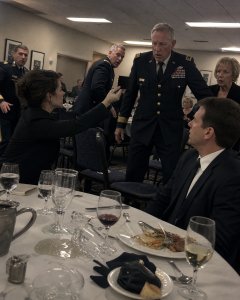
The annual Maxwell Family Charity Gala was a highly anticipated event, a pillar of their social calendar. I was still in recovery, confined to the hospital, but word of the event reached me through hushed whispers from nurses and fragmented news reports. My absence, of course, was noted.
Brandon used it.
He chose the gala as his stage for the next phase of his smear campaign. I saw a snippet of it later, a video clip that one of the nurses, discreetly, showed me on her phone. The grand ballroom, usually a place of celebration, was transformed into a theater for his insidious drama.
Brandon, impeccably dressed, stood on a podium, bathed in the soft glow of the spotlights. He held a microphone, his face etched with a practiced sorrow. He began with a tearful speech, his voice catching as he spoke of “my beloved wife, Leticia,” and her “struggle with mental health” after the “unfortunate kitchen accident.” He portrayed himself as the suffering, supportive husband, stoically bearing his burden. It was a performance worthy of an Oscar.
“My heart breaks for Leticia,” he murmured, his eyes seemingly glistening with unshed tears. “This trauma has, sadly, brought to the surface some long-standing difficulties. A fragile state, exacerbated by her past.”
My blood ran cold as I watched. He wasn’t just implying; he was explicitly stating that I was mentally unstable, using his carefully crafted narrative to bolster his divorce claims and discredit any accusations I might make. He was leveraging the pain of my past, something he knew nothing about beyond superficial details, to destroy my present. This was the specific, petty cruelty Eleanor had hinted at, the intentional twisting of my identity against me. He wasn’t just taking my money; he was taking my mind, my story, and weaponizing it.
Then came the “intervention.” He orchestrated it seamlessly. During his speech, he looked out into the crowd, his gaze falling upon a carefully selected group of our mutual acquaintances. These were people we had dined with, laughed with, people I had considered friends.
He gestured vaguely. “I know many of you have expressed concern,” he said, his voice dropping to a confidential tone. “And I appreciate your compassion.”
One by one, cue cards in hand, these “concerned friends” stepped forward, their faces mirroring Brandon’s feigned distress. Sarah, a woman I had shared countless coffees with, spoke first.
“Leticia is a wonderful woman,” she said, her voice soft but firm. “But she’s been through so much. We’re all just worried she’s not seeing things clearly right now.”
Another, David, a business acquaintance who had often come to our house, added his piece.
“She’s making some… unusual claims,” he said, his eyes wide with mock sympathy. “We just want her to get the help she needs. To protect her from herself.”
They gently, subtly, suggested that my claims against Brandon were simply the ravings of a traumatized, mentally unstable woman. They suggested I needed “professional help,” not legal assistance. The entire performance was designed to publicly isolate me, to brand me as delusional, and to make any accusations I might utter seem like symptoms of a breakdown. The words “unusual claims” stung, knowing Brandon had carefully coached them. It was a coordinated attack, a public execution of my credibility.
Watching the video, a hot wave of shame and rage washed over me. Shame, that these people, whom I had trusted, could be so easily manipulated. Rage, at Brandon’s calculated cruelty, his willingness to destroy my reputation for his own gain. He wasn’t just lying; he was actively turning my entire social circle against me, making it impossible for me to find allies or even sympathetic ears outside of the hospital walls. The sheer callousness of using my trauma, my difficult history, as a weapon against me, was a specific, personal humiliation that felt more painful than the burns themselves.
The nurses in the room were silent, their faces a mixture of discomfort and pity. I felt their gaze, their unspoken judgments. Even without Brandon explicitly naming me as mentally ill, the implication was clear, devastating. He was making sure that when the divorce papers went through, when the news of the house sale broke, everyone would believe his narrative: that I was an unstable woman who had finally succumbed to her demons, and he was the benevolent husband trying to save me from myself.
“He’s good,” one of the nurses murmured softly, almost to herself.
I nodded, my jaw tight. He was. But this public humiliation, this calculated attempt to erase my voice, only fueled my resolve. He thought he was isolating me, breaking me. Instead, he was galvanizing me. The codicil, hidden in my father’s album, now felt like an even more potent secret. He had tried to silence me with boiling water, then with legal maneuvers, and now with public humiliation. But he had fundamentally underestimated the woman he was trying to destroy. He had no idea the strength I drew from my “difficult past,” the very thing he sought to weaponize against me. He thought he was painting me into a corner, but he was actually giving me the perfect stage for my own comeback.
More Stories






+ There are no comments
Add yours