
After I lost my kids and my family shunned me, they only came back when $18 million appeared


Five years later, the ancestral lands hummed with a different kind of energy. Where neglect had once crept, a vibrant outreach center now stood, its buildings repurposed, its gardens flourishing. The old communal meeting hall, once peeling and worn, had been lovingly restored, its entrance now proudly bearing the name “Adebayo Children’s Legacy Center.”
The land, once a site of contention, now bloomed with purpose. Children’s laughter drifted from a small, colorful playground. Volunteers bustled in and out of classrooms where local youth received tutoring, or into a kitchen where meals were prepared for the hungry. This was what Jamal and Imani’s legacy had built, a living testament to compassion, not control.
I walked through the sprawling communal garden, the rich scent of damp earth and growing things filling the air. The sun, warm and generous, kissed my skin. My fund, the Adebayo Children’s Legacy Fund, was thriving, its reach extending far beyond the community, but its heart remained here, intertwined with the reformed Children of the New Dawn.
The Benevolent Trust had indeed dissolved, just as the ancient Covenant had mandated. A transparent, rotating council of elders now guided the community, their decisions made through open dialogue, not autocratic decree. It hadn’t been easy. The initial transition was tumultuous, marked by lingering distrust and the painful unlearning of old ways. But slowly, painstakingly, the community had rebuilt itself, stronger and more aligned with its original, charitable mission.
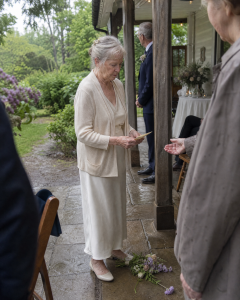
My eyes scanned the rows of collard greens, sweet potatoes, and corn. There, bent low over a patch of freshly tilled soil, was Sister Abena. She no longer wore the elaborate robes of the Reverend, nor did she command with booming pronouncements. Her hands, once soft and adorned with rings of authority, were now calloused and stained with earth. She wore a simple, practical tunic, her grey hair tied back with a humble cloth.
She was simply “Sister Abena” now, a gardener.
I watched her for a moment, her movements slow, deliberate, deeply connected to the earth. The woman who had once wielded faith as a weapon of control now tended life with quiet devotion. Her public admission of fear and corrupted faith had been the turning point, a shattering of her ego that allowed for something new, something humble, to emerge.
I walked over to her, my steps silent on the soft earth. She didn’t look up immediately, lost in the rhythm of her work.
“Good morning, Mama,” I said gently.
She paused, then slowly straightened, her hands resting on the small trowel she held. Her eyes, still bearing the faint echoes of past storms, now held a deep, quiet peace. A genuine smile, softer than any I had ever seen, touched her lips.
“Nia,” she said, her voice raspy, yet warm. “The morning light is good for the new sprouts. Helps them root deep.”
She turned back to a stubborn patch of weeds, her movements unhurried. “These young ones,” she murmured, pulling a particularly tenacious bindweed. “They always find a way to creep in, even in the best-tended garden.”
I knelt beside her, picking up a smaller trowel left nearby. I began to work on a clump of dandelions, their bright yellow flowers a stark contrast to the dark soil. The simple act felt strangely profound, a communion of shared labor and unspoken understanding.
“The children are doing well in the tutoring program,” I said, my voice low, just for her. “We’re expanding to offer art classes next month. Something Jamal would have loved.”
Abena nodded slowly, her gaze thoughtful. “He would have, yes. He always saw beauty where others saw only dirt.” She pulled another weed, her sigh soft. “He always found things. Buried things. Important things.” Her eyes met mine, a flicker of remembrance, of gratitude, in their depths. “He taught you well, my daughter.”
We worked in comfortable silence for a while, the gentle scraping of trowels against soil the only sound. The sun climbed higher, warming our backs. The weight of the past was not erased, not forgotten, but it no longer felt like a crushing burden. It was simply part of the soil, enriching the new growth.
“Sarita brought by the seedlings yesterday,” Abena mentioned, her voice calm. “She’s teaching the younger children about pollination in her class. They were very excited.”
My sister, Sarita, had found her own path, teaching at the Legacy Center, her empathy now a guiding force, free from the shadow of our mother’s control. Brother Elias, my father, served on the new council, his quiet wisdom a steadying presence in the reformed community.
I pulled a final weed, its roots surprisingly deep. “It’s good work, Mama,” I said, looking at the rows of vibrant green. “This garden. This center.”
She looked at the garden, then at the bustling center in the distance, a faint smile playing on her lips. “Yes,” she agreed. “A good harvest, indeed. From what was once… barren.”
We rose together, brushing the earth from our clothes. The silence that once promised isolation now hummed with the quiet, persistent rhythm of genuine connection.
More Stories


+ There are no comments
Add yours